Arabic mehndi is loved for exactly what it does best: bold shapes, flowing lines, and breathing room. Instead of filling every inch of skin, Arabic designs let large paisleys and open flowers do the talking, with vines and leaves sweeping across the back of the hand in one graceful movement. The result photographs beautifully, suits every outfit from a simple dress to a heavily embroidered ensemble, and — best of all — takes far less time than a full-coverage design.
Here are fourteen Arabic back hand mehndi designs, each one chosen for a real reason: a bold paisley that anchors the hand, a vine that follows its natural shape, and enough open skin that the design stays light and elegant. Every look works on its own or paired with rings and bracelets, and each one dries into that rich reddish-brown stain we all love.
1. Bold Paisley Trail with a Flowing Vine
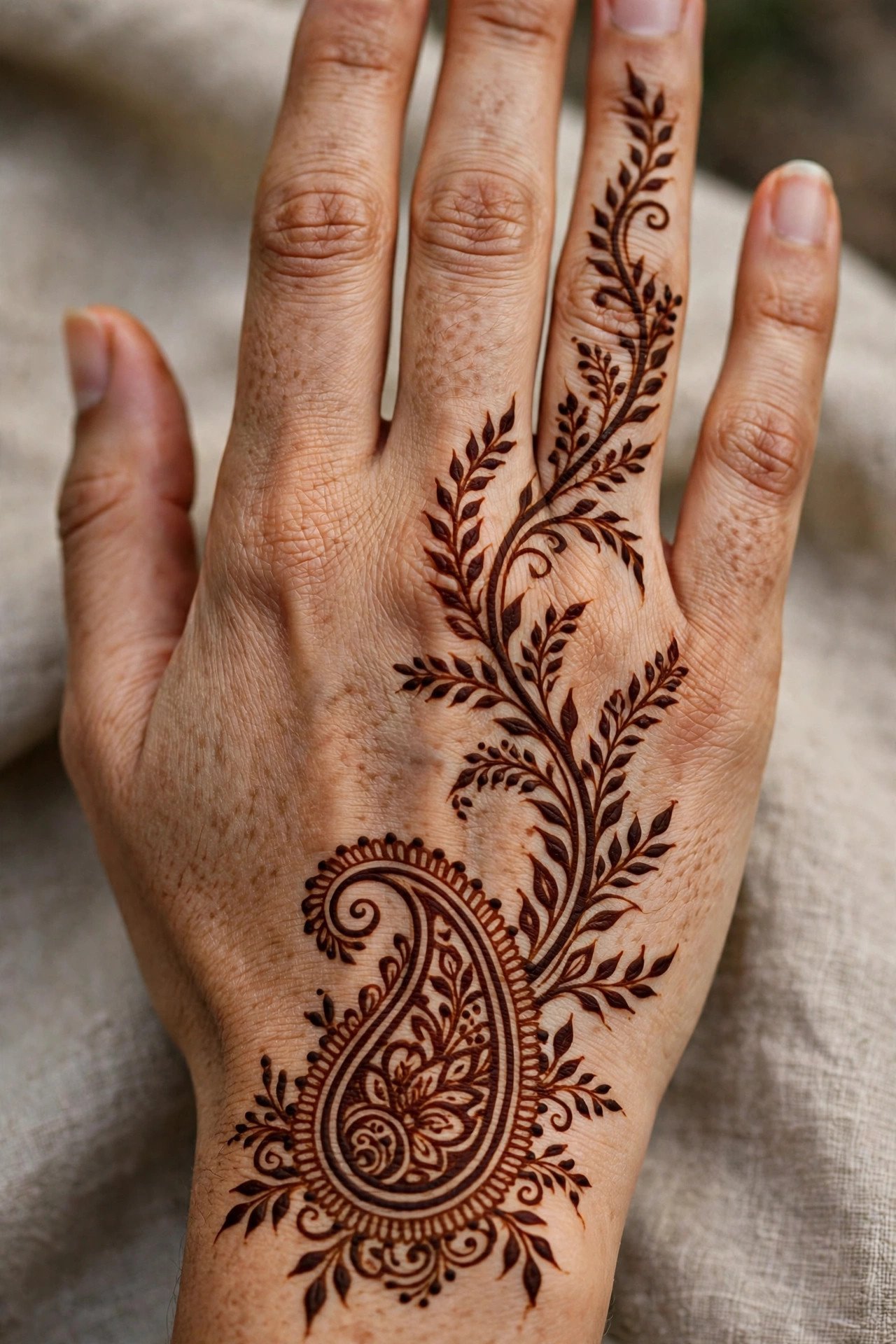
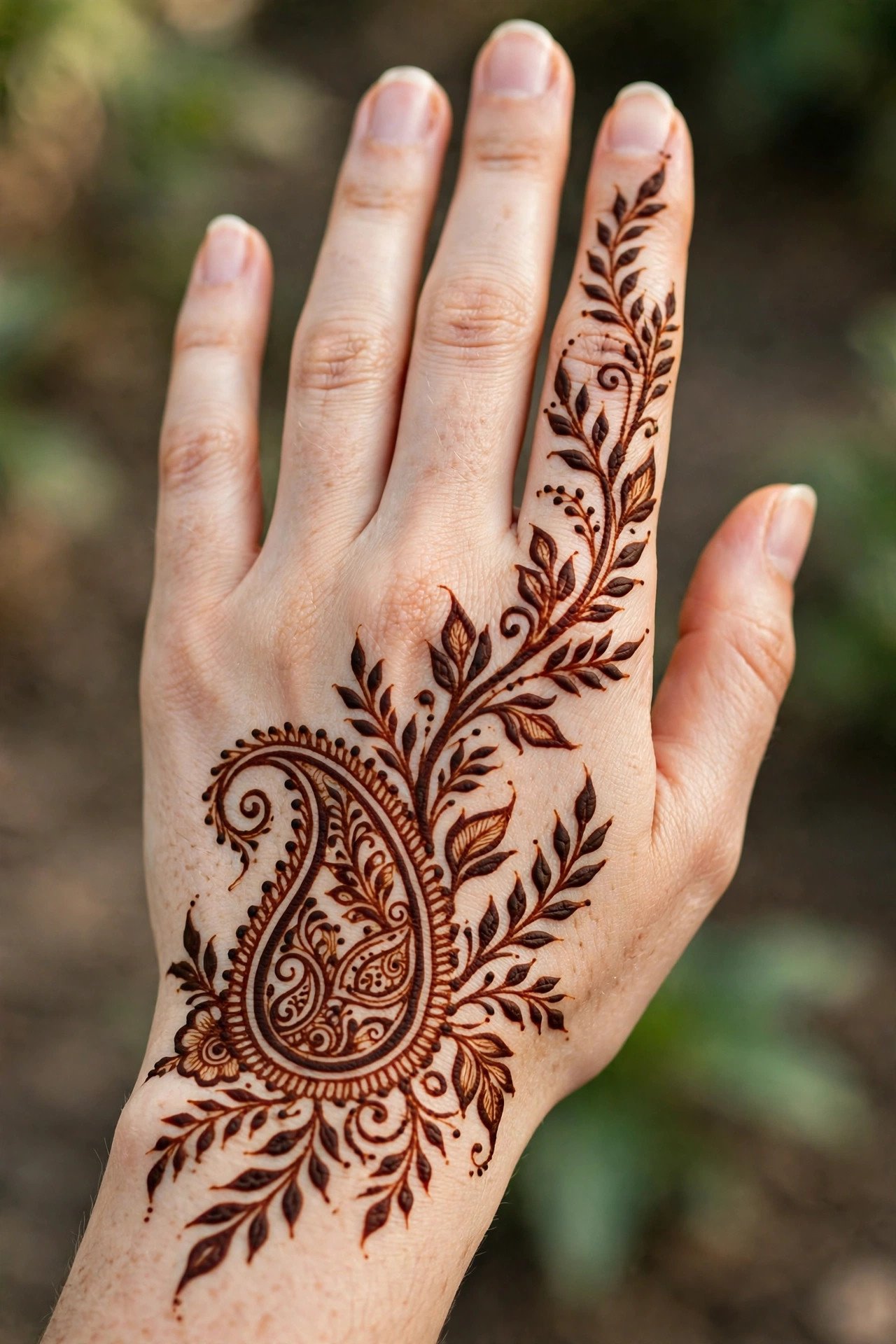
A large paisley near the wrist, trailed by a flowing vine of leaves toward the fingers, is the signature Arabic back hand look. The paisley gives the design its bold anchor while the vine keeps it moving, and the open skin between motifs stops it feeling heavy. Give it about twenty-five minutes, keep the paisley outlines thick, and let the vine taper as it reaches the fingers for a look that suits weddings, engagements, and festive evenings alike.
2. Large Floral Paisley with Leaf Vines
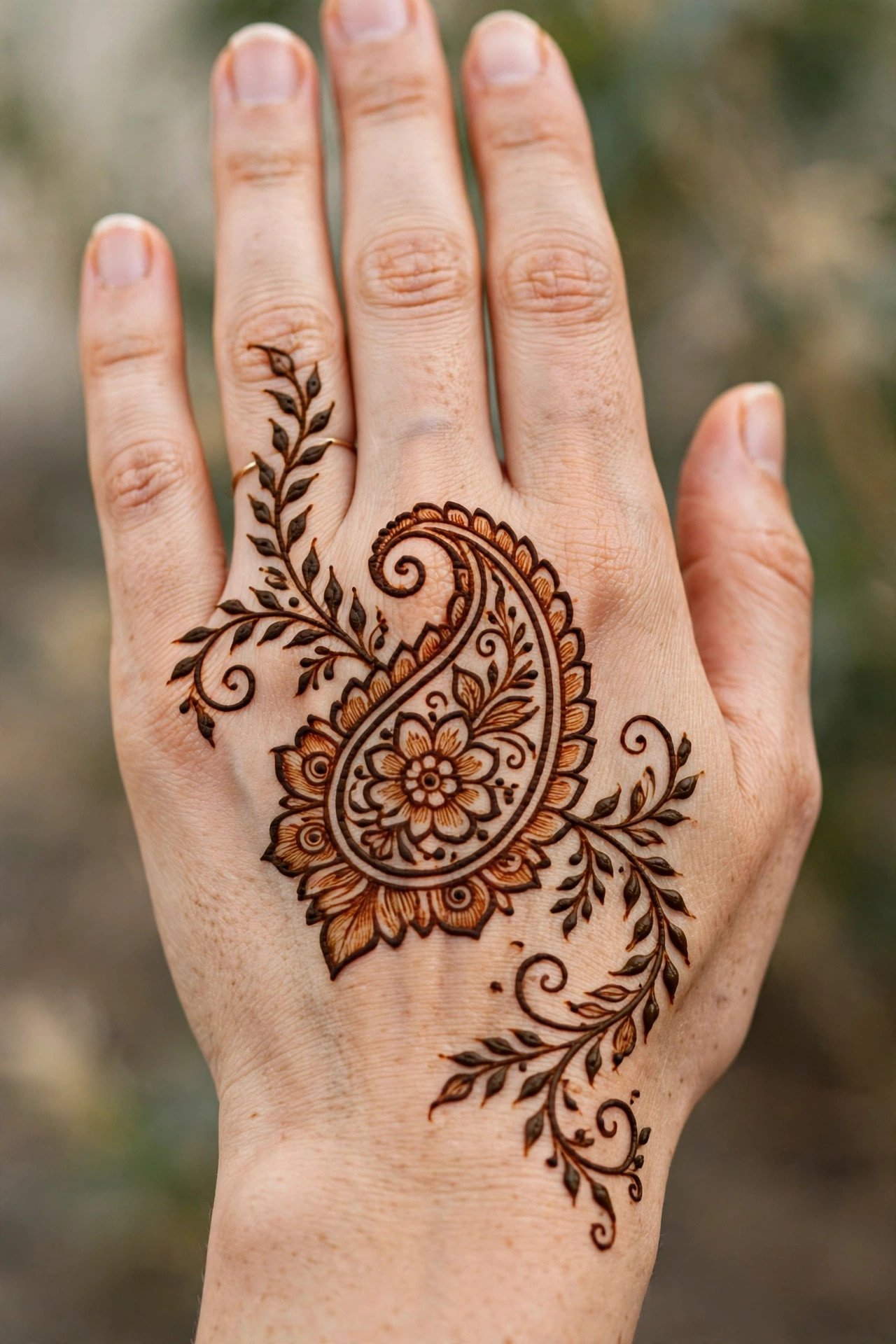
Pair one oversized floral paisley in the centre of the hand with two leafy vines curling off it, and you have a design that looks far more elaborate than it is. The flower-filled paisley draws the eye, the vines fill the hand without crowding it, and the whole thing takes around thirty minutes. It pairs beautifully with statement rings, since the centre of the hand stays the star.
3. Flowing Vine from Wrist to Index Finger
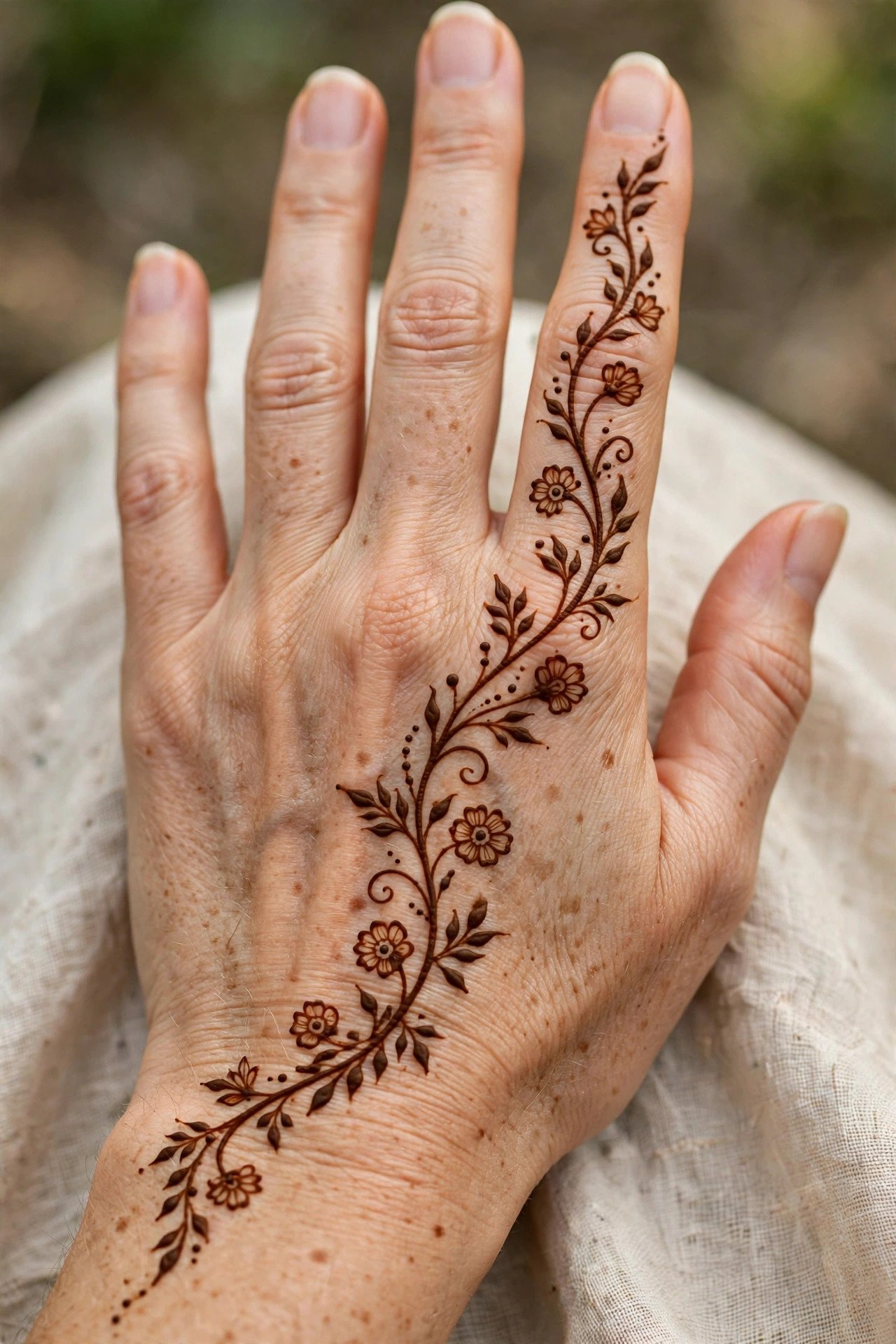
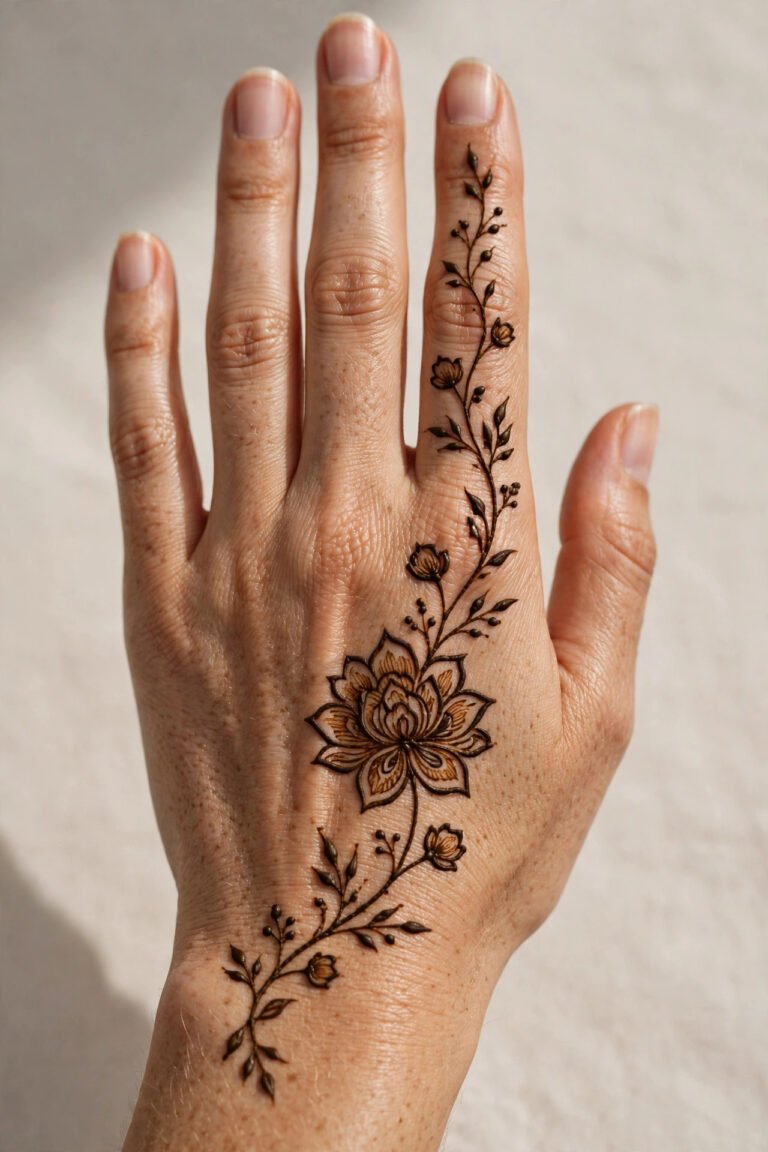
A single vine sweeping diagonally from the wrist to the index finger is the most flattering Arabic placement there is — the diagonal makes fingers look longer and the hand look slimmer. Dot the vine with open flowers and small leaves, leave generous gaps, and you are done in about twenty minutes. This is the design to pick when you want grace without fuss.
4. Bold Paisley with Dot Fill
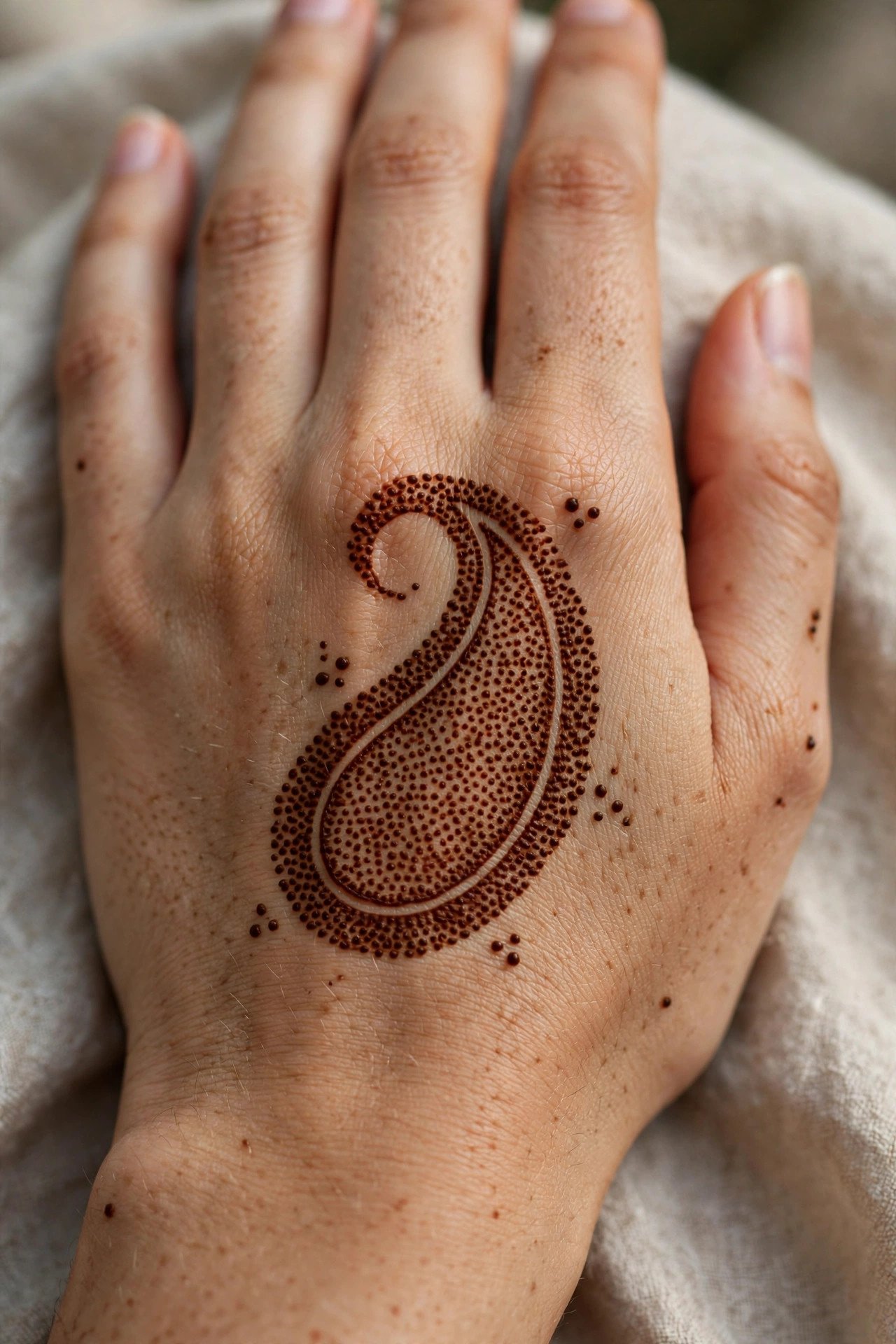
One chunky paisley, filled with tiny dots instead of solid colour, gives you boldness with a lighter finish. The dots add texture and let the skin show through, so the design reads as detailed rather than dark. It takes roughly twenty minutes and suits anyone who loves the paisley shape but wants a softer stain. Add a few scattered dots around it to tie the hand together.
5. Arabic Rose Vine with Shaded Leaves
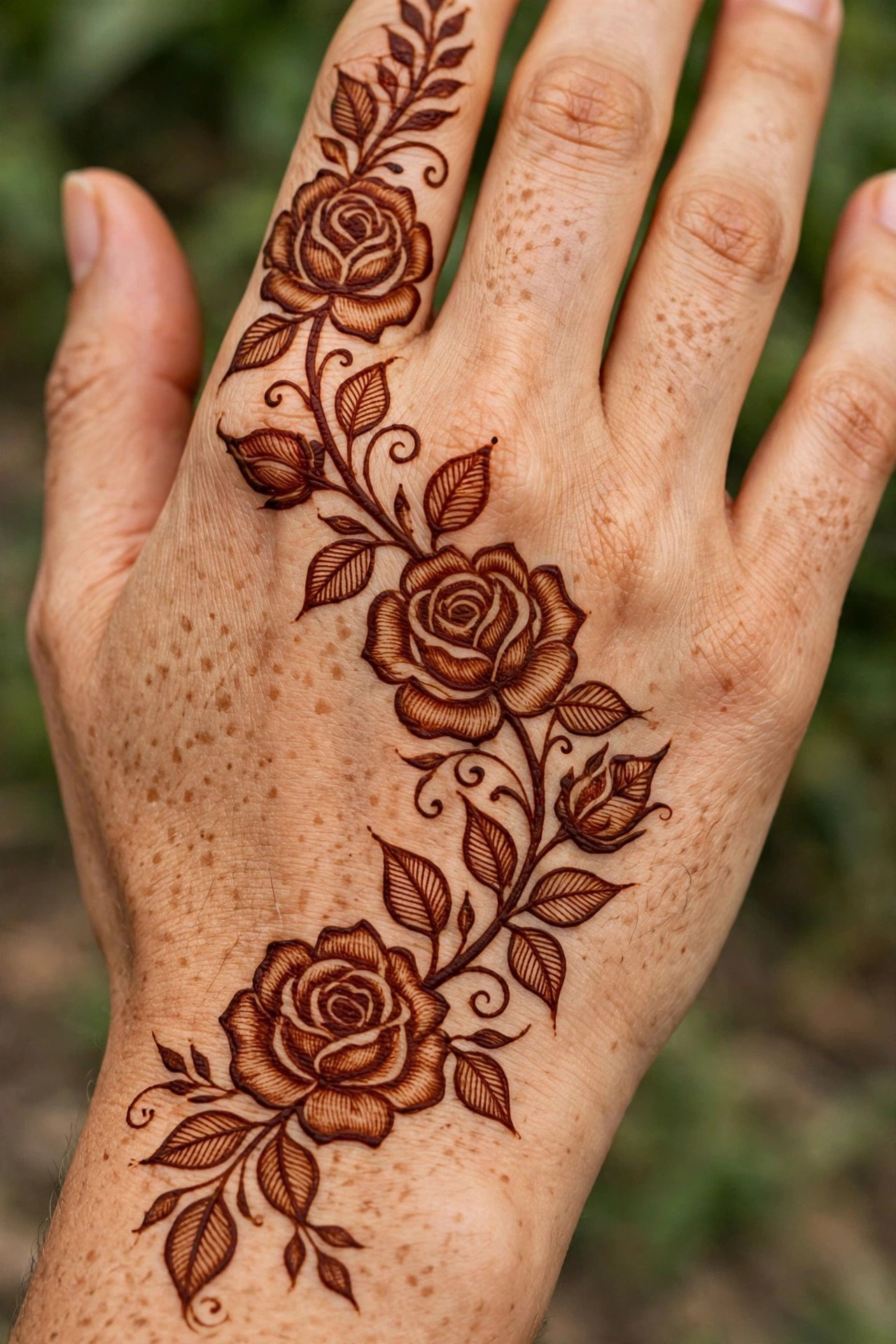
Big open roses strung along a vine, with leaves shaded in fine parallel lines, bring a romantic, almost watercolour feel to the back of the hand. The shading adds depth without density, and the roses give the design its wow factor in photos. Allow about thirty minutes, and keep the roses large — small shaded roses lose their softness.
6. Paisley and Floral Cascade
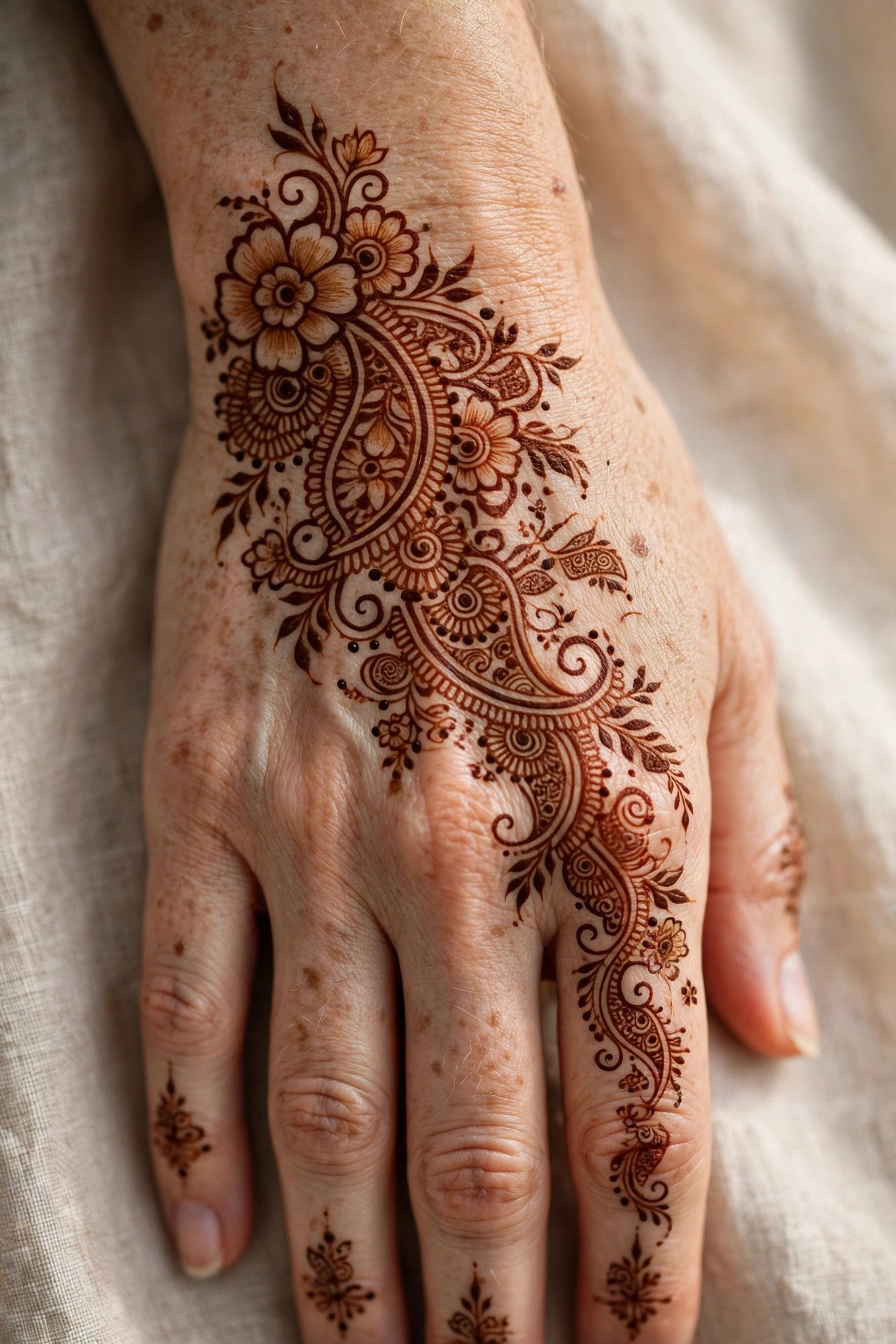
A cascade of paisleys and flowers tumbling from the wrist toward the knuckles looks like a waterfall of henna across the hand. Start large at the wrist and shrink each motif as you go, so the design feels like it is flowing rather than stamped on. It takes around thirty minutes and is a wonderful choice for celebrations where your hands will be photographed a lot.
7. Bold Vines with Stained Fingertips
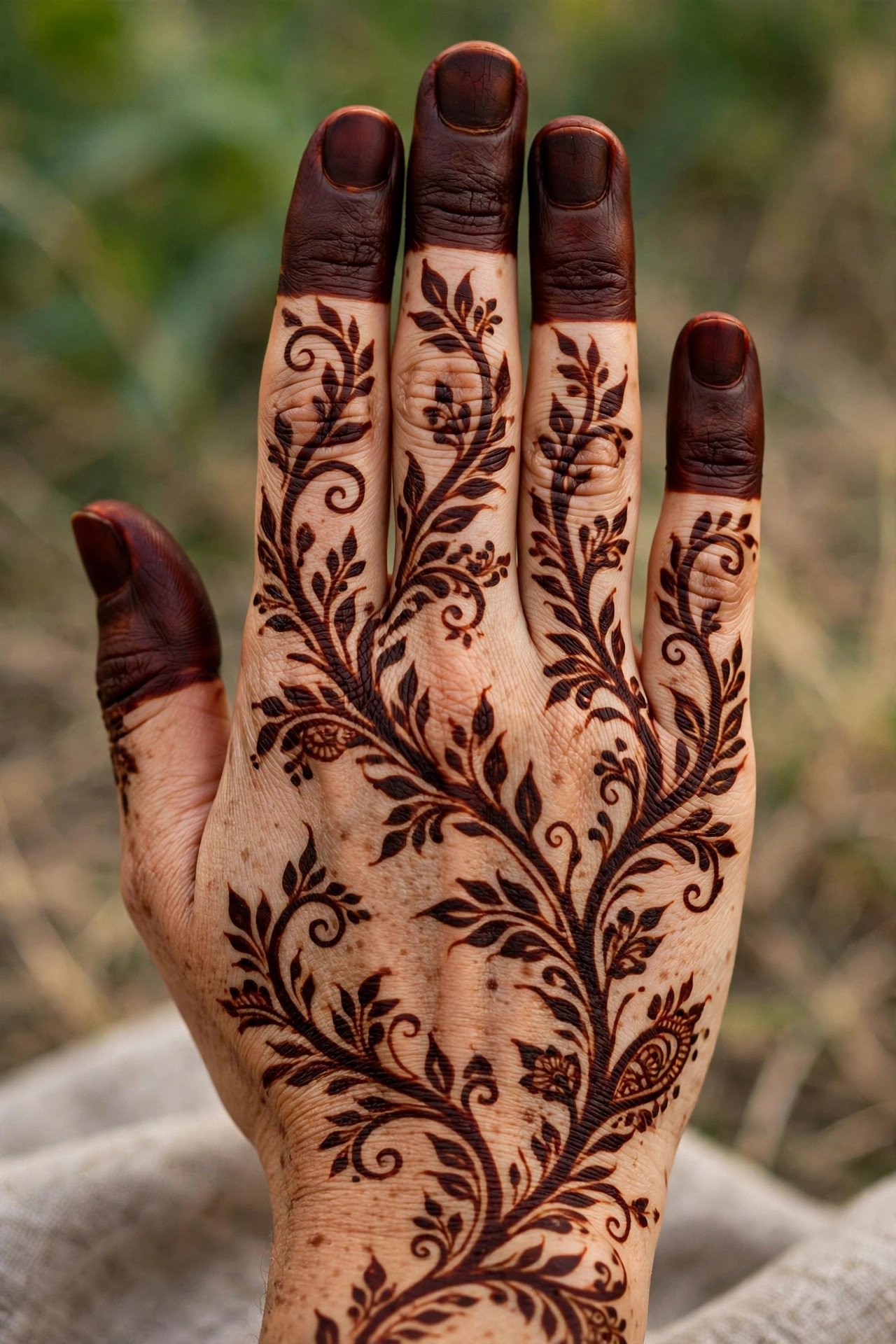
Bold vines across the back of the hand, finished with fully stained fingertips, give you contrast: flowing lines above, solid colour at the tips. The stained tips anchor the design and make the vines look even more fluid by comparison. Twenty-five minutes is plenty, and the look pairs well with a bold ring on the middle finger.
8. Chunky Paisley with a Net Accent
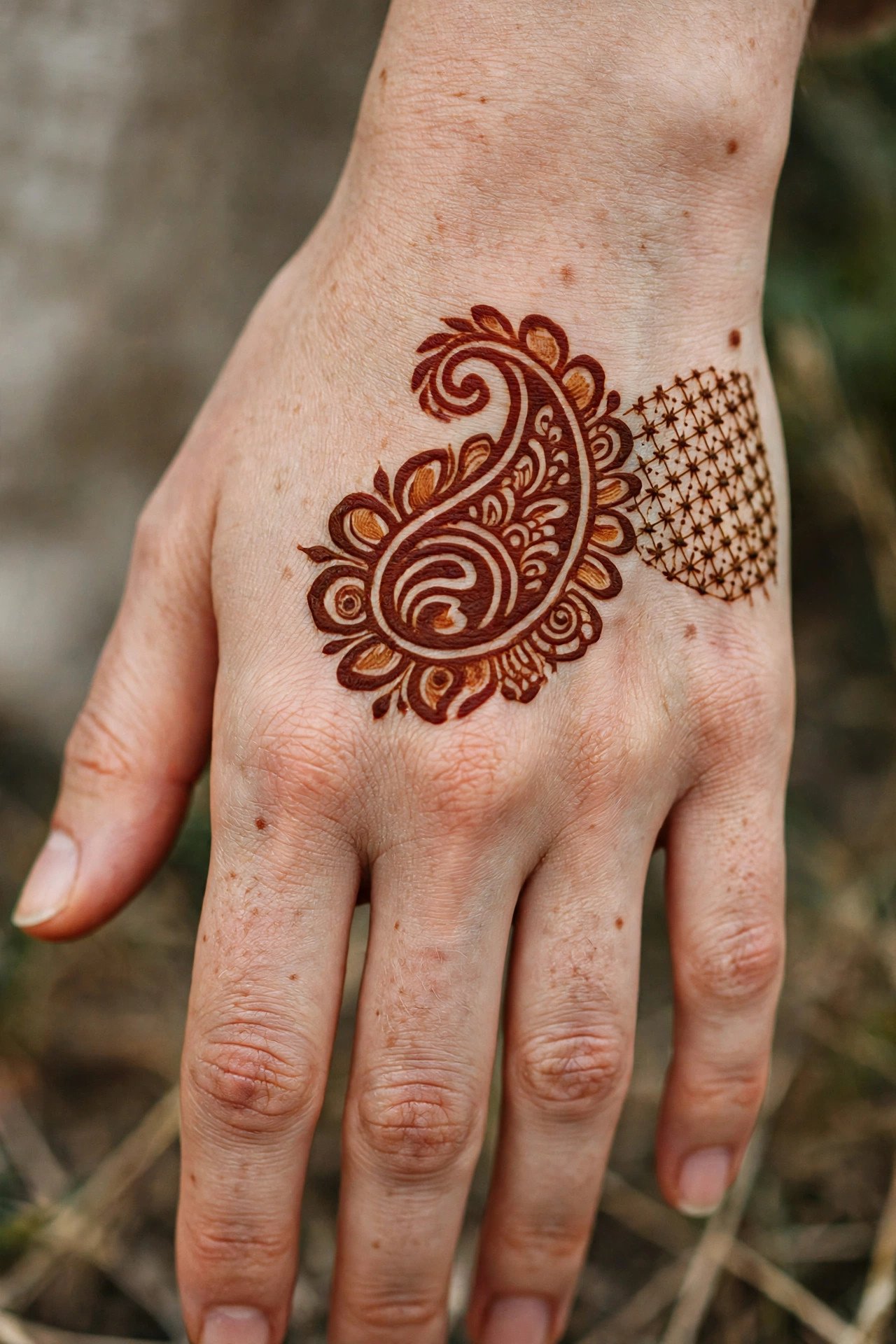
A chunky paisley gets a modern twist when a small patch of fine net work sits beside it, like a piece of lace tucked into the design. The net adds intricate detail exactly where the eye lands, while the rest of the hand stays open and Arabic in feel. Give it thirty minutes — the net is the fiddly part — and keep it to one patch so the paisley stays dominant.
9. Flowing Floral Trail with Buds
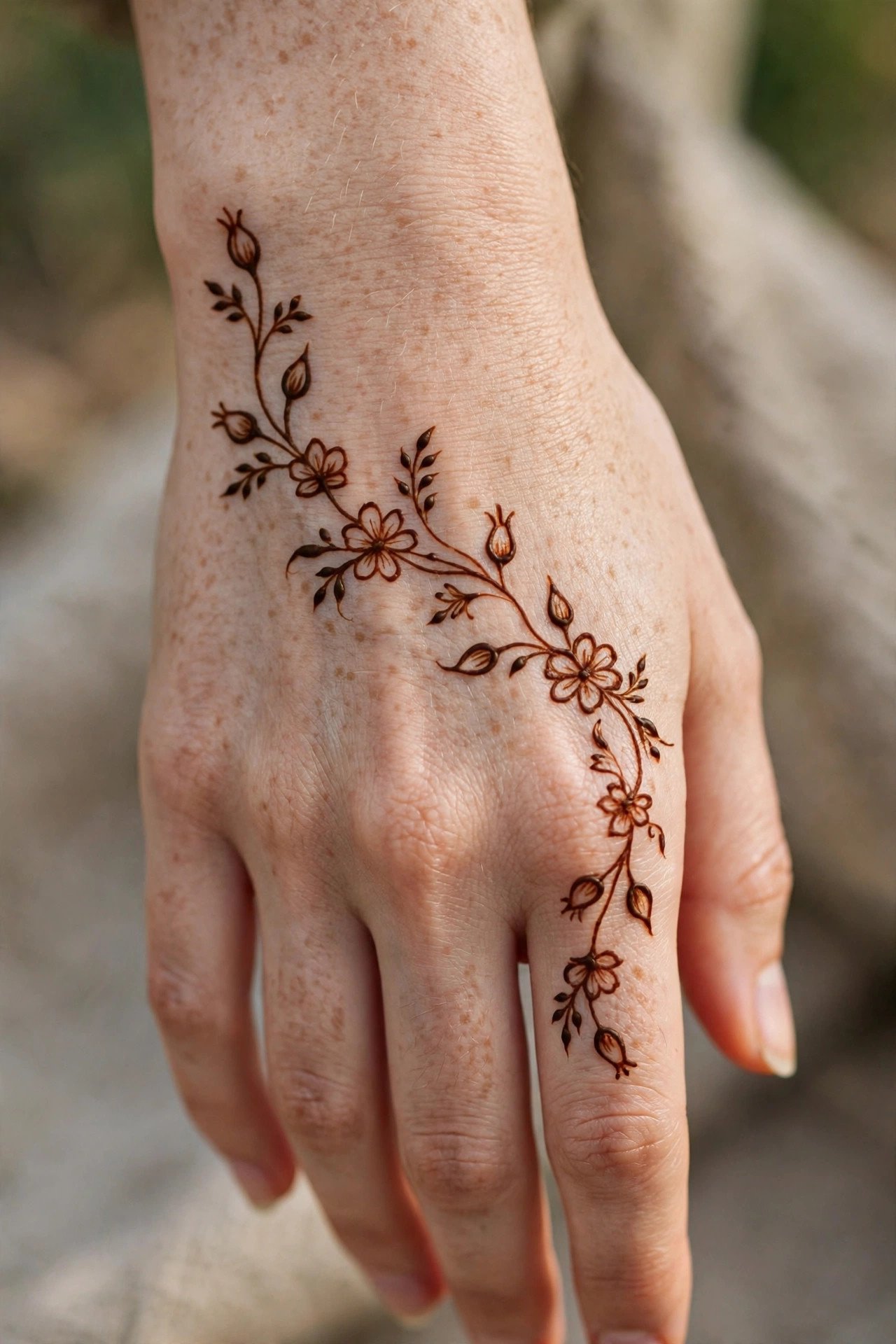
A trail of open flowers and unopened buds winding across the hand feels fresh and youthful, like a garland caught mid-bloom. The mix of full flowers and tiny buds keeps the eye moving, and the open spacing keeps it light. It takes about twenty minutes and suits daytime celebrations, garden parties, and wedding-guest looks.
10. Paisley Mandala Centre with Vines
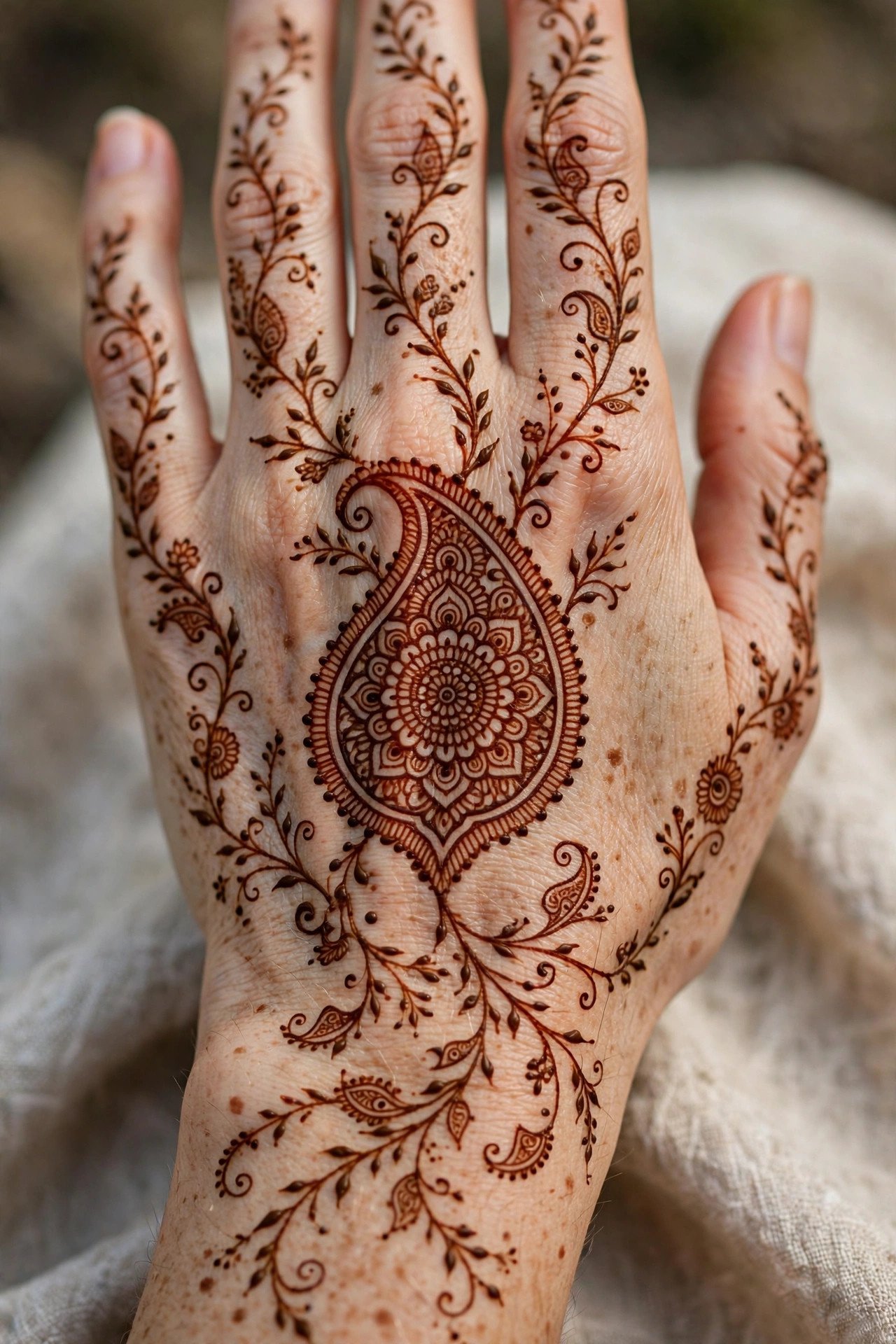
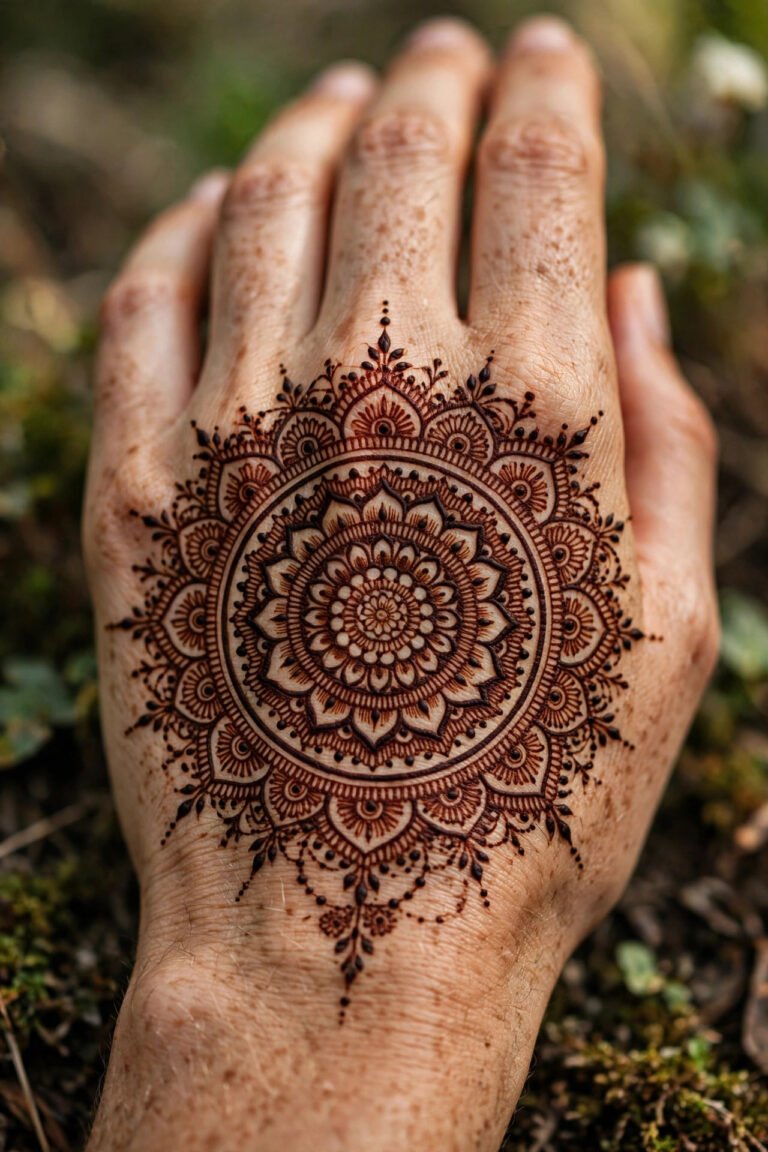
Set a paisley-shaped mandala in the centre of the hand and let vines radiate from it toward the wrist and fingers, and you get the best of both worlds: a focal point with Arabic flow. The mandala gives structure, the vines give movement, and the open skin between them keeps it wearable. Allow thirty minutes for the mandala detail.
11. Bold Arabic Flowers with Swirl Vines
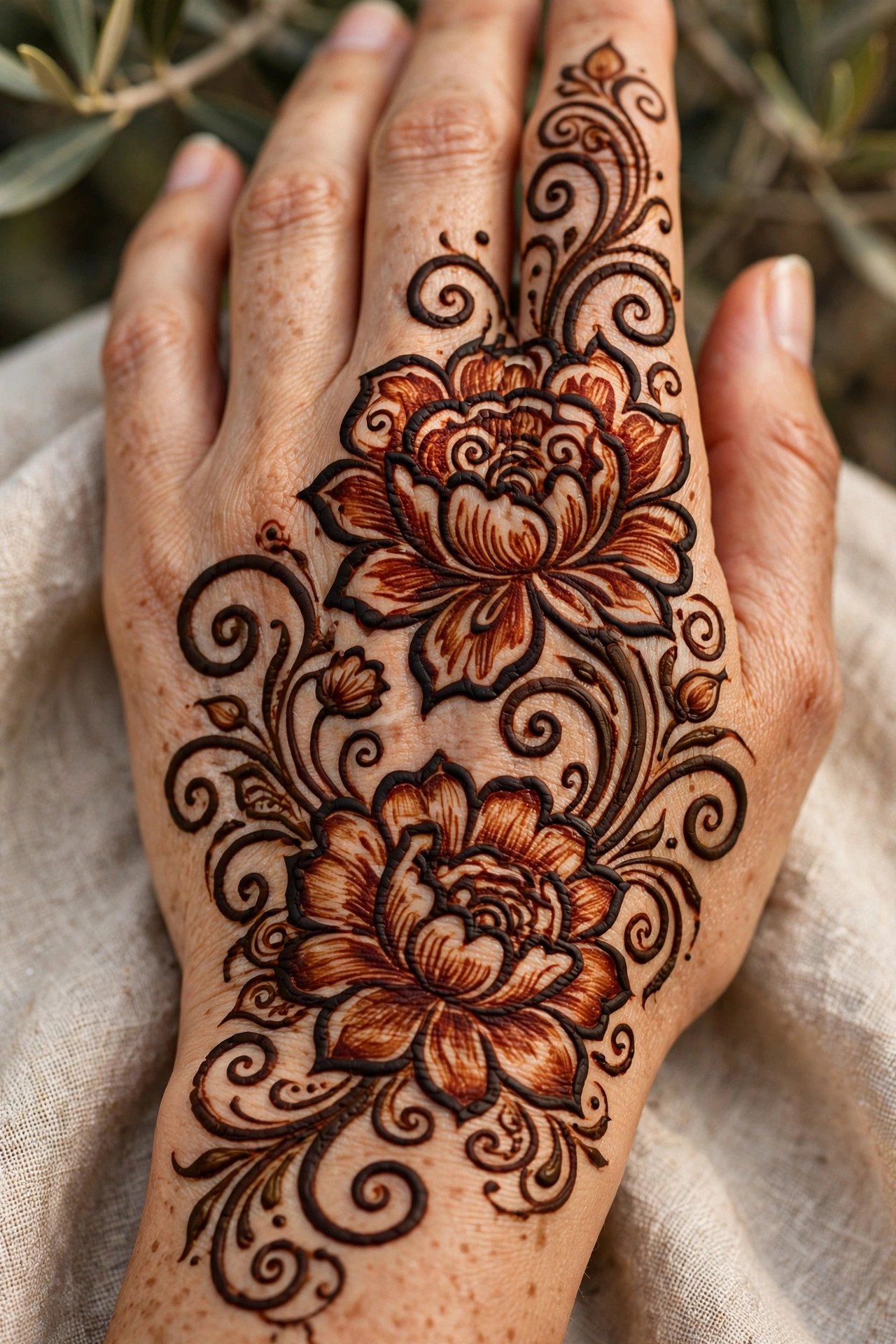
Oversized flowers connected by swirling, curling vines are pure Arabic drama — big, confident shapes with playful curls filling the gaps. The swirls stop the design feeling formal, so it works as well for a party as for a wedding. Twenty-five minutes, thick outlines, and a light hand on the curls are all it needs.
12. Paisley Duo with a Leafy Trail
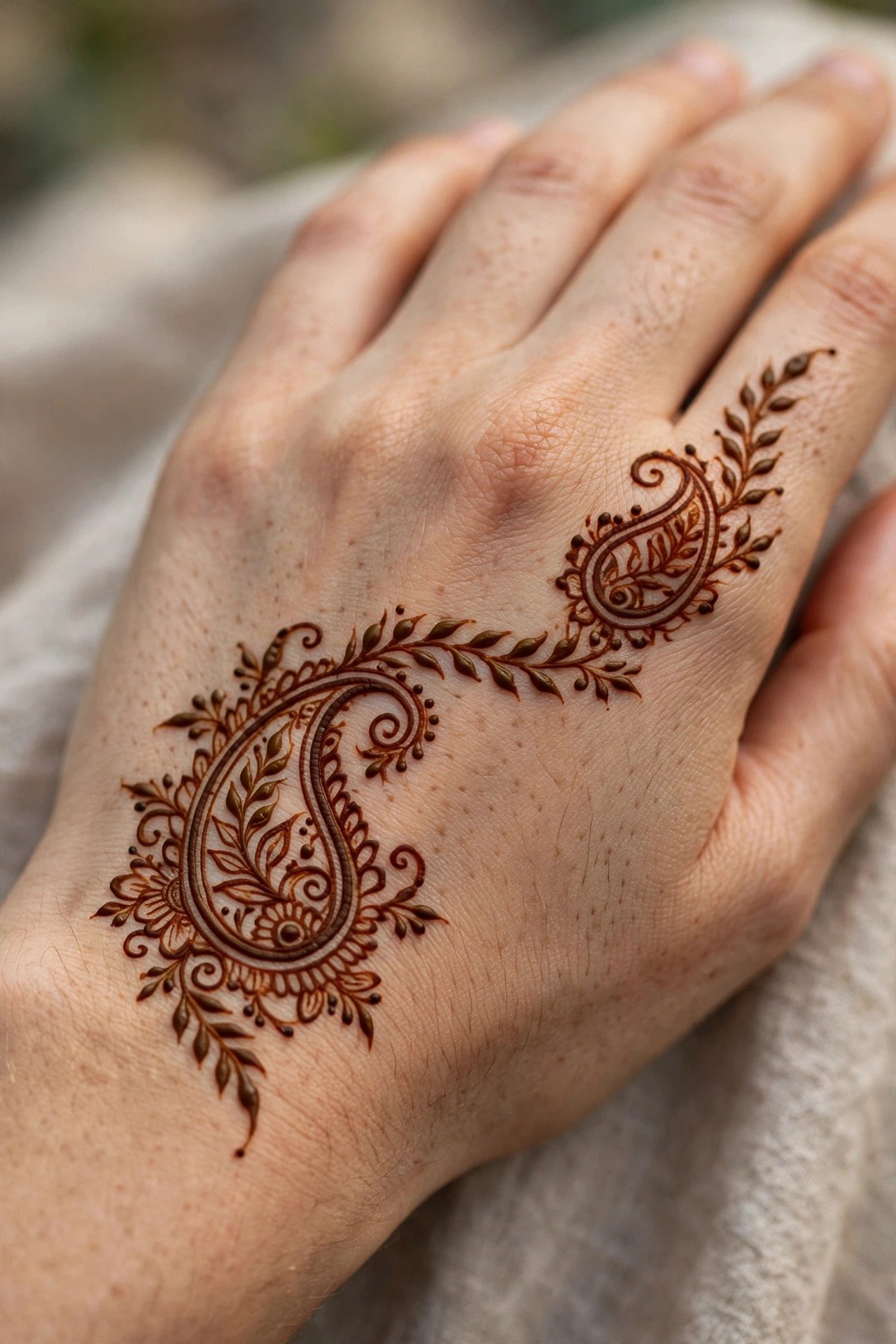
Two paisleys — one large, one small — linked by a leafy trail make a beautifully balanced design that fills the hand without covering it. The size contrast is what makes it interesting, and the trail ties the two motifs into one story. It takes about twenty-five minutes and looks lovely with a slim bracelet at the wrist.
13. Flowing Vine with Open Roses
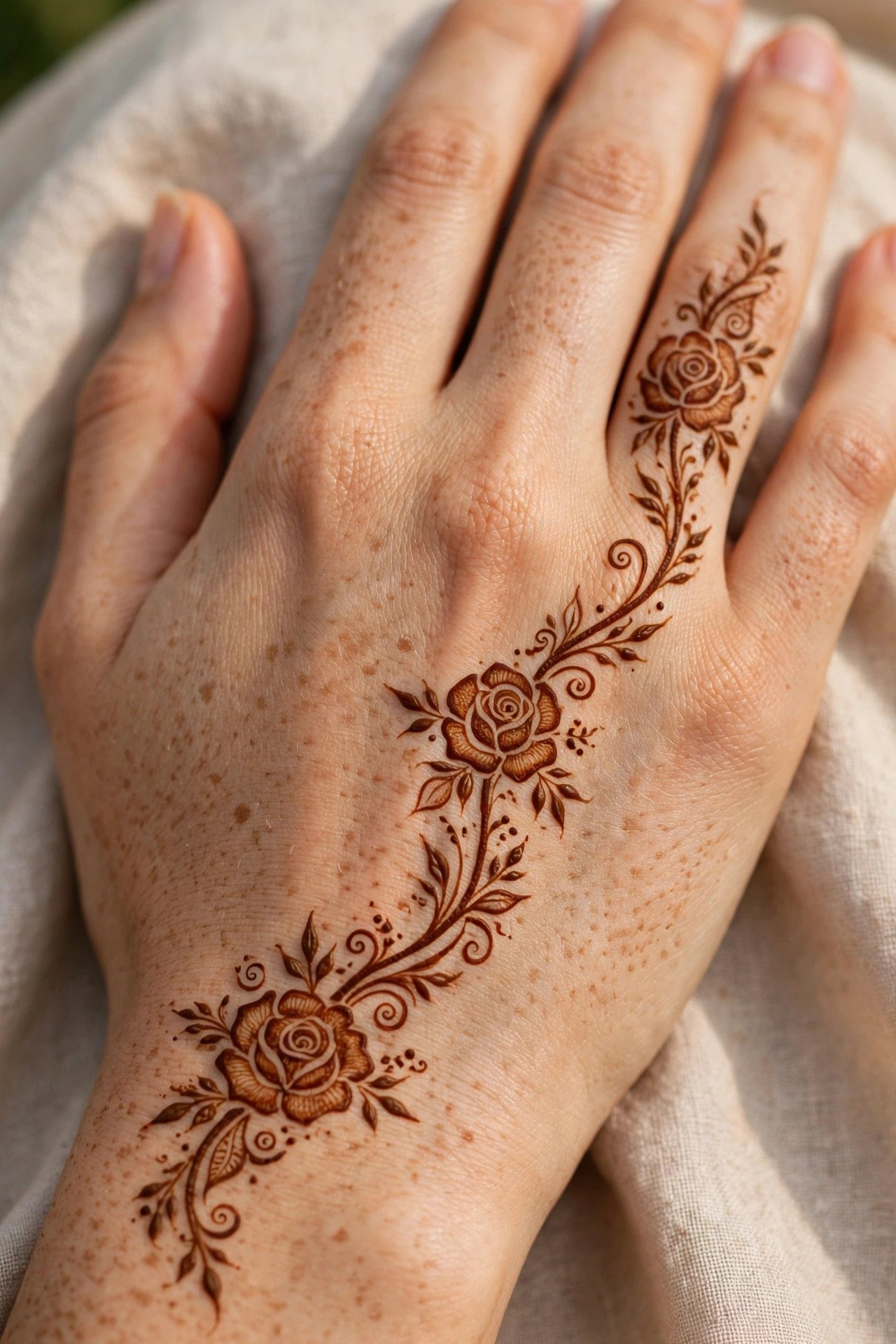
A single flowing vine carrying three open roses, spaced generously apart, is the minimalist end of Arabic design — and often the most elegant. Each rose gets room to breathe, the vine gives the hand direction, and the whole look takes twenty minutes. Choose this one when your outfit is already detailed and your hands should complement, not compete.
14. Grand Paisley with a Wrist Cuff
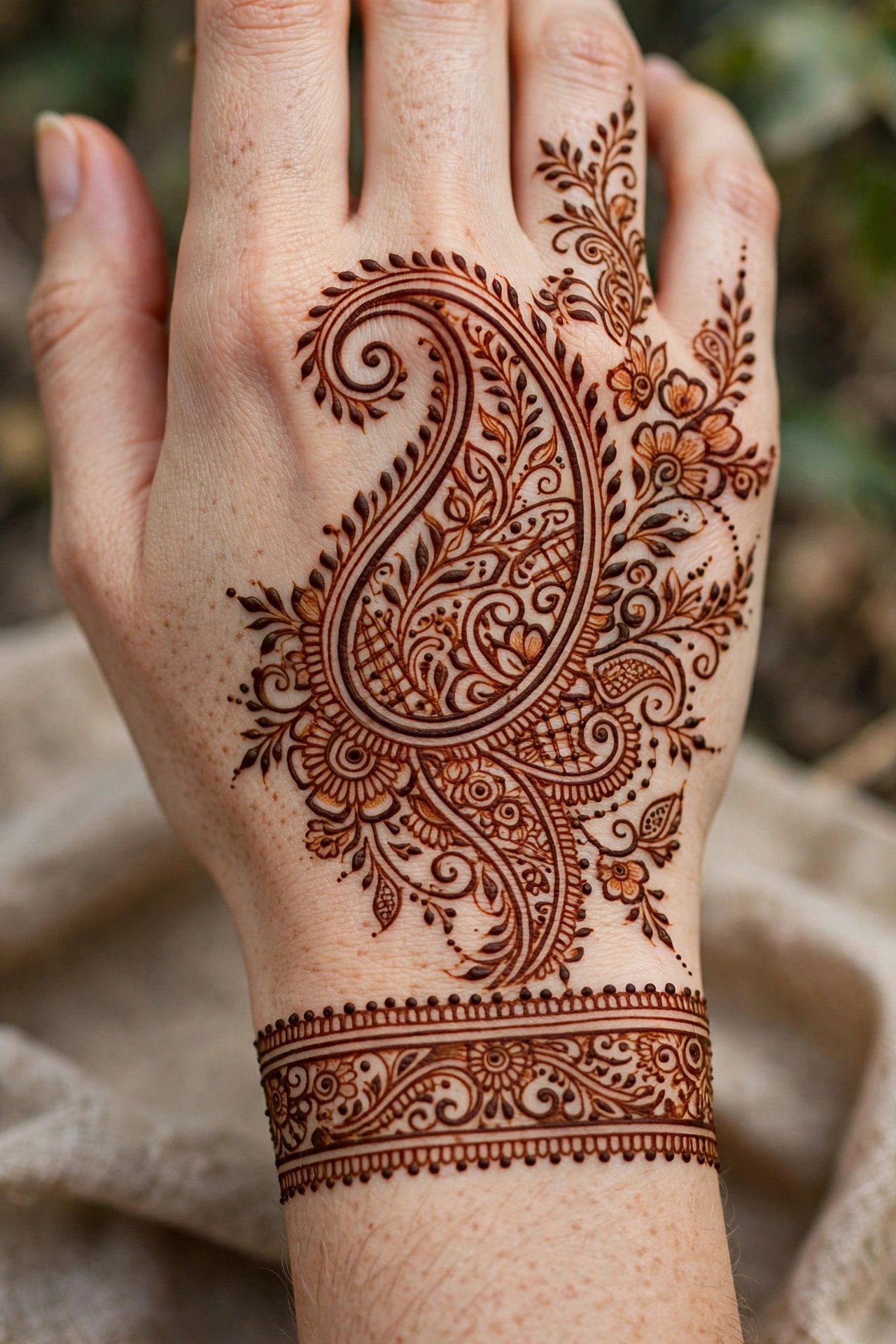
Finish with the grandest look in this list: a large paisley dominating the back of the hand, anchored by a decorative cuff band at the wrist. The cuff frames the design like jewellery, the paisley fills the hand with presence, and together they read unmistakably festive. Allow thirty-five minutes, and wear it with an open sleeve so the cuff gets its moment.
A few application and aftercare tips before you start: always do a patch test first, and apply henna to clean, dry skin with no lotion on it. Arabic designs rely on bold outlines, so use a cone with a slightly wider tip and keep your lines confident rather than sketchy. Let the paste dry fully, then leave it on for at least four to six hours — overnight gives the darkest stain. Avoid water for the first few hours after removing the paste, and dab on a little natural oil to protect the stain. Keep the design away from soap and scrubbing for the first day, and your Arabic mehndi will deepen into a rich colour that lasts one to two weeks.