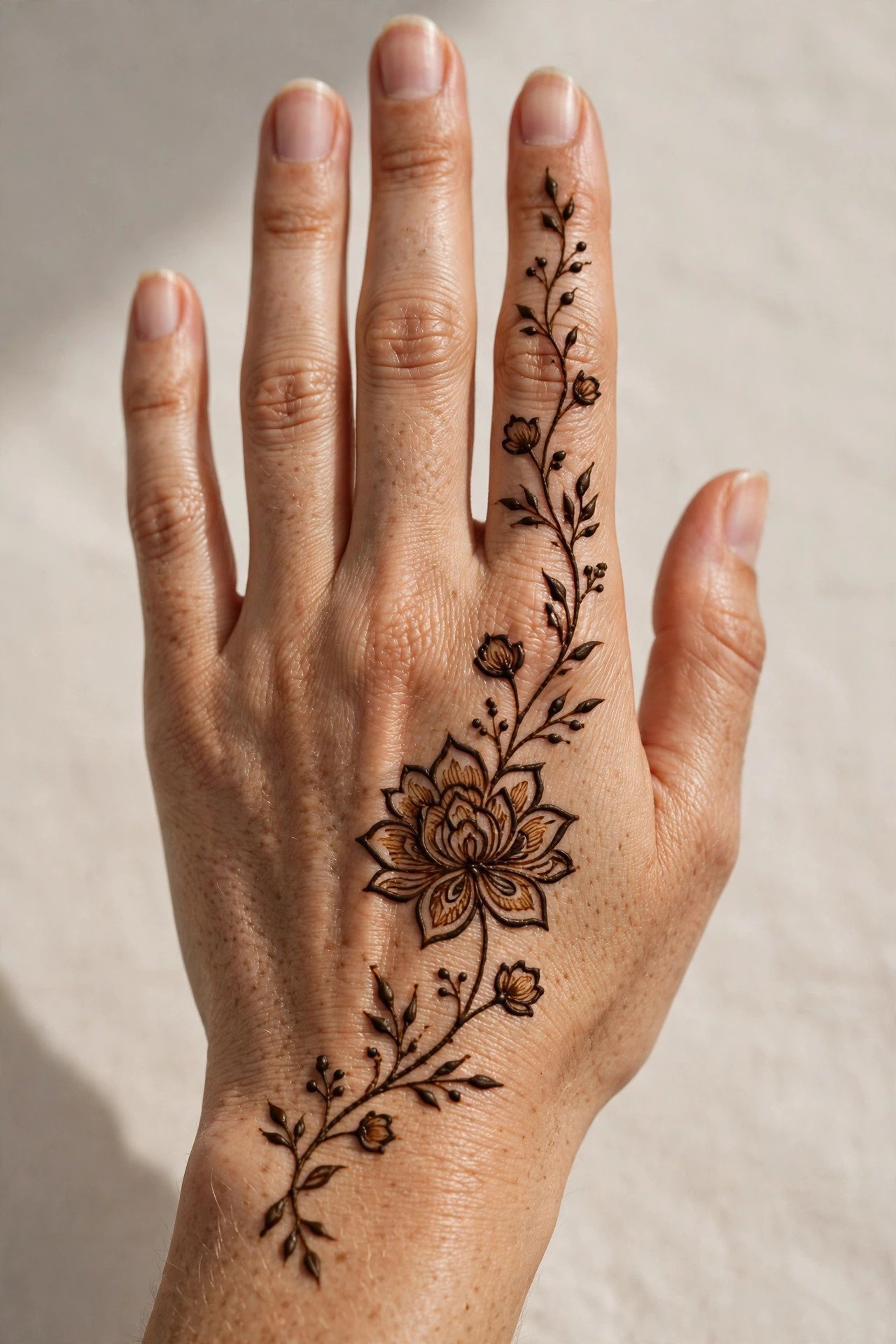
Simple back hand mehndi has a rule all its own: one vine, whole hand. Where bridal mehndi fills every inch, a simple back-hand design picks a single trail — wrist to finger, one flower, a little leaf — and then stops, leaving the rest of the hand bare. The bare skin is not empty space; it is what makes the vine look deliberate, elegant, and modern.
Here are fourteen simple back hand mehndi designs built around floral trails and vines. Each one takes minutes rather than hours, suits beginners as well as practiced hands, and photographs beautifully because the camera always knows where to look: along the vine, to the flower, and out to the fingertip.
1. Single Vine from Wrist to Finger
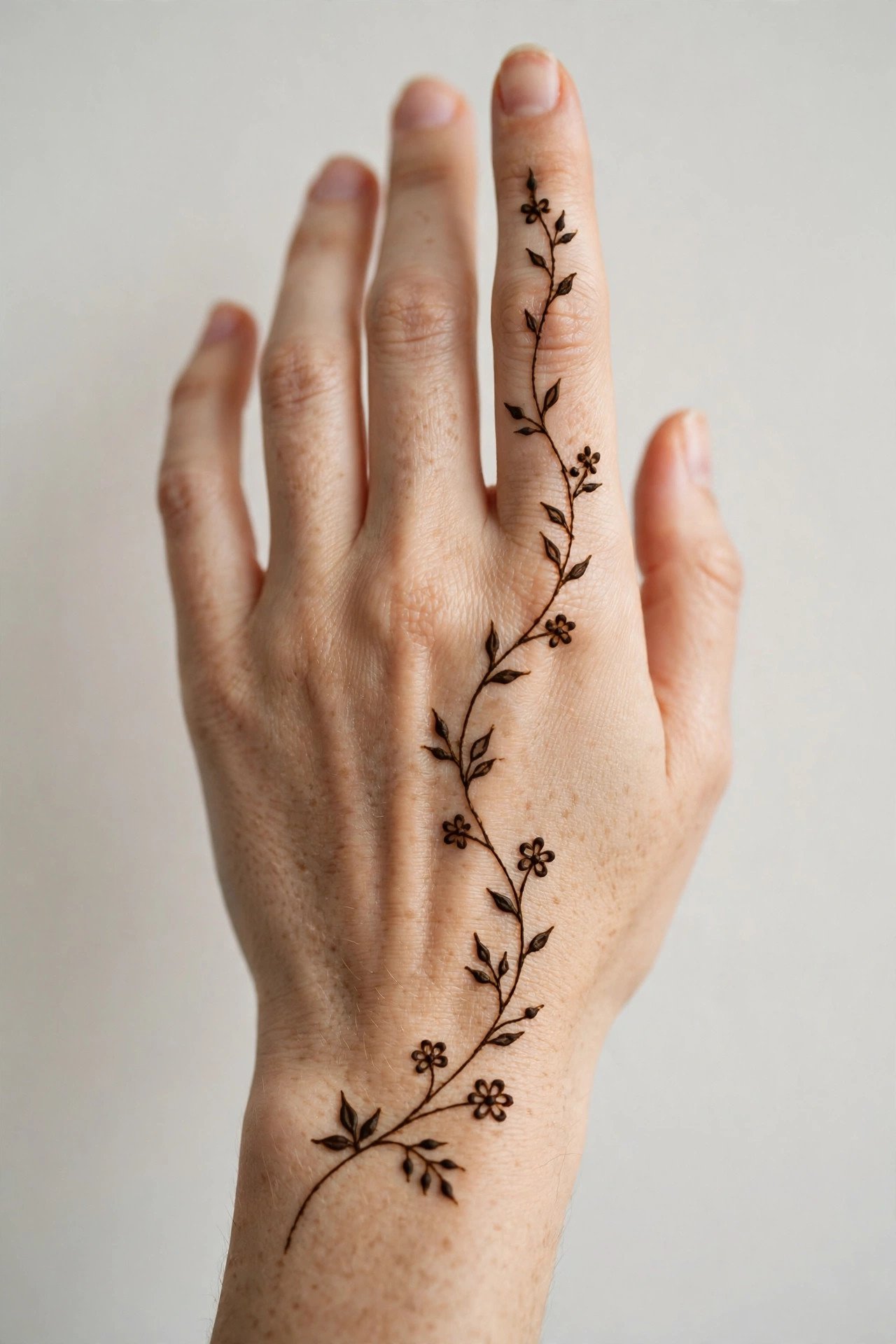
The classic simple design, and still the best: one thin vine with small flowers and leaves running from the wrist up a single finger. Nothing else competes with it, so the line itself has to be good — steady, unbroken, with leaves that alternate sides rather than clustering. It takes about ten minutes, suits every occasion from everyday wear to a celebration, and looks best with the hand relaxed so the vine falls in a natural curve.
2. Big Central Flower with Breathing Space

One big flower in the centre of the back of the hand, surrounded by generous bare skin and just a few small leaves. The breathing space is the design: without it, a big flower looks heavy, but with it, the bloom reads as a single piece of art on the hand. Draw the flower first, check it sits centrally when the hand is flat, then add only the leaves that balance it — no border, no filler, no second flower.
3. Small-Flower Vine Trail
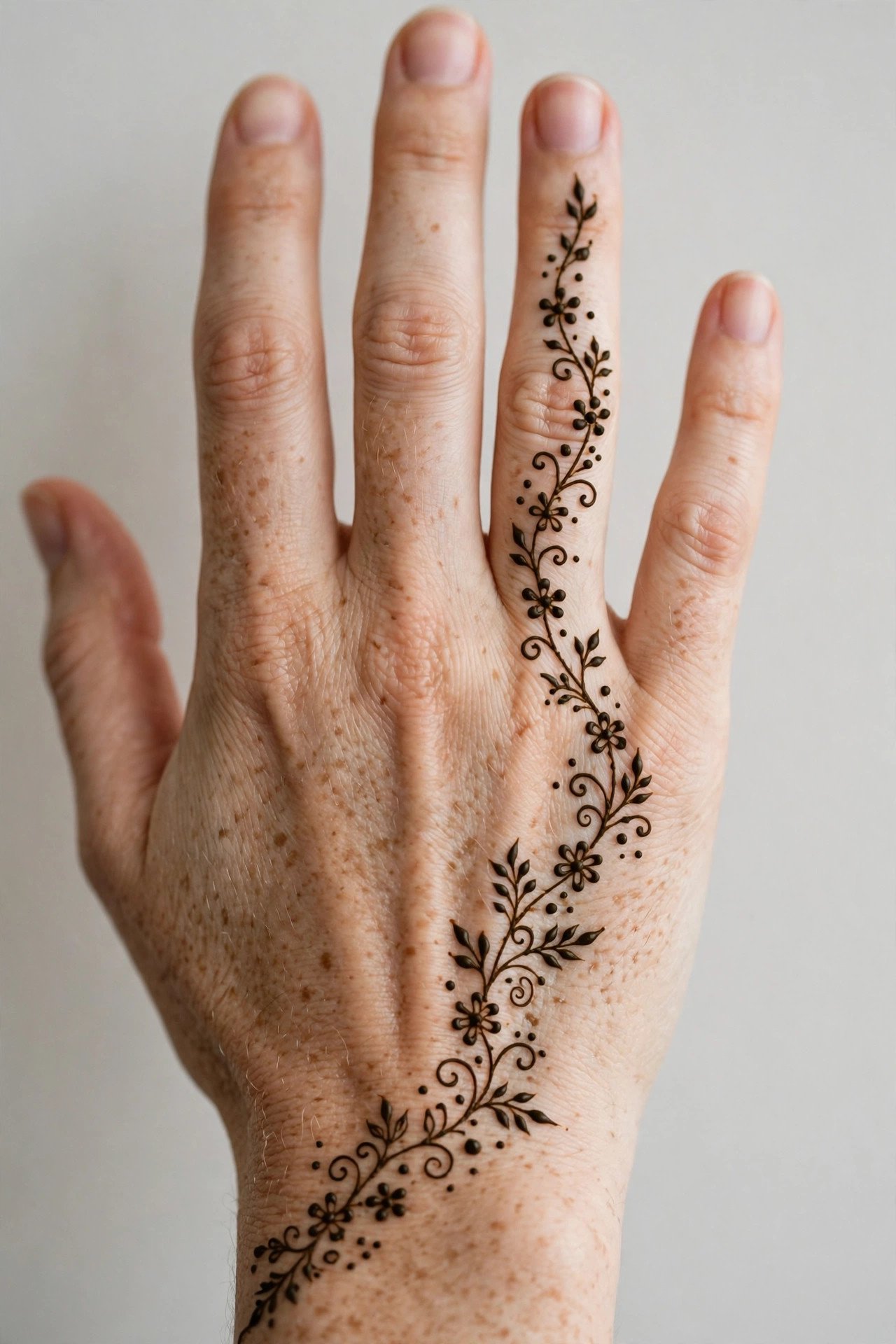
A delicate trail of tiny flowers and dots winds from the wrist to the ring finger, light enough to feel almost like a sketch. The small scale is forgiving — a slightly uneven petal disappears among its neighbours — which makes this a kind and confidence-building design for beginners. Keep the flowers small and the stem thin, and the whole trail stays airy instead of turning into a thick braid.
4. Scalloped Lace Trail up One Finger
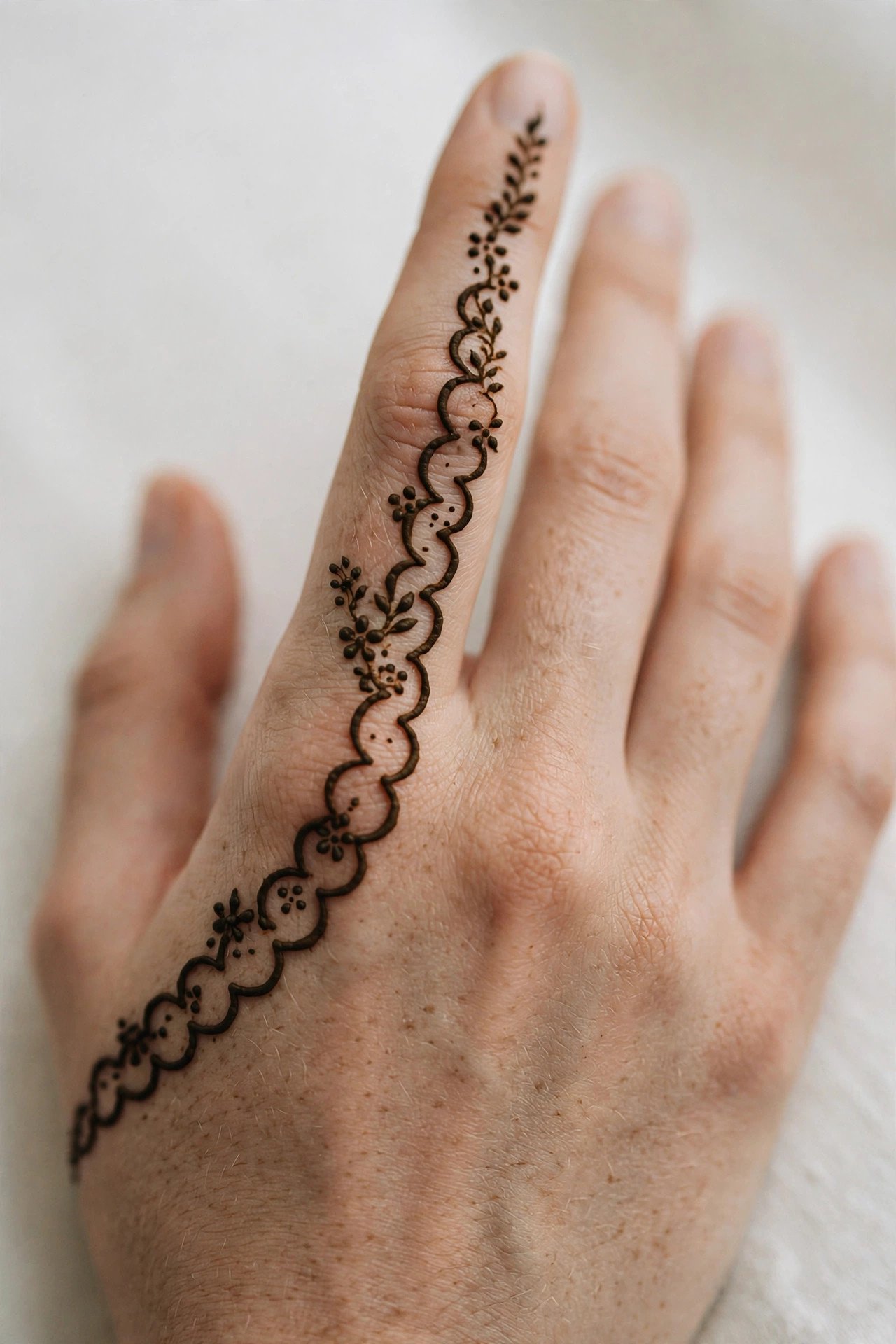
A fine scalloped lace line, dotted with tiny flowers, trails up a single finger from the back of the hand, while the rest of the hand stays bare. The finger focus makes this design feel like an accessory rather than a full hand pattern, and it pairs beautifully with a ring worn on a neighbouring finger. The scallops need a light touch — press too hard and the lace turns into a solid band — so practise the curve on paper first if your hand is new to it.
5. Paisley and Lattice Wrist Cuff
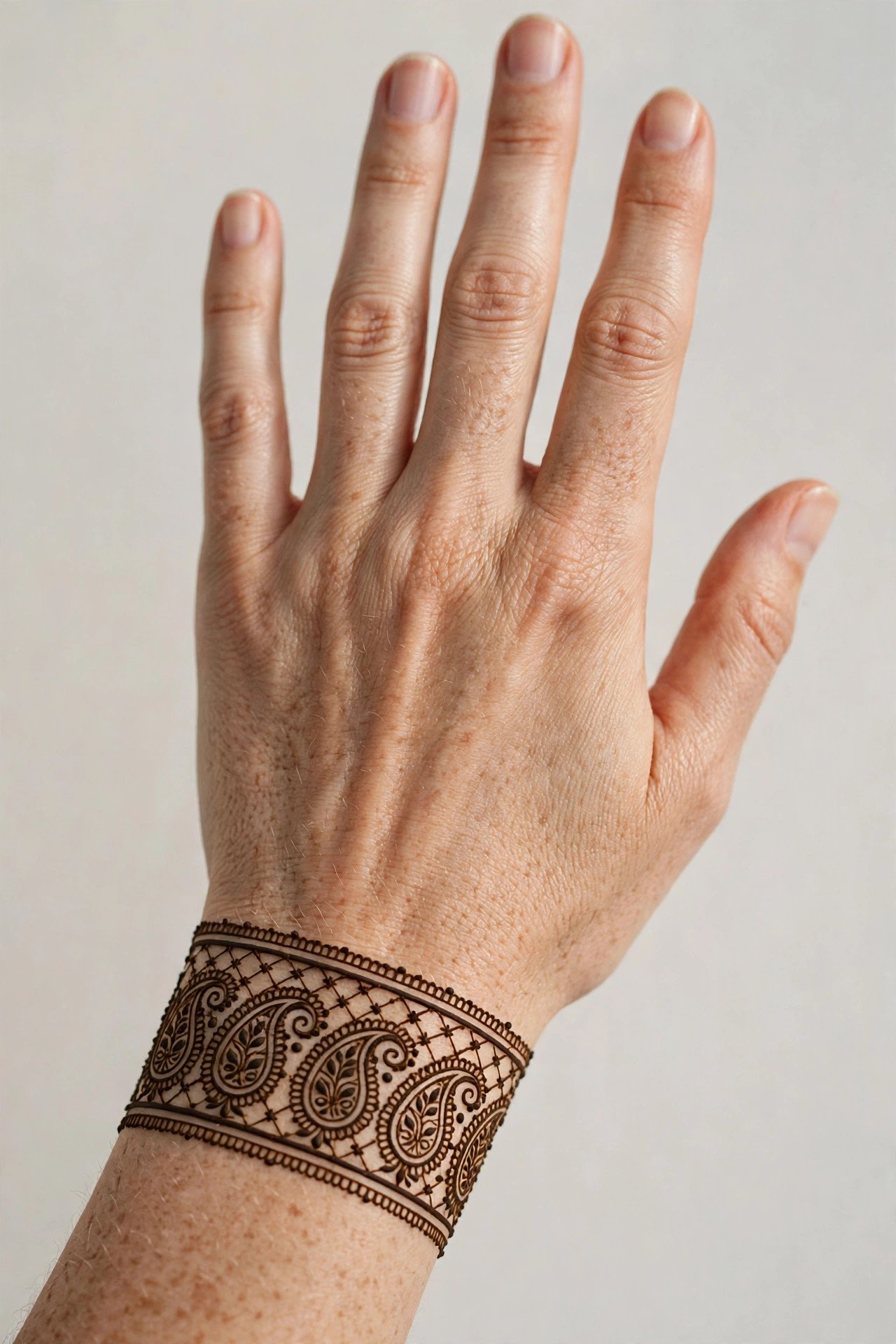
A small paisley and lattice cuff sits at the wrist, while the fingers stay open and bare. The cuff gives the hand a finished, bracelet-like edge without asking anything of the fingers, which makes it perfect for anyone who types, cooks, or simply dislikes henna between the fingers. The lattice keeps the cuff light — solid bands at the wrist can look heavy — and the paisley gives it one graceful, traditional note.
6. Rosebud Trail to the Ring Finger
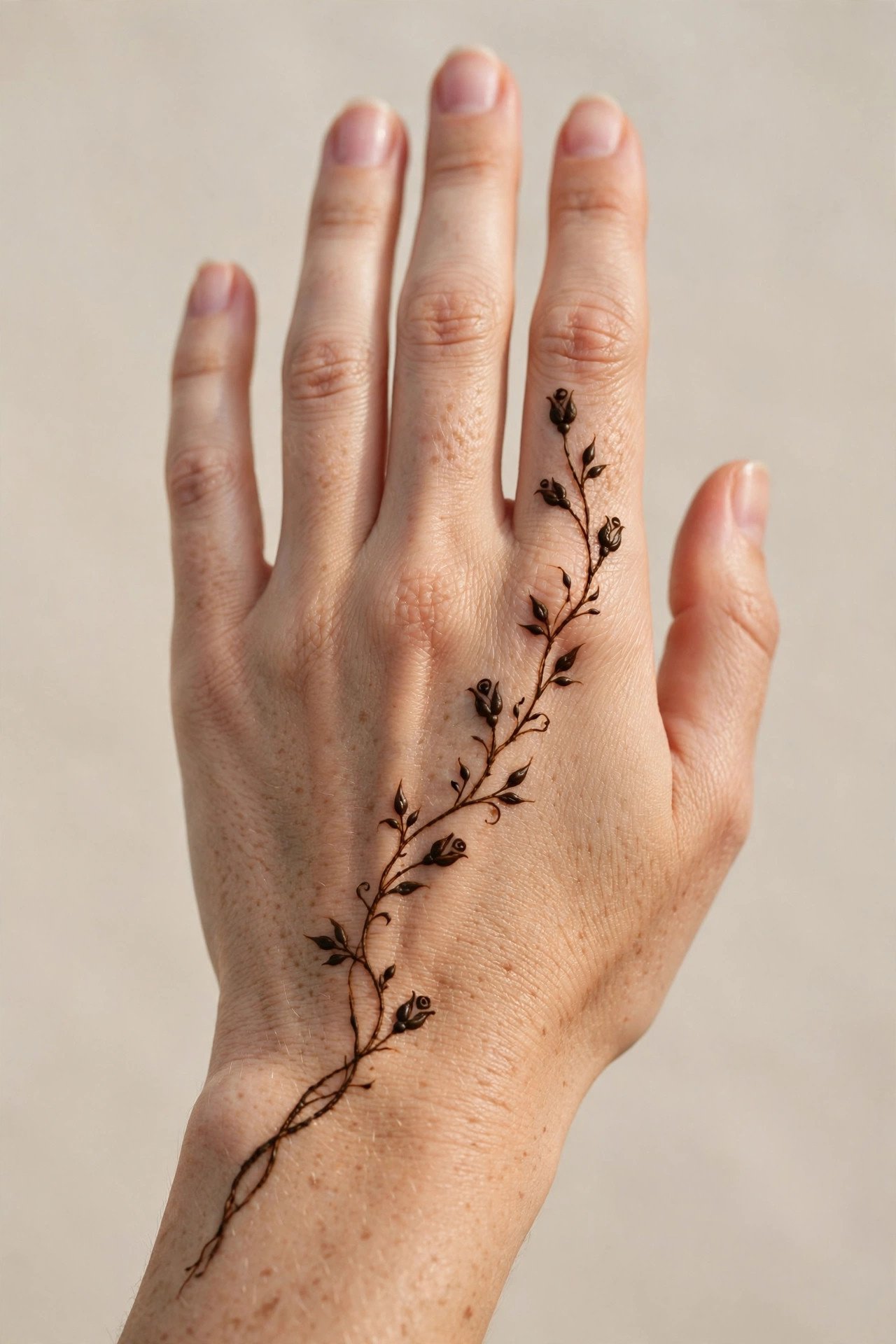
A thin vine of small rosebuds runs from the wrist to the ring finger, romantic without being fussy. Rosebuds are kinder than open roses — they are just layered teardrops — so this trail is well within a beginner’s reach, and the buds photograph as neat, even beads along the stem. It is a lovely choice for a celebration, especially when the ring finger will also carry a real ring: the buds lead the eye straight to it.
7. Leafy Vine with Tiny Buds
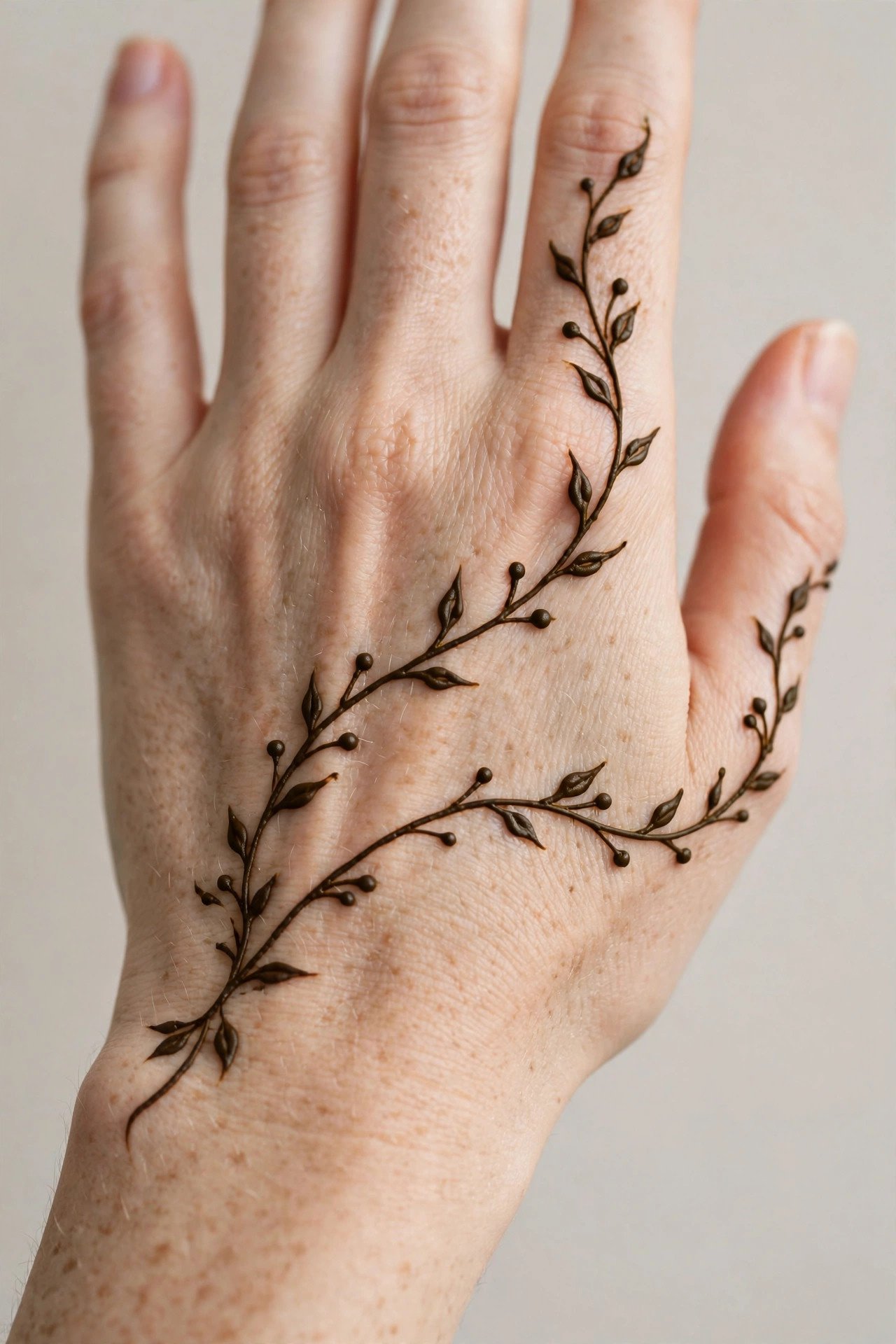
A slender vine with small leaves and tiny buds curves across the back of the hand toward the little finger. Leaves, not flowers, carry this design, which gives it a fresh, green feeling even in plain brown henna — and makes it faster than any floral trail, since a leaf is a single stroke. Let the vine curve rather than run straight: a gentle S-shape flatters the hand’s natural shape and keeps the eye moving.
8. Diagonal Vine Across the Back of the Hand
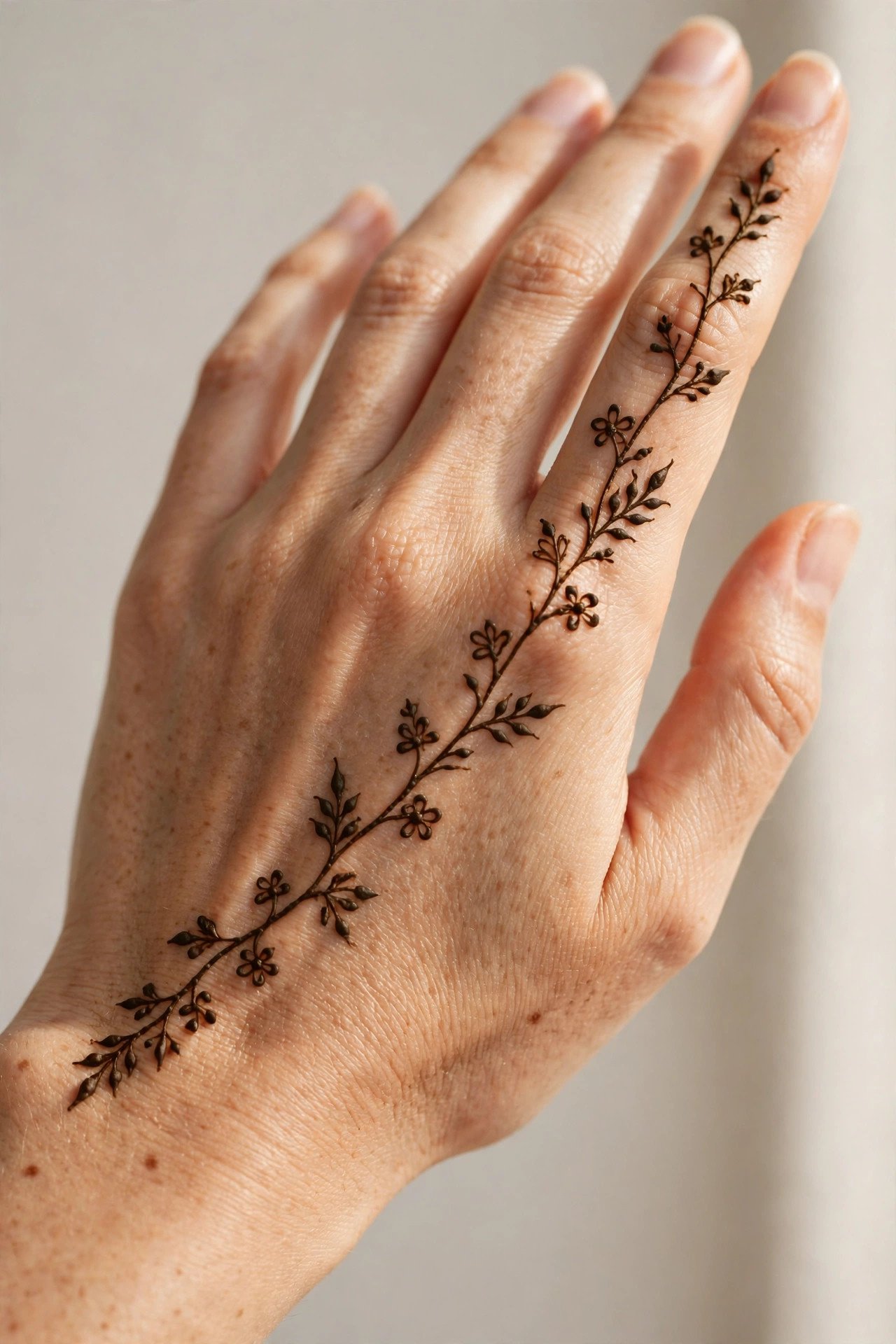
One simple floral vine runs diagonally across the back of the hand, from the wrist to the index finger. The diagonal is doing quiet work here: it makes the hand look longer, it avoids the stiff symmetry of a straight centre line, and it photographs with a natural sense of movement. Keep the flowers small and evenly spaced along the diagonal, and resist adding a second vine — the single line is the whole design.
9. Lotus Trail from Wrist to Little Finger
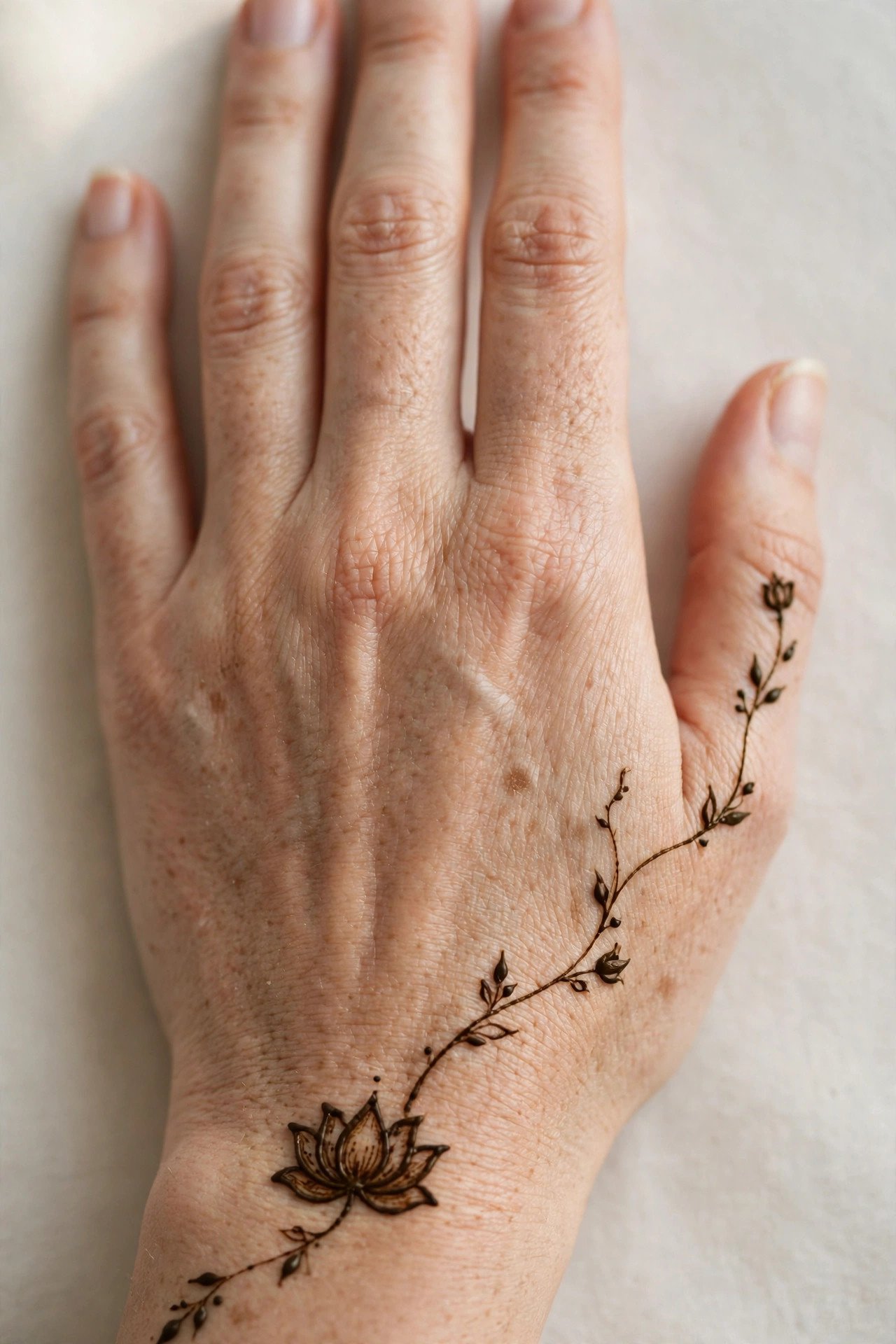
A small lotus bloom sits at the wrist, and a thin stem trails from it to the little finger. Starting the flower at the wrist rather than the centre of the hand is a gentle surprise, and it leaves the whole back of the hand open — a calm, uncluttered look that suits minimal styling. Draw the lotus petals symmetrically and keep the stem truly thin, or the trail will overpower the bloom it comes from.
10. Daisy Chain Vine
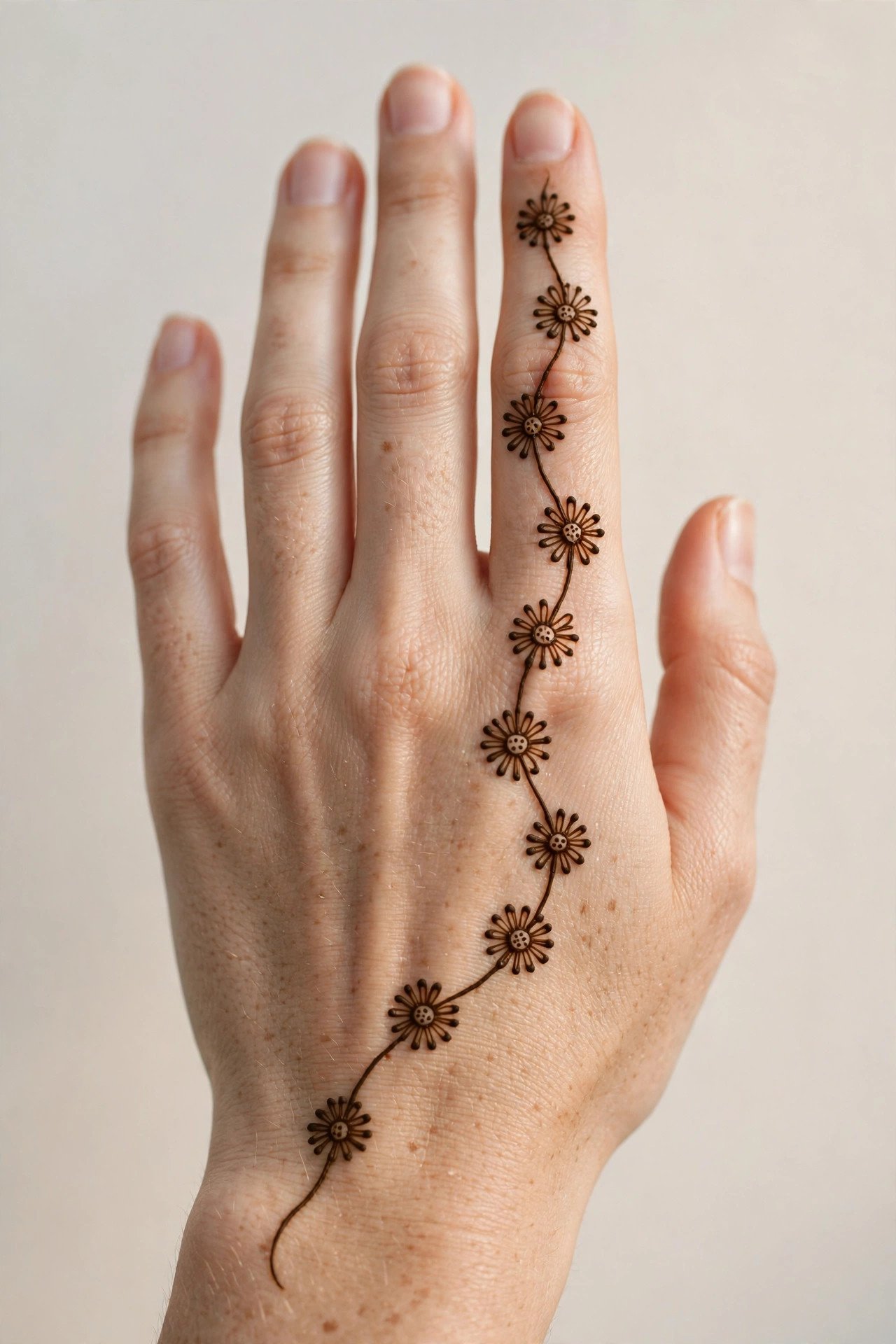
A trail of small, simple daisies linked by a thin stem runs across the back of the hand to the middle finger. Daisies are the friendliest flower in henna — round petals around a dot centre, no layering, no shading — so this is the design to choose when time is short or confidence is low. The chain effect comes from spacing the daisies evenly; cluster them and the chain becomes a bunch, so count the gaps as you go.
11. Curving Vine with Open Petals
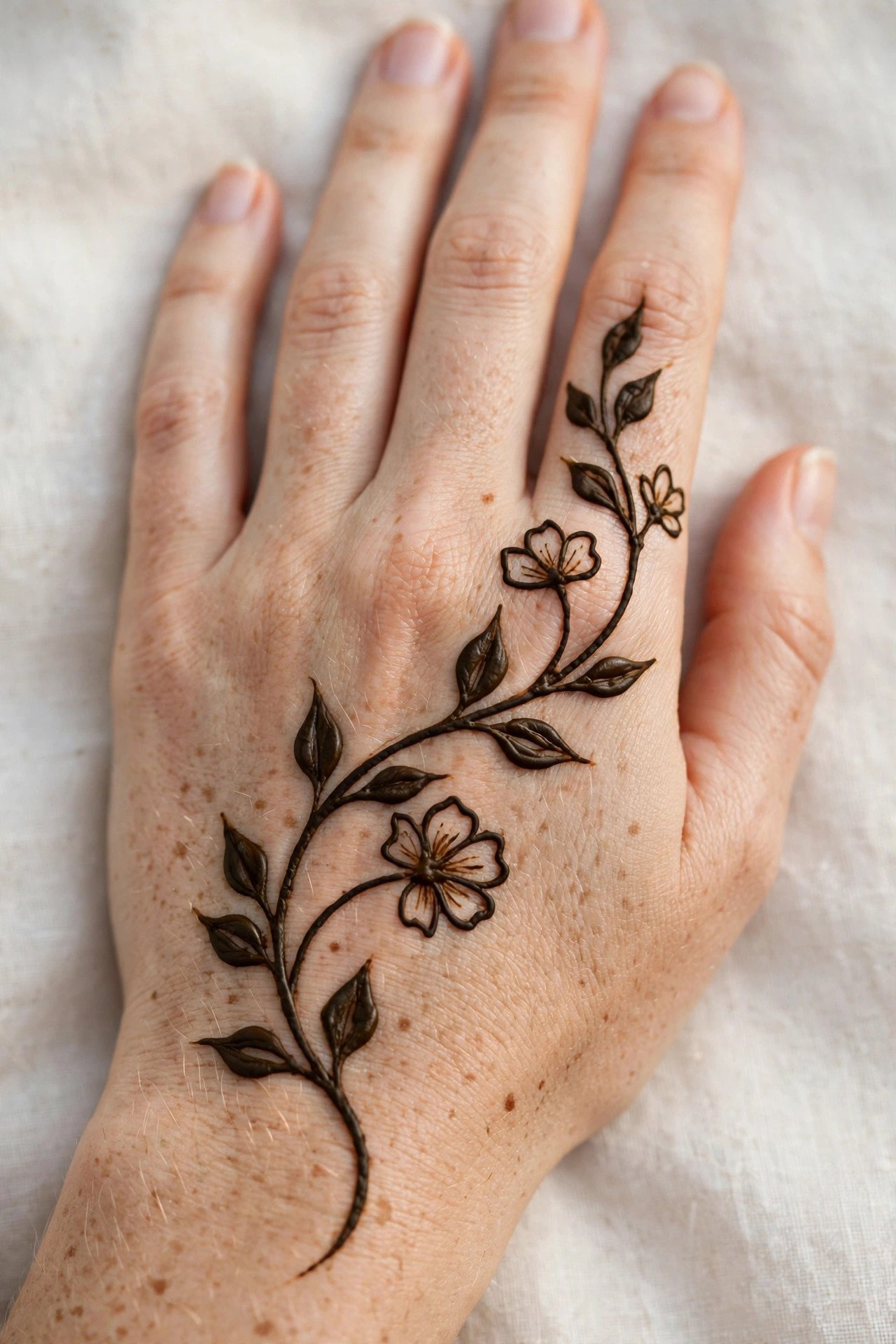
A gently curving vine with open-petalled flowers and a few leaves sweeps across the back of the hand. The open petals — drawn as outlines rather than filled shapes — keep the design light even though the flowers themselves are fairly large, and the curve gives the whole hand a sense of motion. This is the vine to pick when a single small trail feels too plain but a full floral pattern still feels like too much.
12. Minimal Jasmine Vine
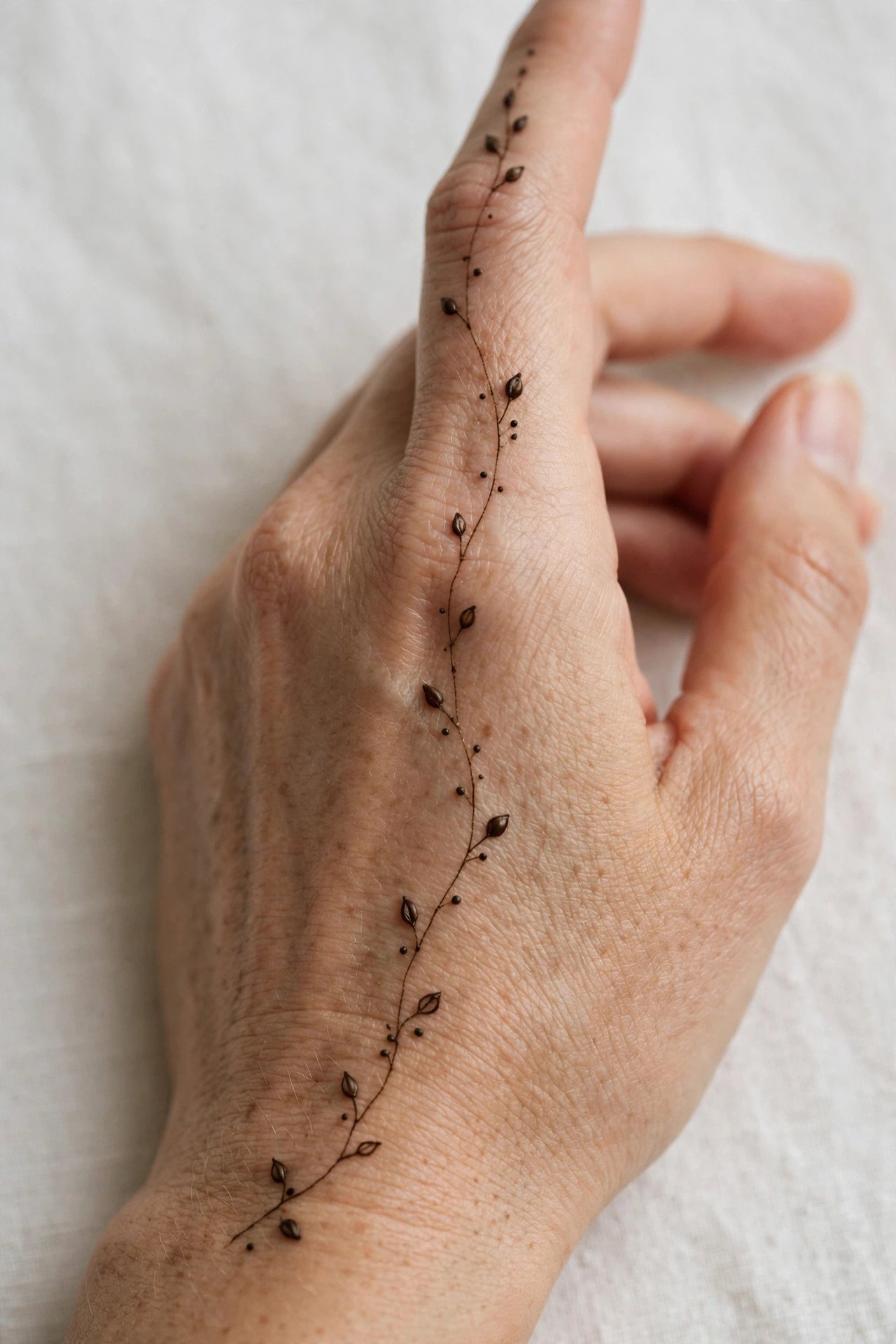
A very thin vine with tiny jasmine buds and dots runs from the wrist to the index finger — barely there, and deliberately so. This is the quietest design in the set, the one for everyday wear, work, and anyone who wants henna without announcing it. The thinness is the skill: use the finest cone tip you have, keep your hand steady, and let the dots do the decorating so the vine itself can stay almost invisible.
13. Two-Stem Vine Meeting at a Centre Flower
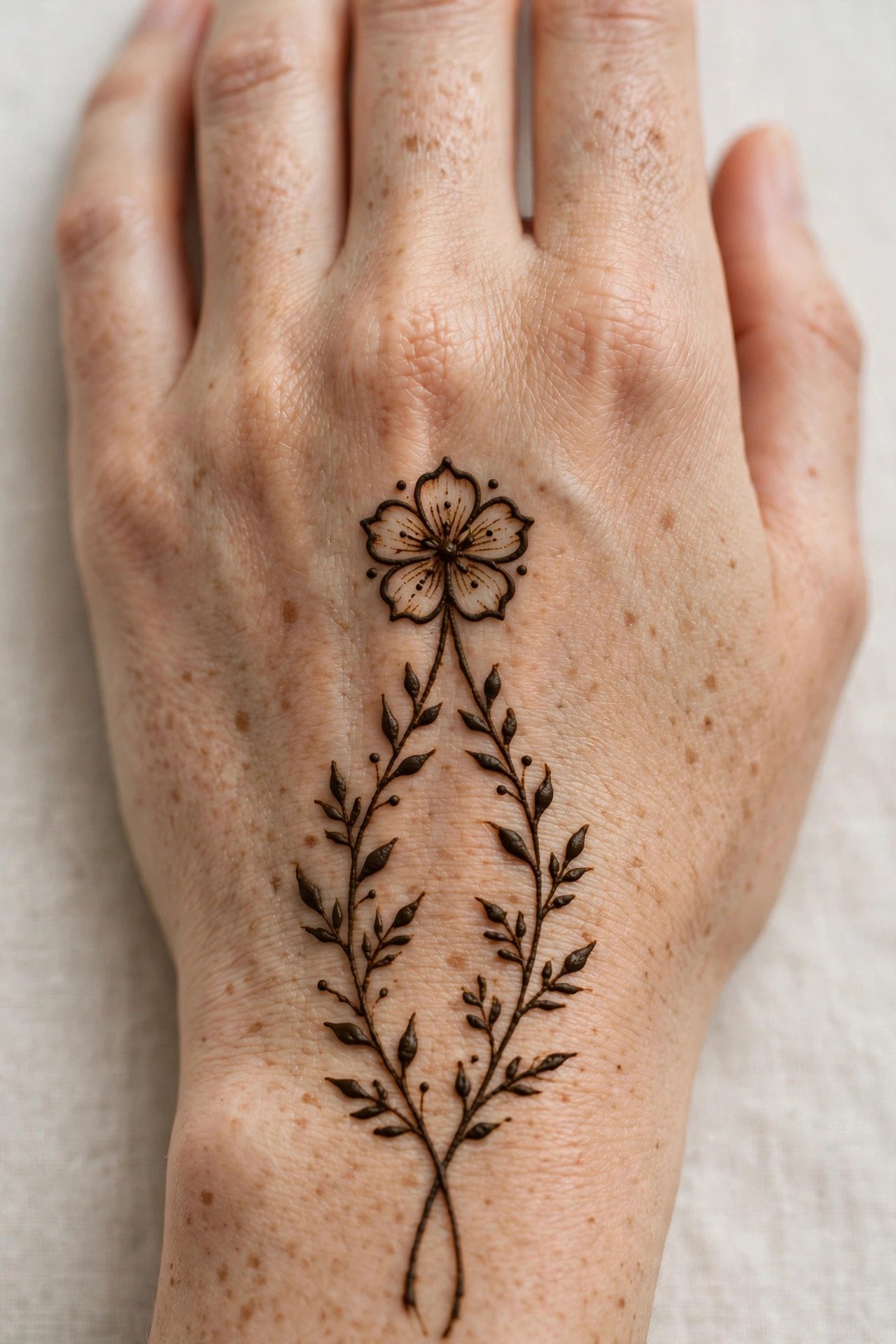
Two thin floral stems rise from the wrist and meet at one medium flower in the centre of the back of the hand. The symmetry feels balanced and complete without any fill, and the meeting flower gives the design a natural focal point for photographs. Keep both stems the same length and weight, and place the flower where the hand is widest, so the two stems frame it evenly rather than crowding one side.
14. Fingertip Vine with a Wrist Bloom
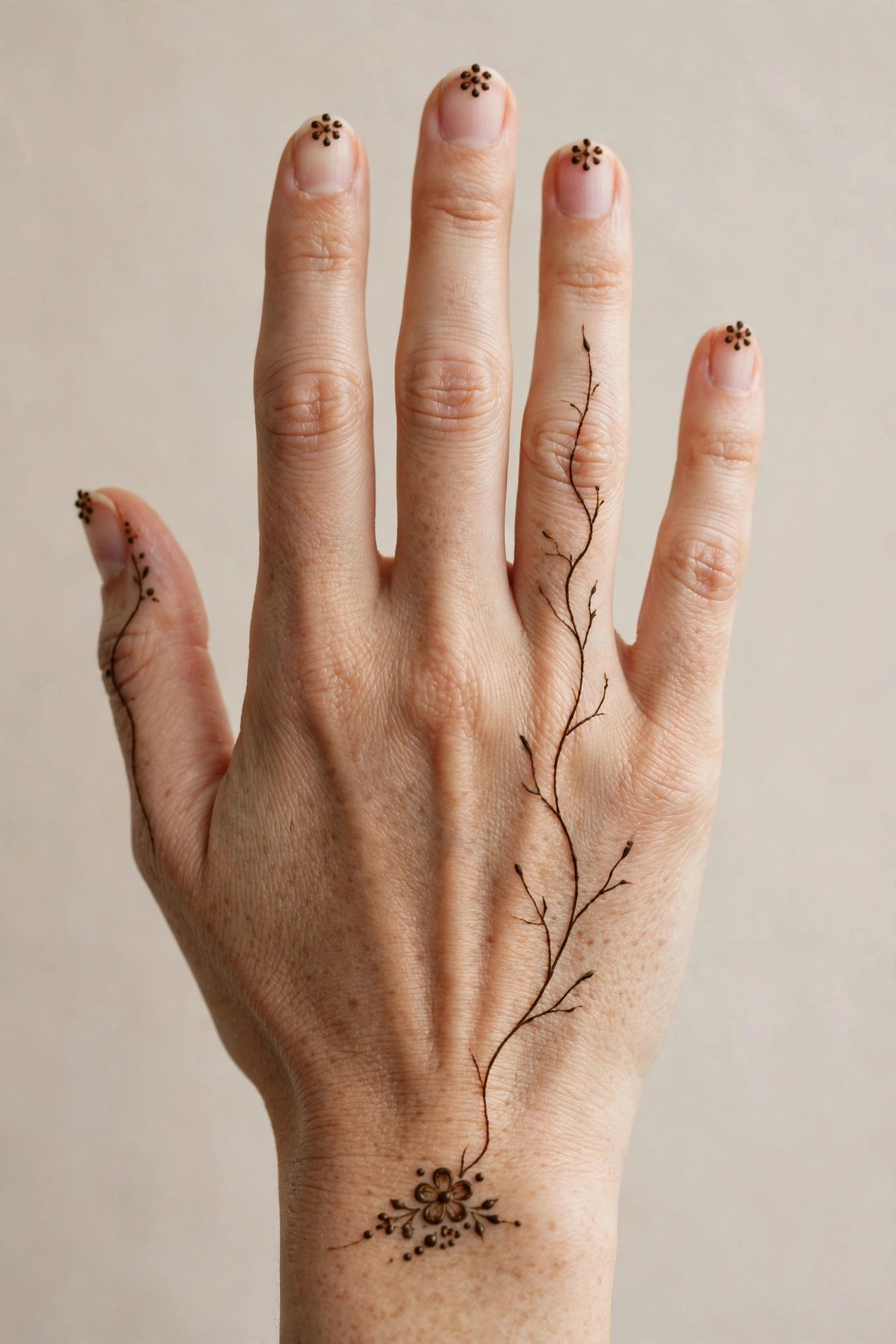
A small bloom at the wrist sends a fine vine up the hand, ending in tiny flowers at the fingertips, while the fingers themselves stay mostly bare. The two endpoints — wrist and fingertips — frame the hand beautifully, and the bare middle keeps the design from feeling busy. It is a graceful choice for photographs, since the eye travels the full length of the hand, and it works especially well with a bracelet that echoes the wrist bloom.
A few application and stain-care tips before you start: simple vines reward a steady, unhurried line, so rest your working hand on a table and draw with the receiving hand flat. Use a fine cone tip and practise the vine’s curve on paper once before committing to skin — a vine cannot be undone mid-line. Let the paste dry completely, keep it on for four to six hours for a good stain, and dab lemon-sugar only after drying to seal it. Avoid water for the first twelve hours after removing the paste, and use a natural oil rather than lotion to keep the colour deep. Simple designs fade gracefully, so a little care at the start buys you several extra days of a beautiful trail.