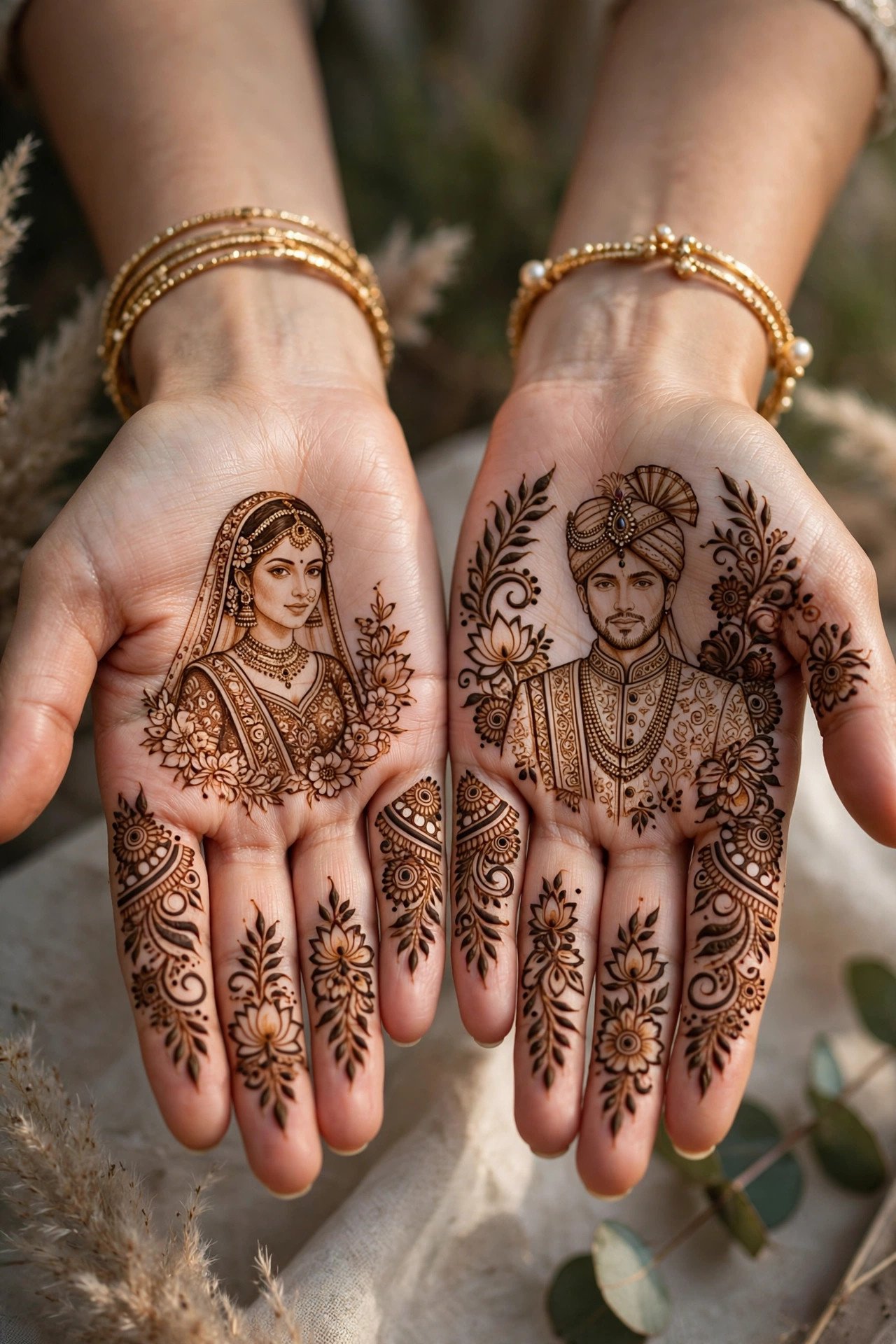
Dulha dulhan mehndi turns bridal henna into storytelling: instead of only flowers and paisleys, the bride’s hands carry portraits of the couple — the bride on one palm, the groom on the other, or the two together in a single scene. When the hands come together, the portraits meet, and that moment has become one of the most photographed details of the modern wedding.
Here are fourteen dulha dulhan mehndi designs, each chosen for a real reason: a portrait style, a framing idea, or a classic format that lets the couple take centre stage. From fine-line portraits and mandap arches to peacock accents and name bands, every design keeps the bride and groom as the heroes — surrounded by the florals and detail that make bridal mehndi so rich.
1. Bride and Groom Portraits on Palms
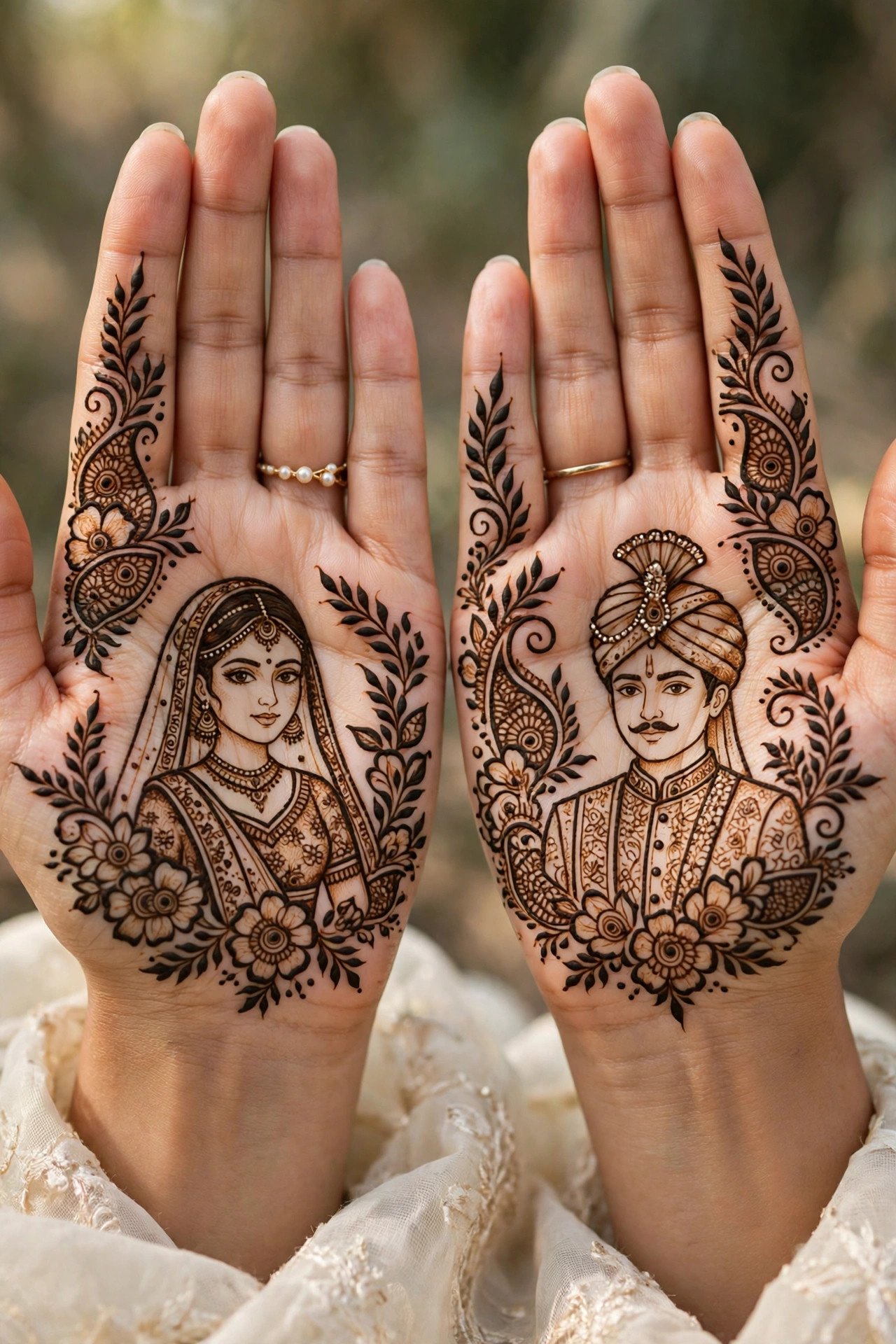
One palm carries the bride’s portrait, the other the groom’s, and when the hands join, the couple stands together. This is the signature dulha dulhan design: detailed faces, traditional wedding attire, and florals framing each portrait. It needs a skilled artist and a patient session, but the joined-hands photo is worth every minute.
2. Dulha Dulhan on the Back of Hands
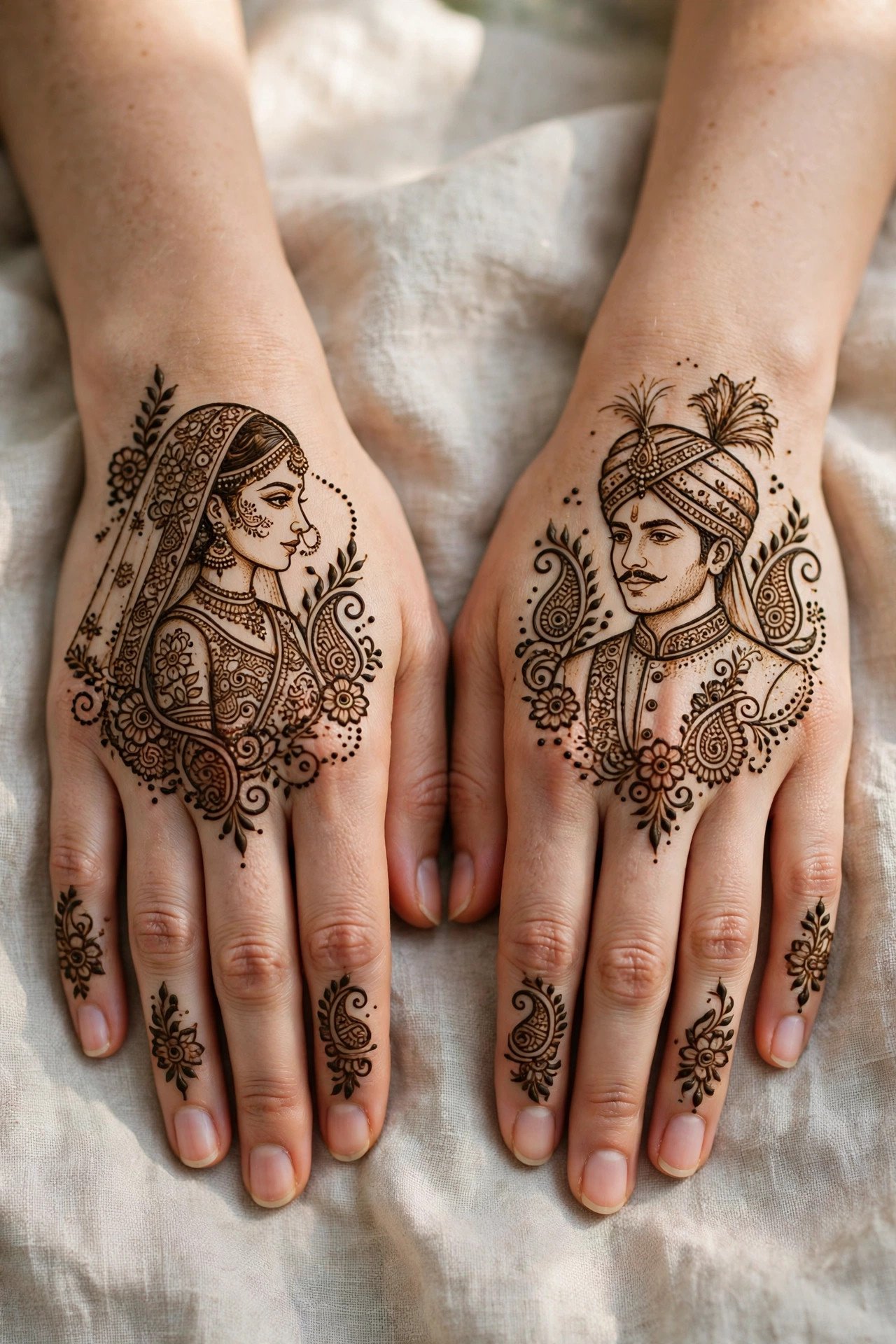
Portraits on the backs of the hands put the couple on display in every gesture — waving, holding flowers, showing rings. The back-of-hand format suits slightly smaller, cleaner portraits framed by paisleys and dots, and it photographs beautifully in candid shots. It is a lovely alternative when the palms carry a different design.
3. Wedding Couple with Floral Frame
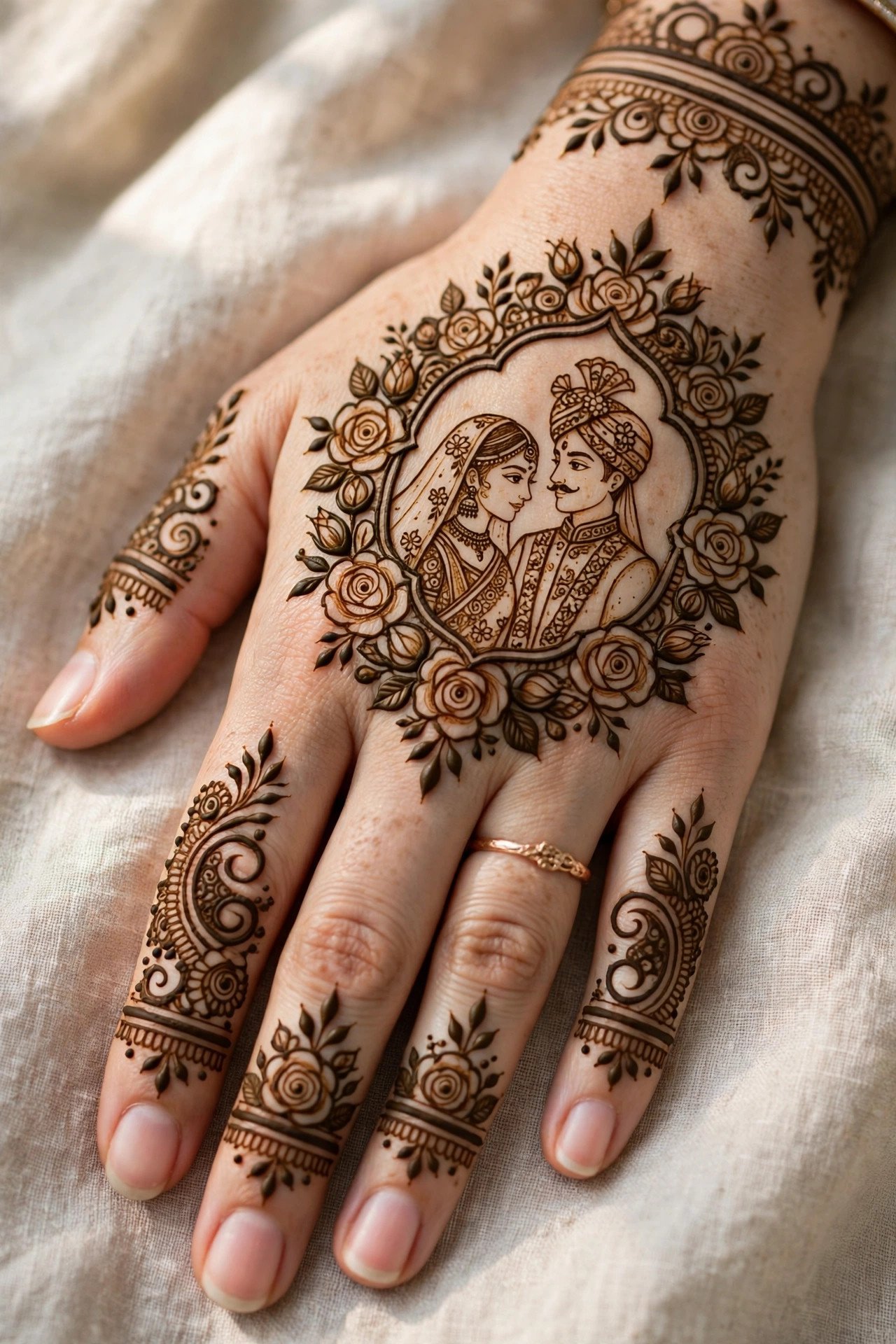
The couple portrait set inside a full floral frame — roses, leaves, and buds bordering the scene — gives dulha dulhan mehndi a garden-like romance. The frame draws the eye inward to the couple, and the florals fill the hand without competing with the faces. It is a soft, romantic take on the portrait tradition.
4. Dulha Dulhan with Jaali Background
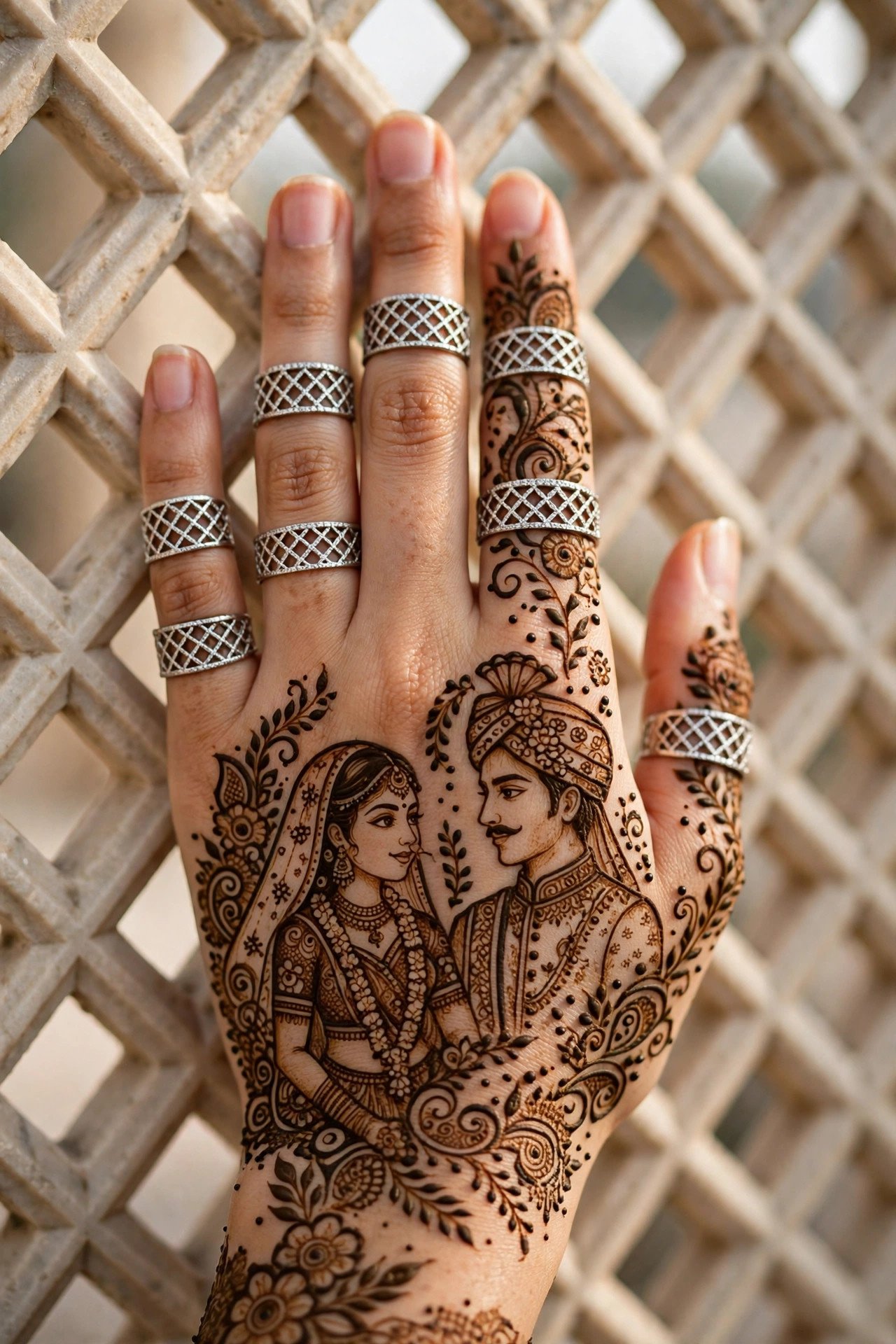
A jaali lattice background behind the couple portraits adds royal structure to dulha dulhan mehndi: the neat diamonds contrast with the soft portrait lines, and the whole palm reads as a framed miniature painting. Keep the lattice fine so the faces stay the clear focal point, and let the fingers carry matching lattice bands.
5. Bride Portrait with Groom’s Turban Detail
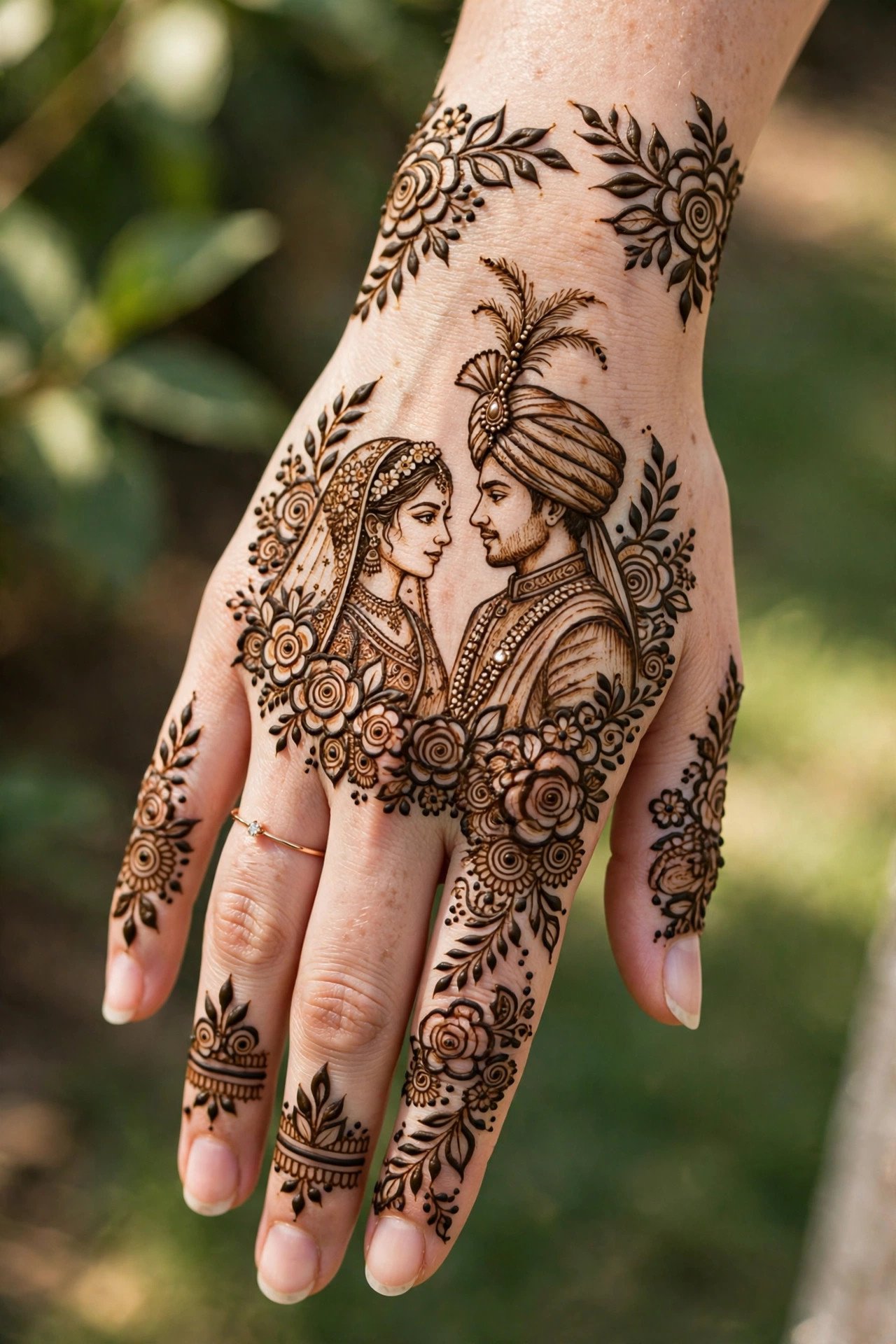
A bride portrait paired with the groom’s turban rendered in fine detail — folds, jewel, and plume — celebrates the groom’s attire as its own artwork. The turban detail gives the design a regal accent, while the bride’s portrait carries the softer florals. Together they balance grandeur and grace on a single hand.
6. Couple Portraits with Paisley Borders
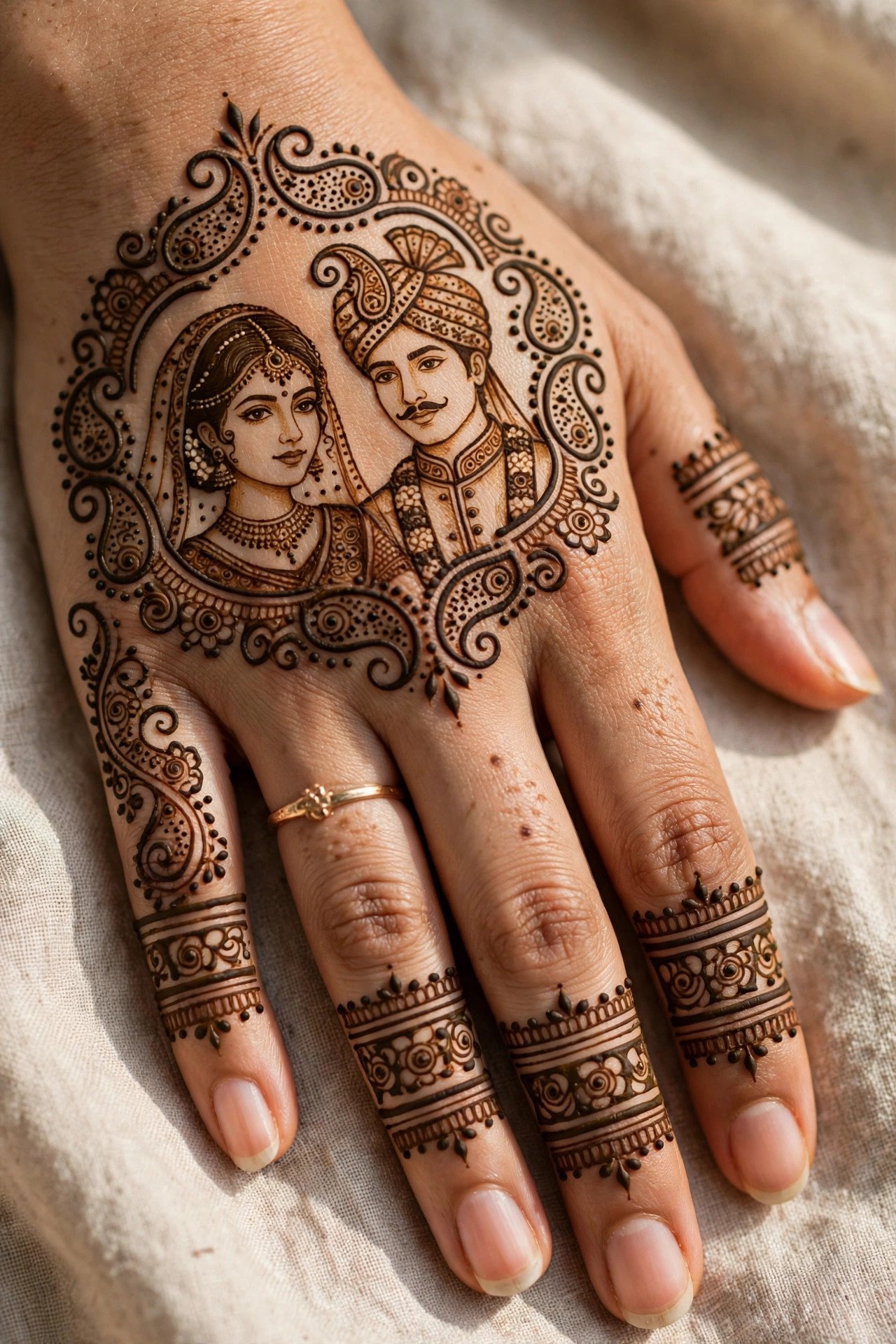
Paisley borders curling around the couple portraits give dulha dulhan mehndi its most traditional frame: teardrops and dots enclosing the scene like a classic border. The paisleys add bridal richness without stealing attention from the faces, and they extend naturally onto the fingers. It is a timeless, elegant format.
7. Dulha Dulhan with Mandap Arch
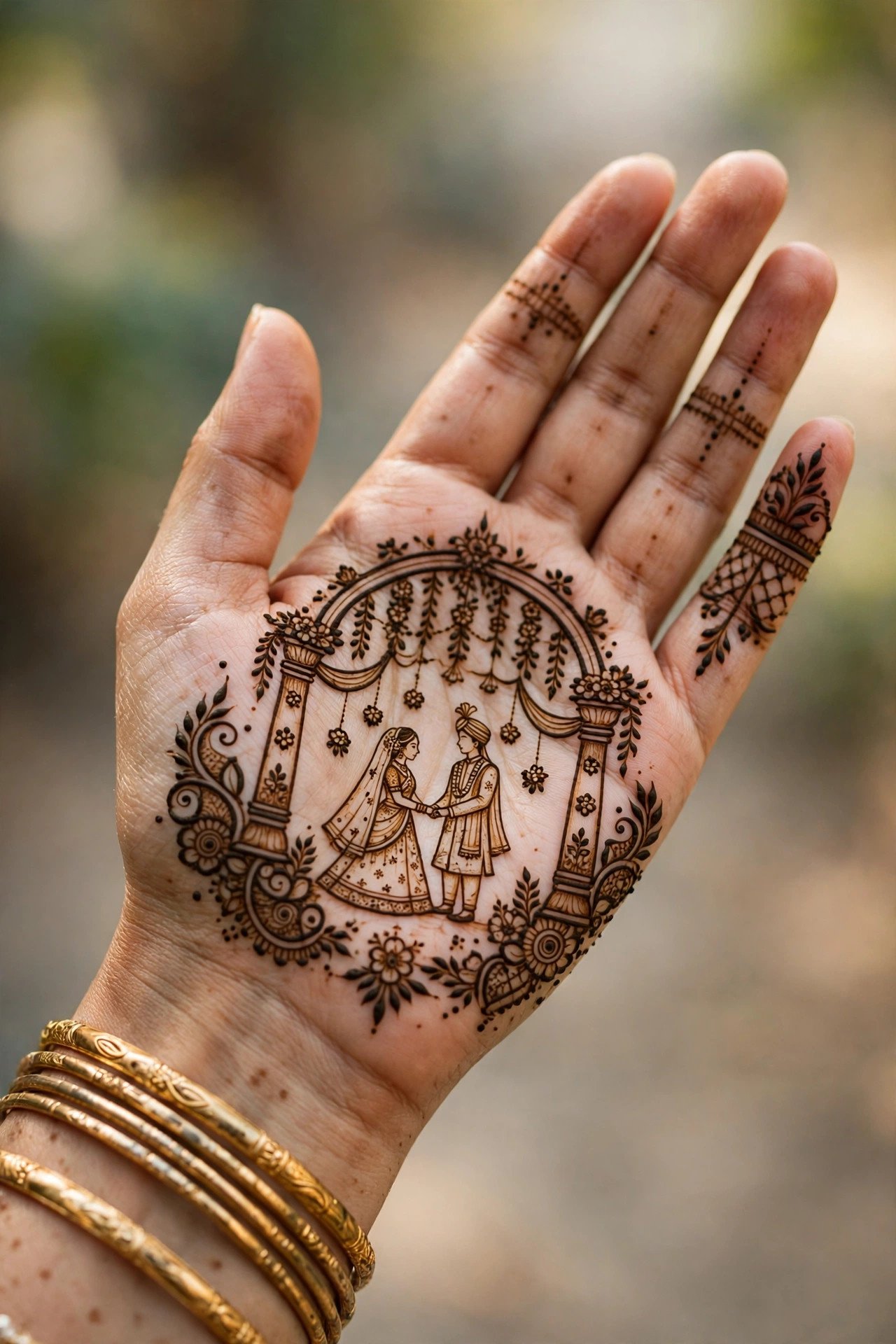
The couple standing beneath a mandap arch — pillars, drapes, and hanging florals drawn in henna — turns the palm into a wedding scene. The arch frames the portraits architecturally, the florals soften it, and the whole design tells the ceremony story at a glance. It is the most scene-like design in this list, and a favourite for photos.
8. Full Hands with Couple and Florals
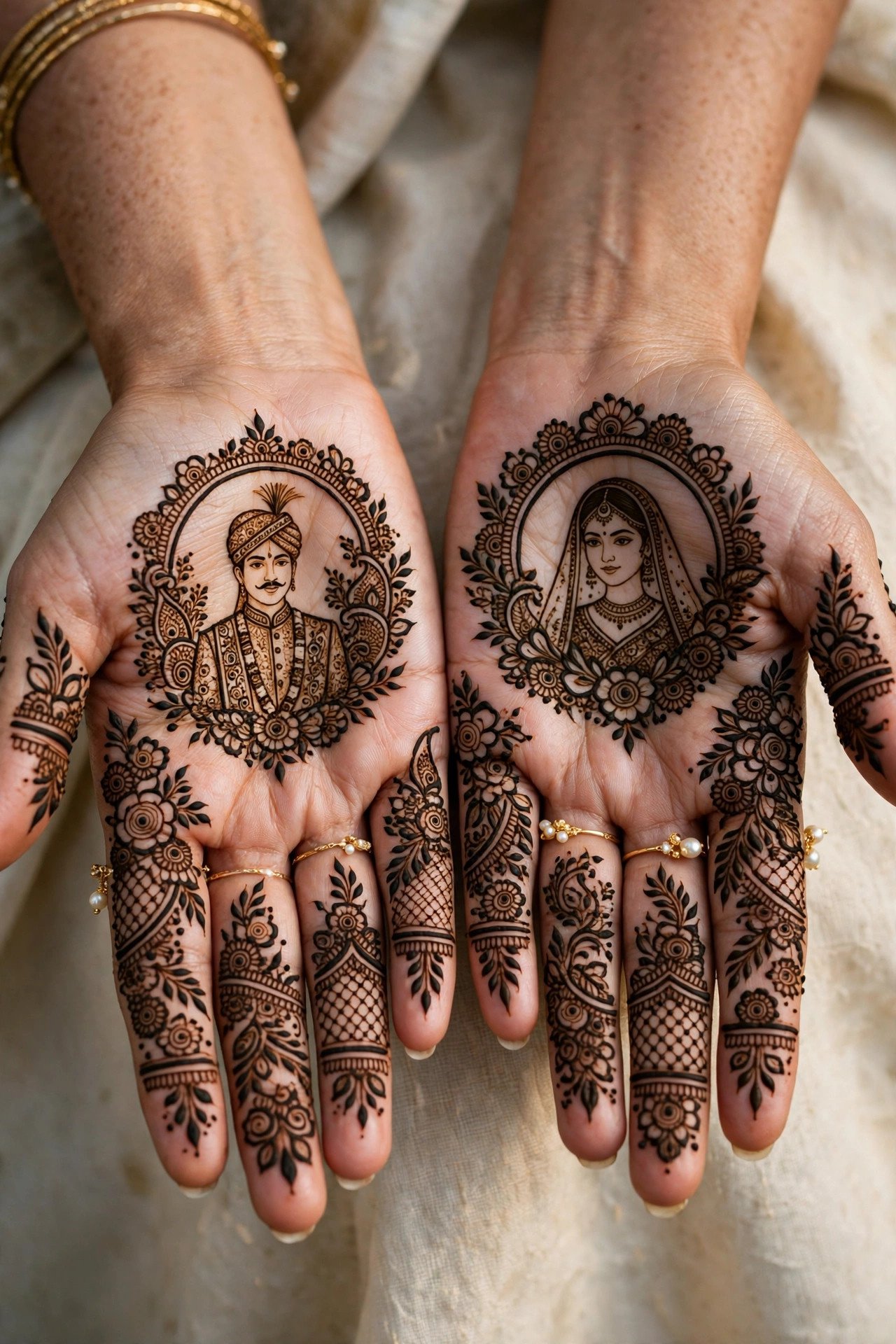
Full hands where the couple portraits anchor the palms and florals cascade to the fingertips give dulha dulhan mehndi its richest format. The portraits stay central, the flowers fill every remaining inch, and the density guarantees a deep stain. Book a long session — this is the design that takes the whole afternoon, gloriously.
9. Dulha Dulhan with Lotus Base
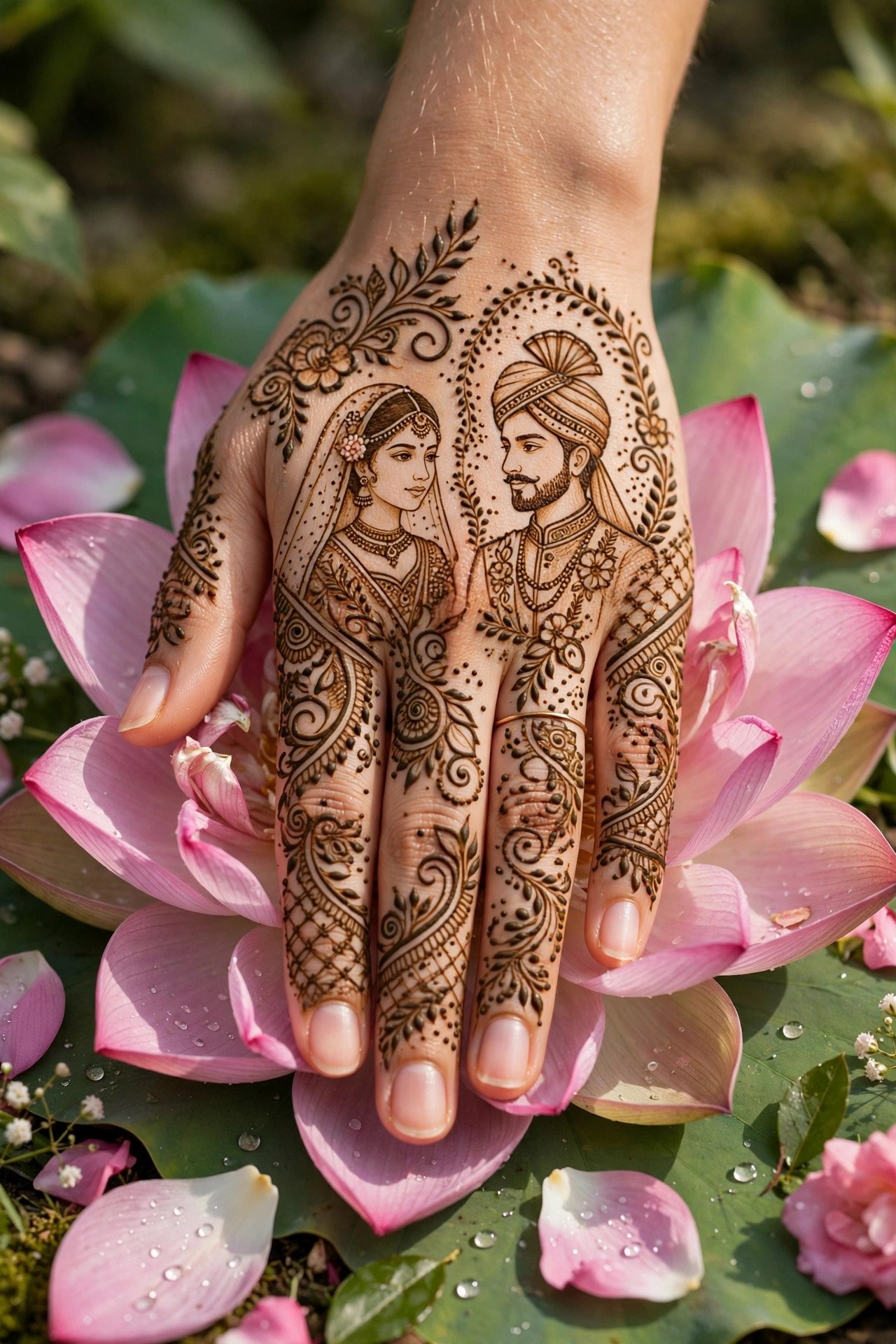
The couple portraits resting on a lotus base — petals opening beneath their feet — give dulha dulhan mehndi a calm, symbolic foundation. The lotus grounds the scene, the portraits rise above it, and the surrounding dots and leaves keep the hand balanced. It is a serene, meaningful variation on the classic portrait design.
10. Couple Portraits with Fine-Line Detail
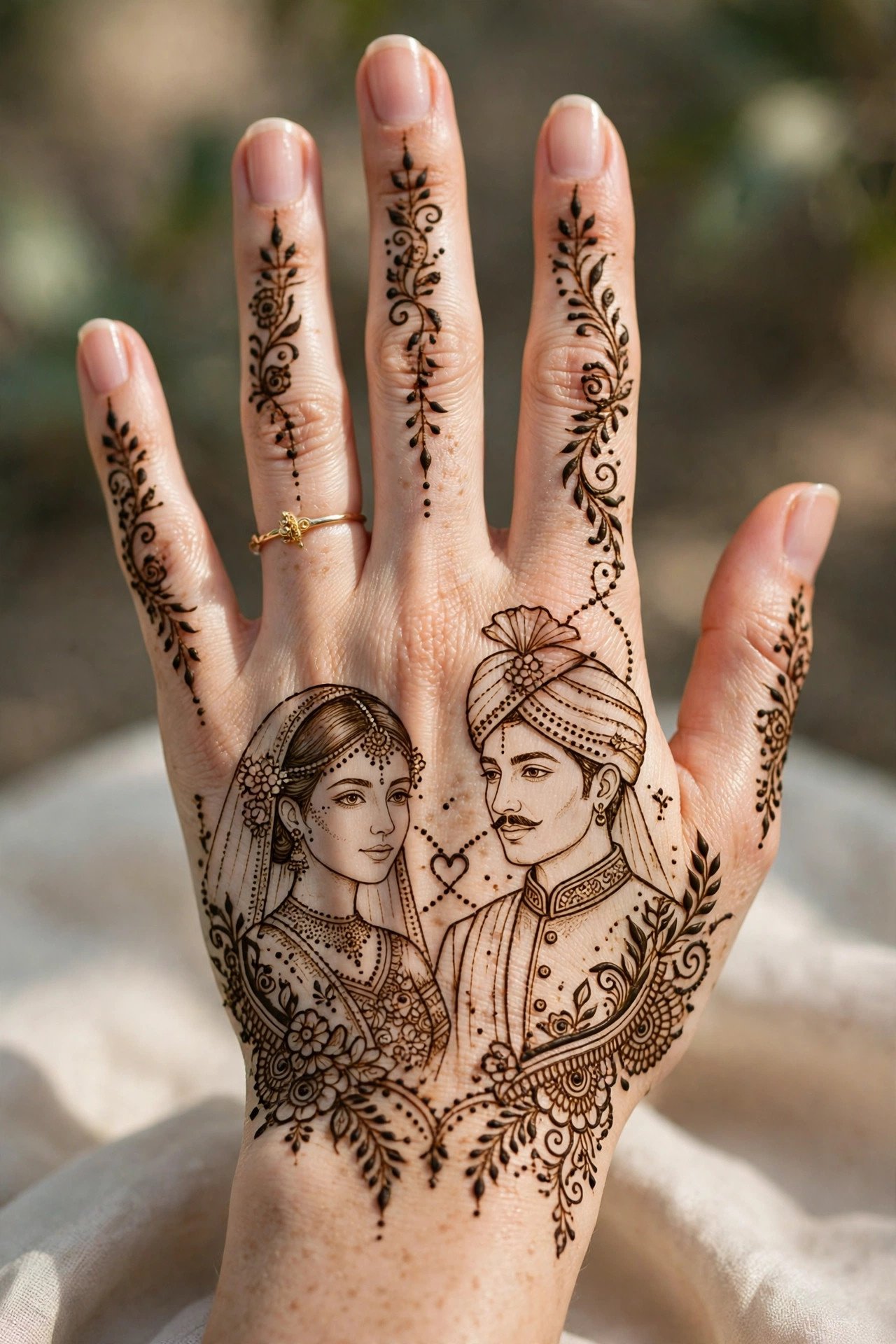
Fine-line portraits — delicate outlines, minimal fill, and crisp facial detail — give dulha dulhan mehndi a modern, refined feel. The lighter linework suits brides who want the couple story without dense coverage, and the portraits stay readable in close-up photos. Pair fine-line portraits with open finger detail for a contemporary finish.
11. Dulha Dulhan with Peacock Accents
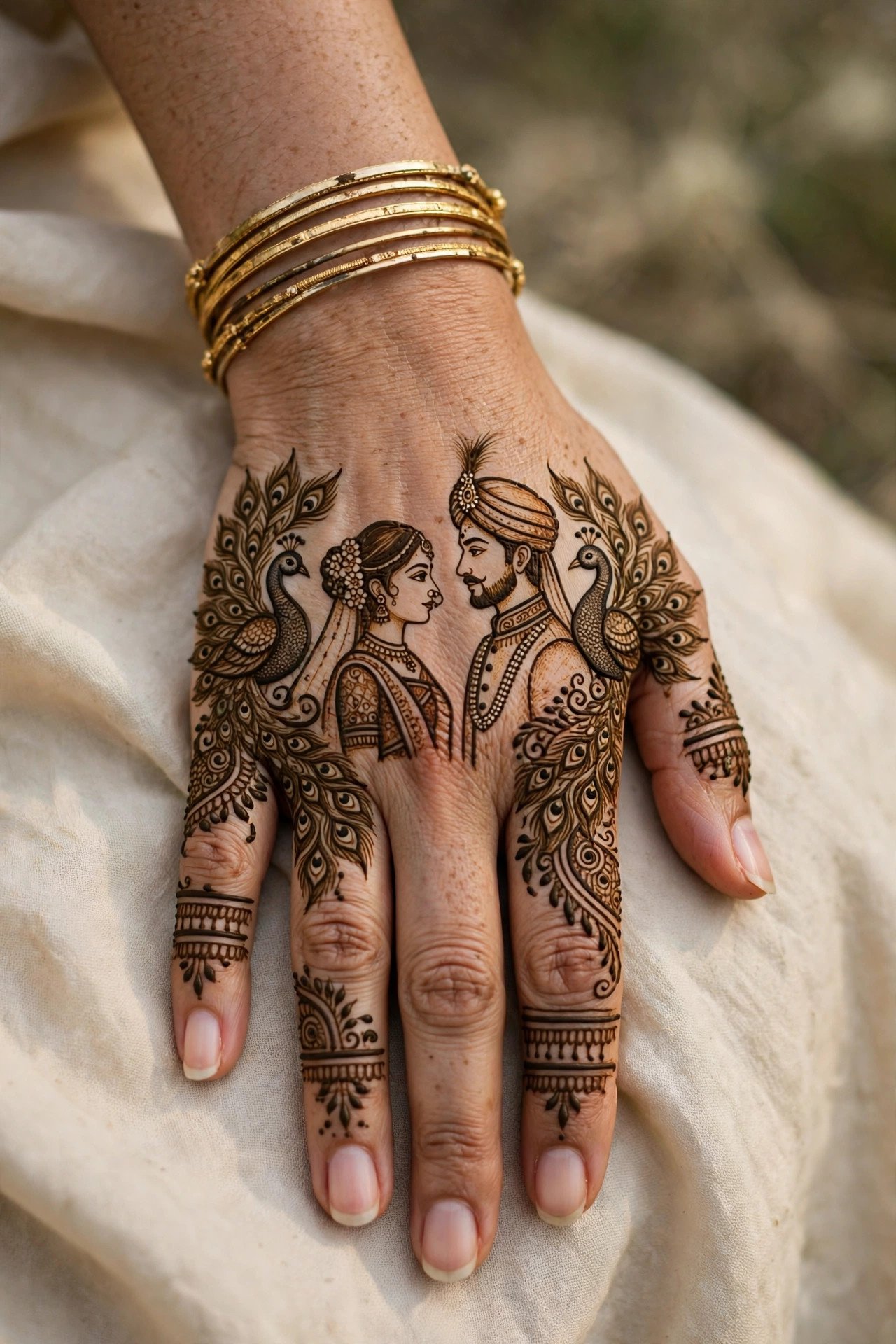
Peacocks flanking the couple portraits — feathers fanning on either side of the scene — add grace and traditional symbolism to dulha dulhan mehndi. The birds frame the couple without crowding them, and their flowing tails extend the design elegantly toward the fingers. It is a beautiful choice for brides who love classic motifs alongside portraits.
12. Bride and Groom with Wedding Bells
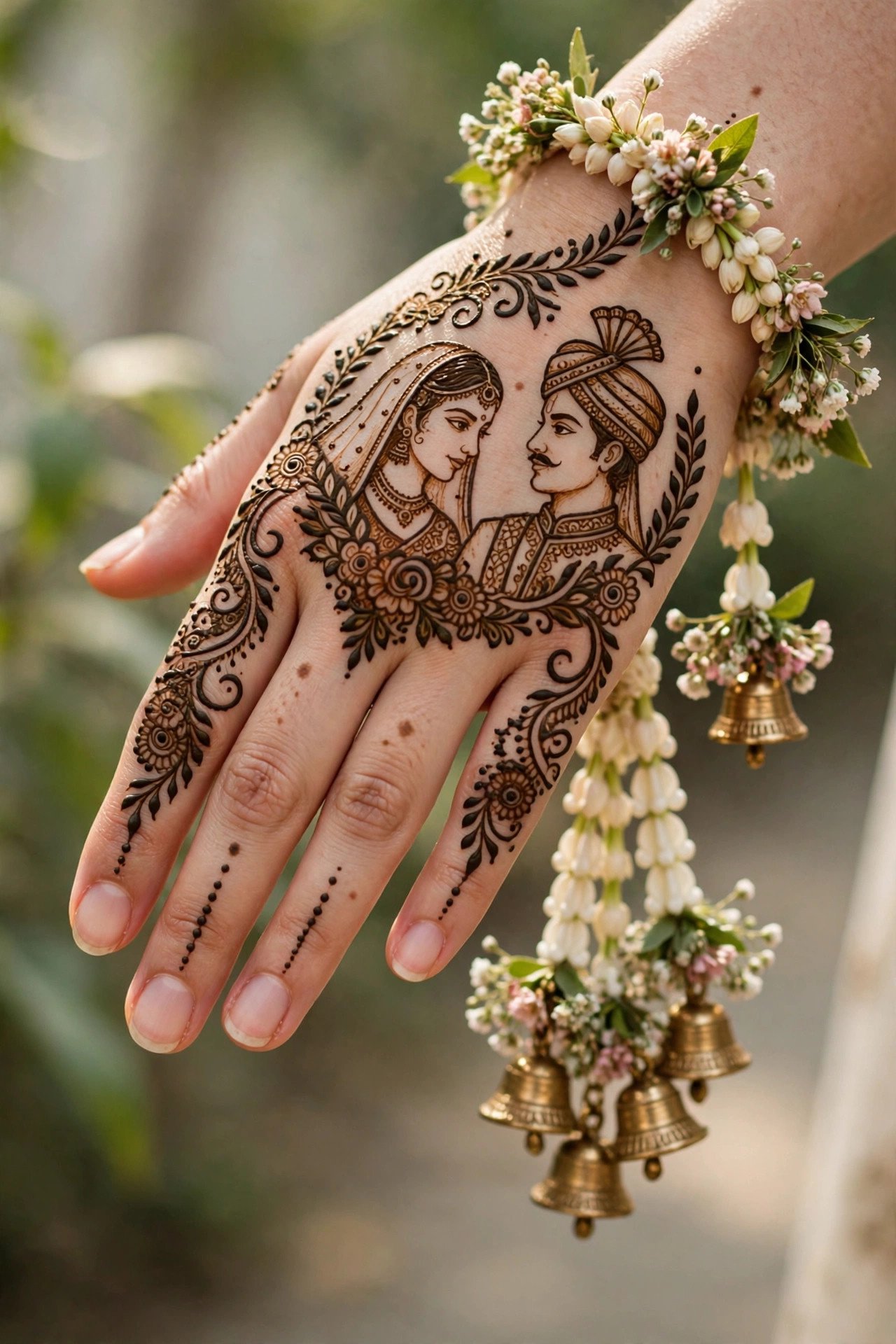
Wedding bells hanging above the couple portraits, ringed with tiny florals, add a celebratory chime to dulha dulhan mehndi. The bells give the design a festive top border, the portraits hold the centre, and the whole palm feels like a celebration frozen in henna. It is a joyful, slightly playful portrait variation.
13. Dulha Dulhan with Name Bands
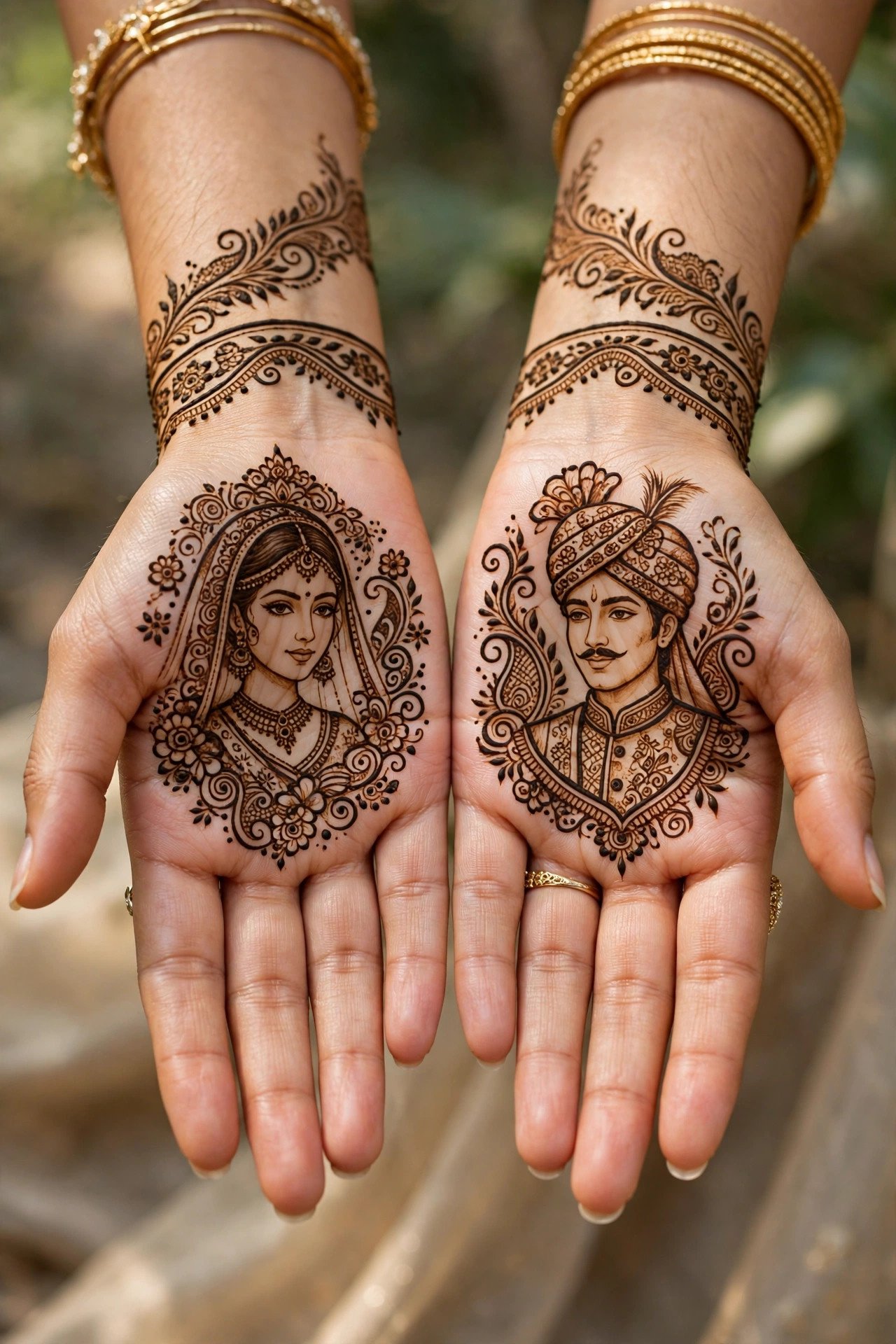
Name bands circling the wrists — the couple’s names in flowing henna script — paired with portraits on the palms, make dulha dulhan mehndi doubly personal. The bands tie the two hands together, the portraits tell the story, and the names guarantee no one mistakes whose wedding this is. Keep the script flowing and legible.
14. Classic Dulha Dulhan Full Hands
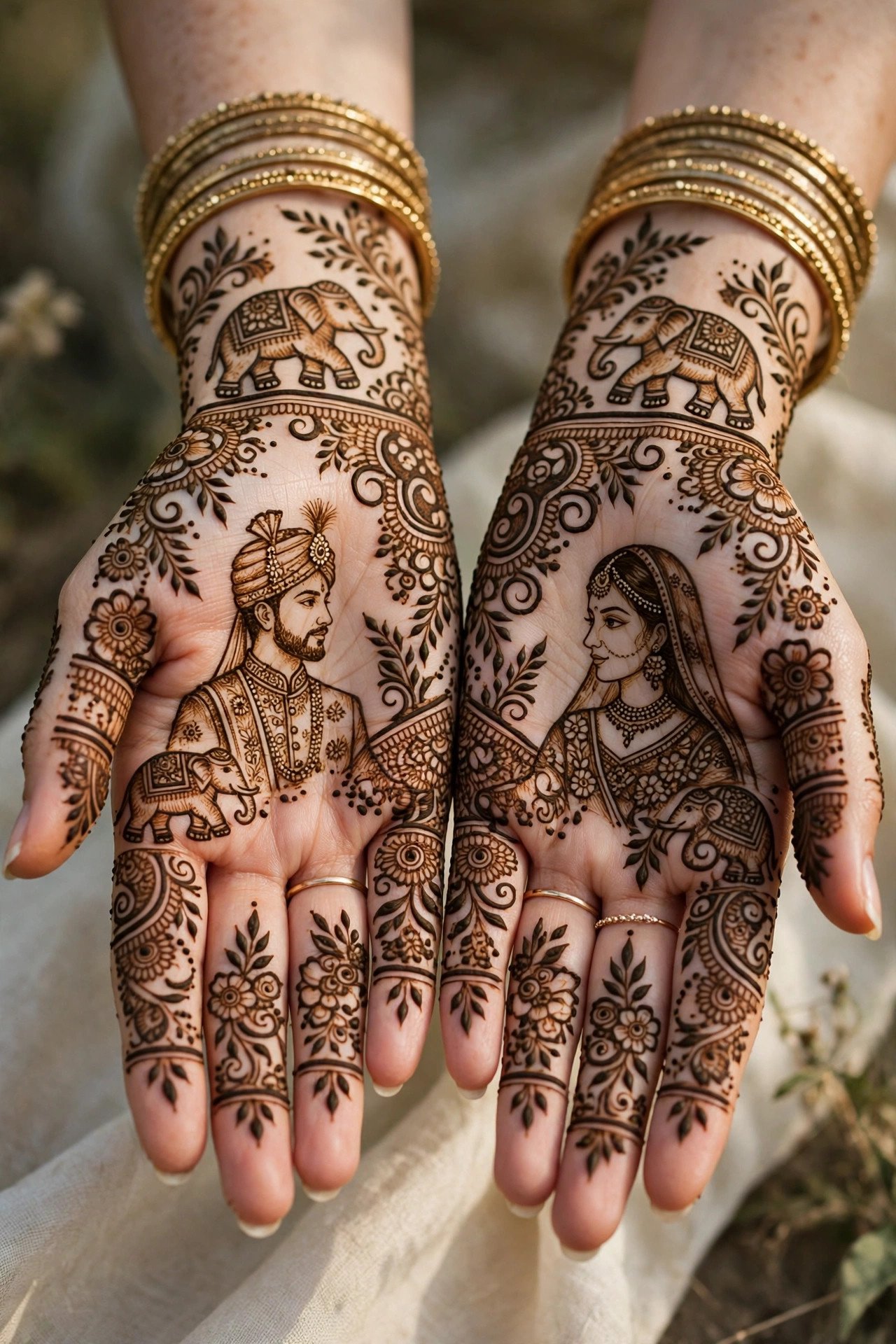
Finish with the classic: full hands, couple portraits on the palms, elephants and florals filling the rest, and detailed fingers completing the set. It is the most traditional dulha dulhan format — dense, detailed, and deeply photogenic — and it remains the design most brides picture when they dream of portrait mehndi.
A few application and aftercare tips before you start: always do a patch test first, and apply henna to clean, dry skin with no lotion on it. Portrait mehndi takes longer than motif-only bridal work, so book an experienced artist a day or two before the wedding and allow a full, unhurried session. Leave the paste on for at least six hours — overnight gives the darkest stain — then avoid water and soap for the first day and dab on a little natural oil. Your dulha dulhan portraits will deepen into a rich colour that lasts one to two weeks.