A saree is not one garment but many, because the drape changes everything: the same six yards become a different outfit in Bengal, Maharashtra, Gujarat and Tamil Nadu. Bridal draping is a regional art, and this guide follows the regions.
Here are 14 bridal saree draping ideas for women, framed for India and the South Asian diaspora in the US, UK and Canada. A saree is its own garment, distinct from the lehenga’s separate skirt and blouse, and every drape below is a saree drape.
See also: related wedding guide.
1. Kanjeevaram Drape
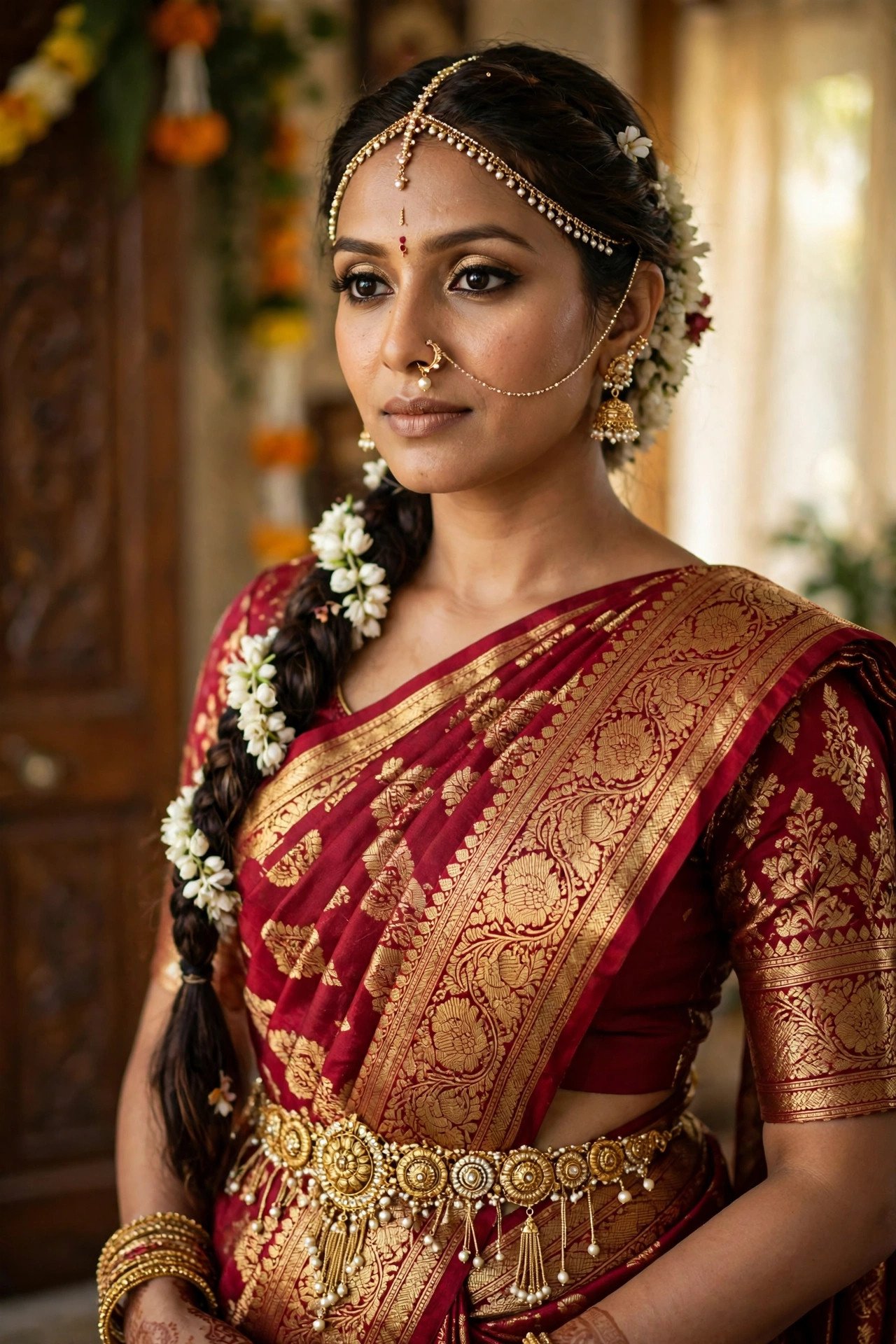
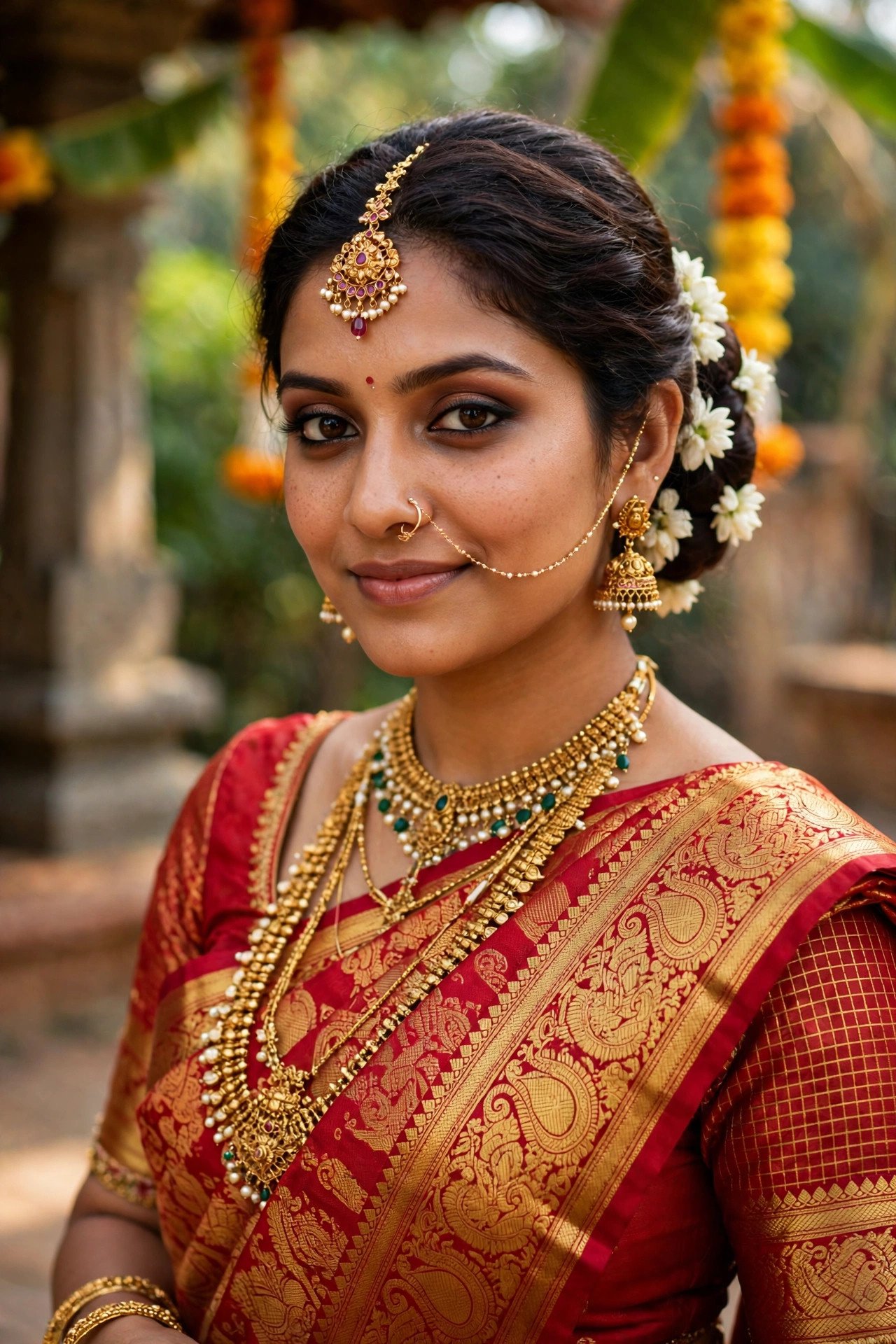
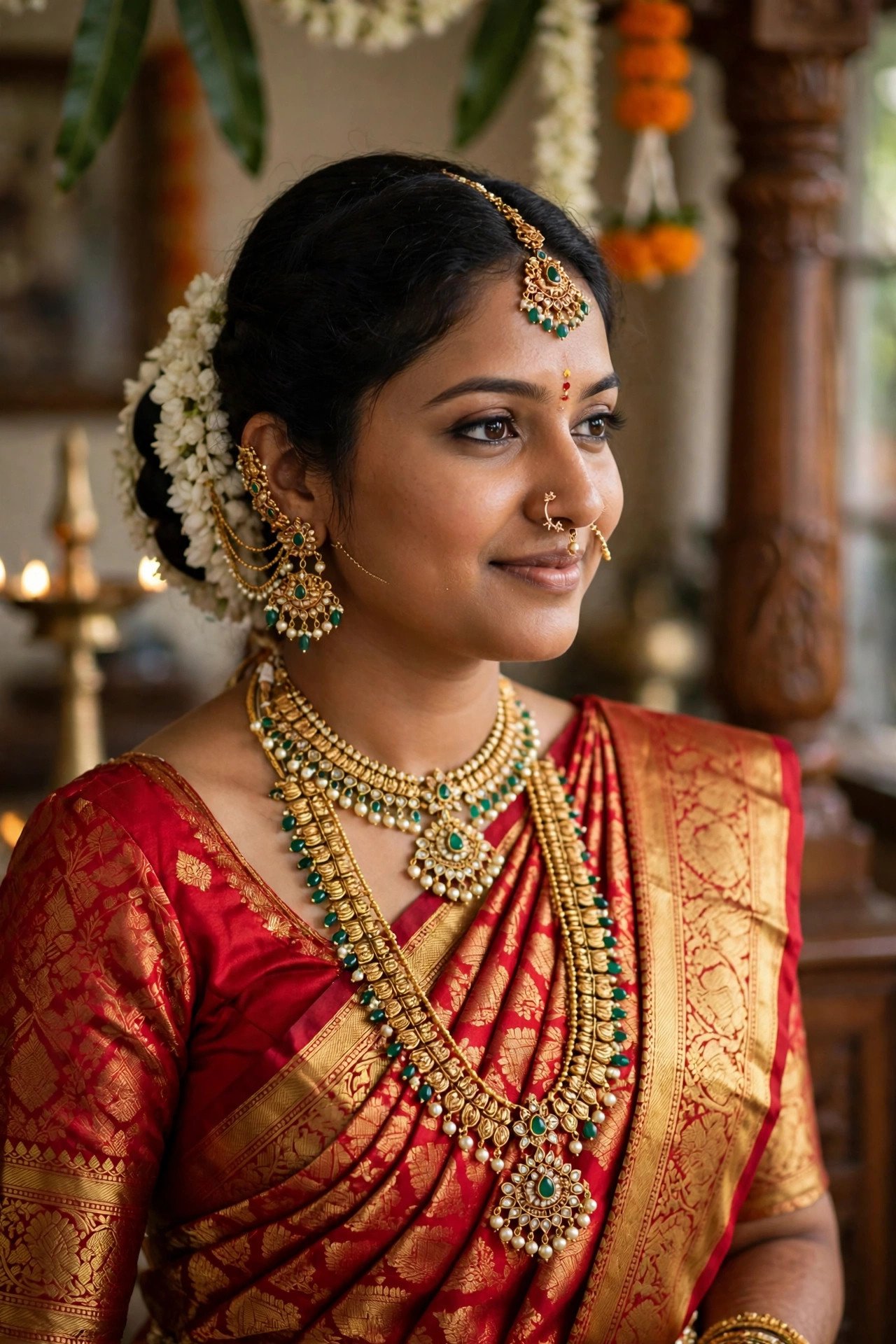
The Kanjeevaram drape, in heavy silk with a contrasting temple border, is the South Indian bridal classic. Pleats fall neatly at the waist, the pallu rests over the left shoulder, and gold temple jewellery completes it.
2. Bengali Drape
The Bengali bridal drape, in a red and white or red and gold saree, carries the pallu over both shoulders in the traditional aatpoure style, with a large key bunch at the waist. It is one of India’s most recognisable bridal looks.

3. Maharashtrian Nauvari Drape
The nauvari is a nine-yard drape worn like a dhoti, with the fabric passing between the legs, giving the bride freedom of movement no other bridal drape offers. In Paithani silk with a peacock border, it is Maharashtrian bridal heritage.
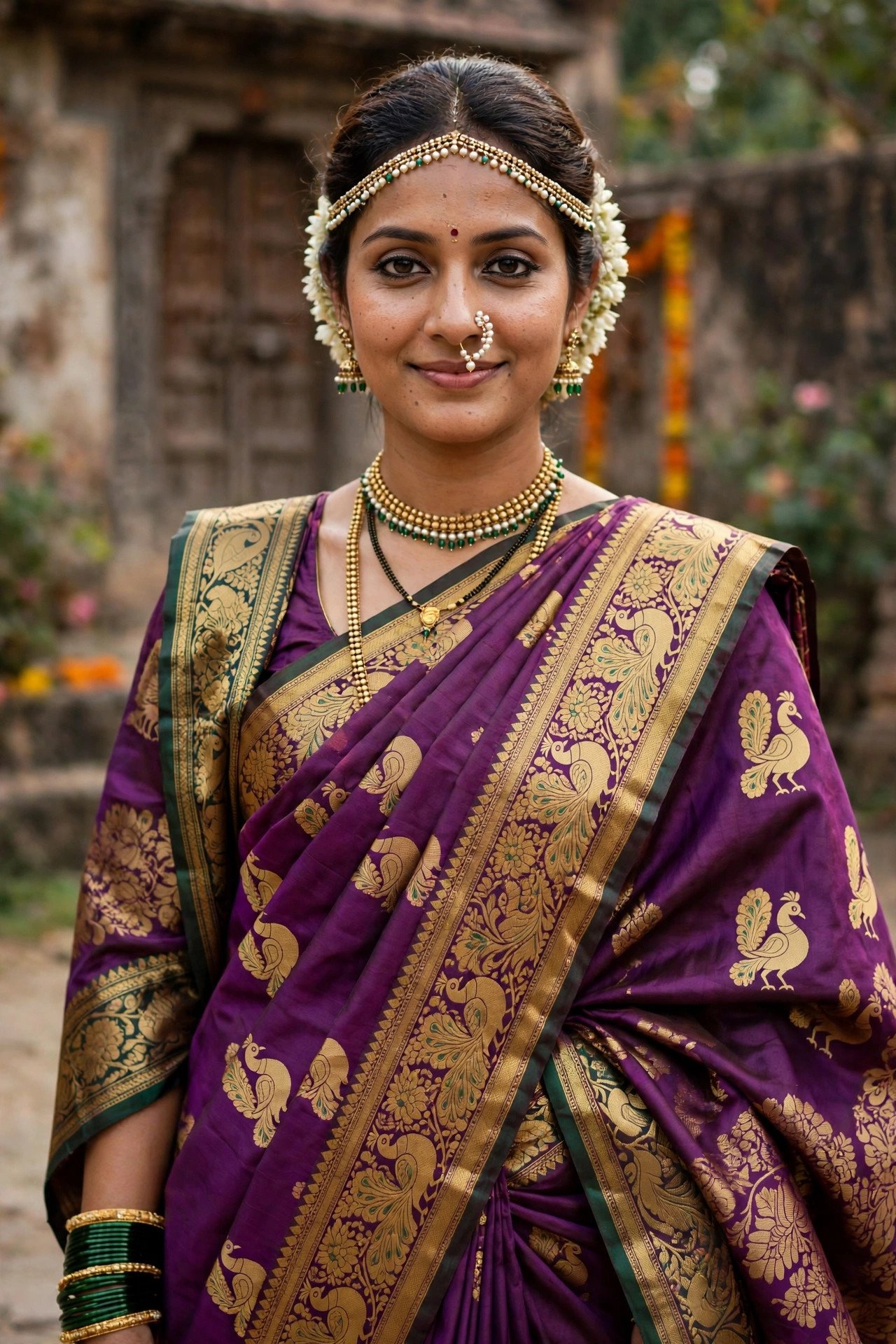
4. Gujarati Seedha Pallu Drape
The Gujarati seedha pallu brings the pallu forward over the right shoulder and across the front, so the decorative end is on display throughout the ceremony. It is the drape that shows off embroidery best.
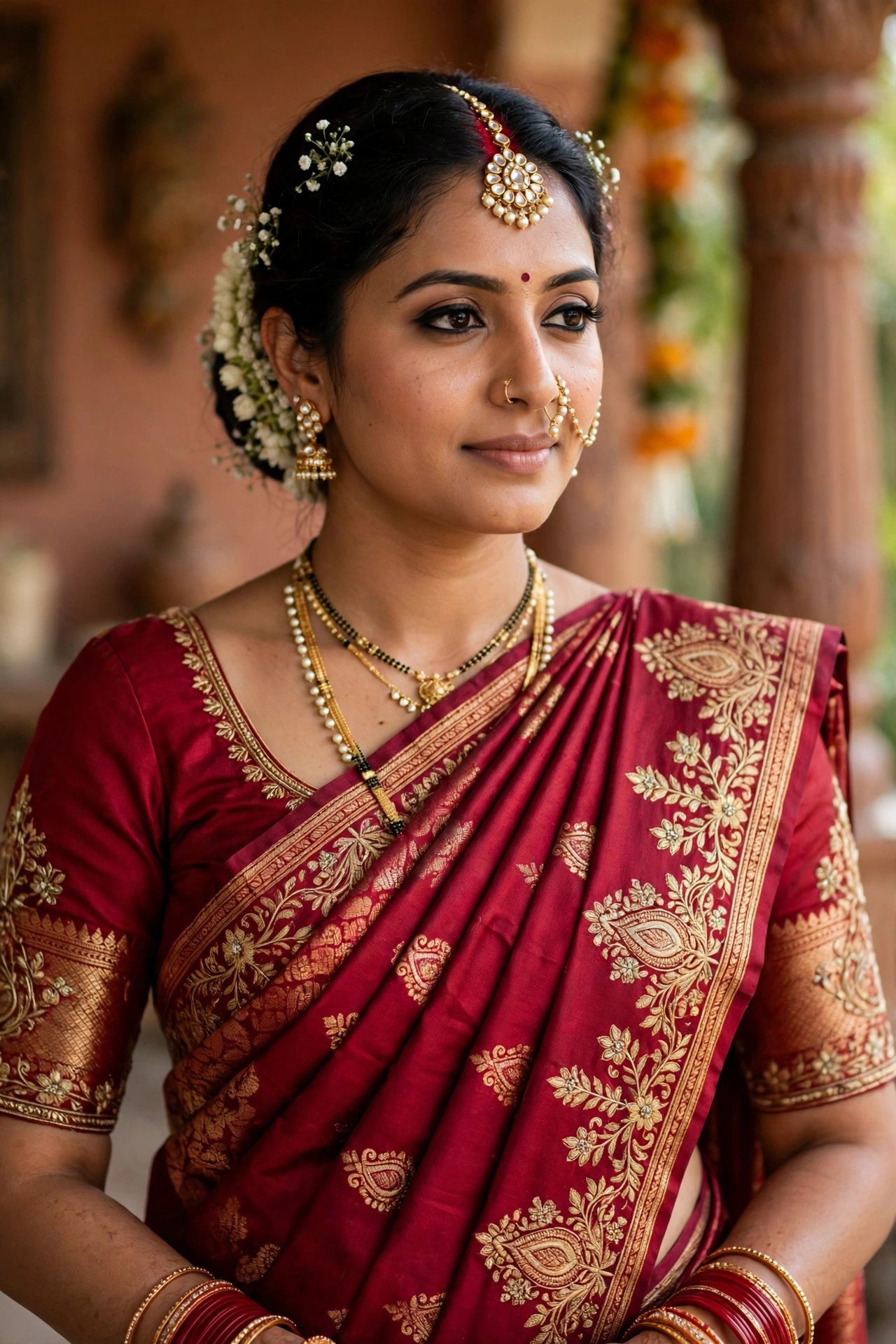
5. Modern Pre-Draped Saree
Pre-draped sarees stitch the pleats and pallu in place, so the bride gets the saree silhouette without the draping skill or the safety pins. They are the diaspora bride’s best friend, especially for long wedding days.
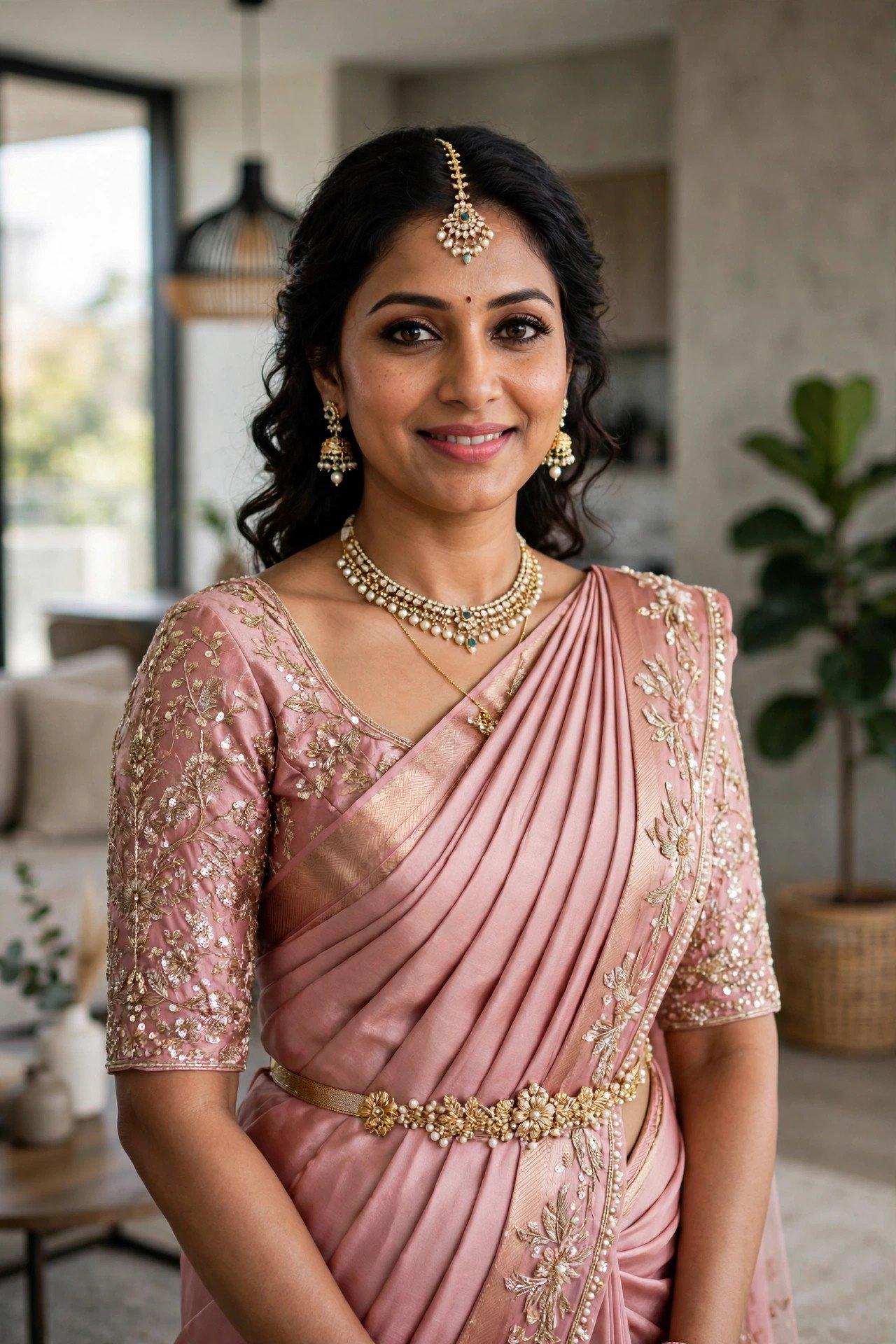
6. Belted Drape
A belted drape cinches the saree at the waist with a kamarbandh or a modern belt, defining the waist and holding the pleats in place. It suits brides who want a structured, fashion-forward saree line.
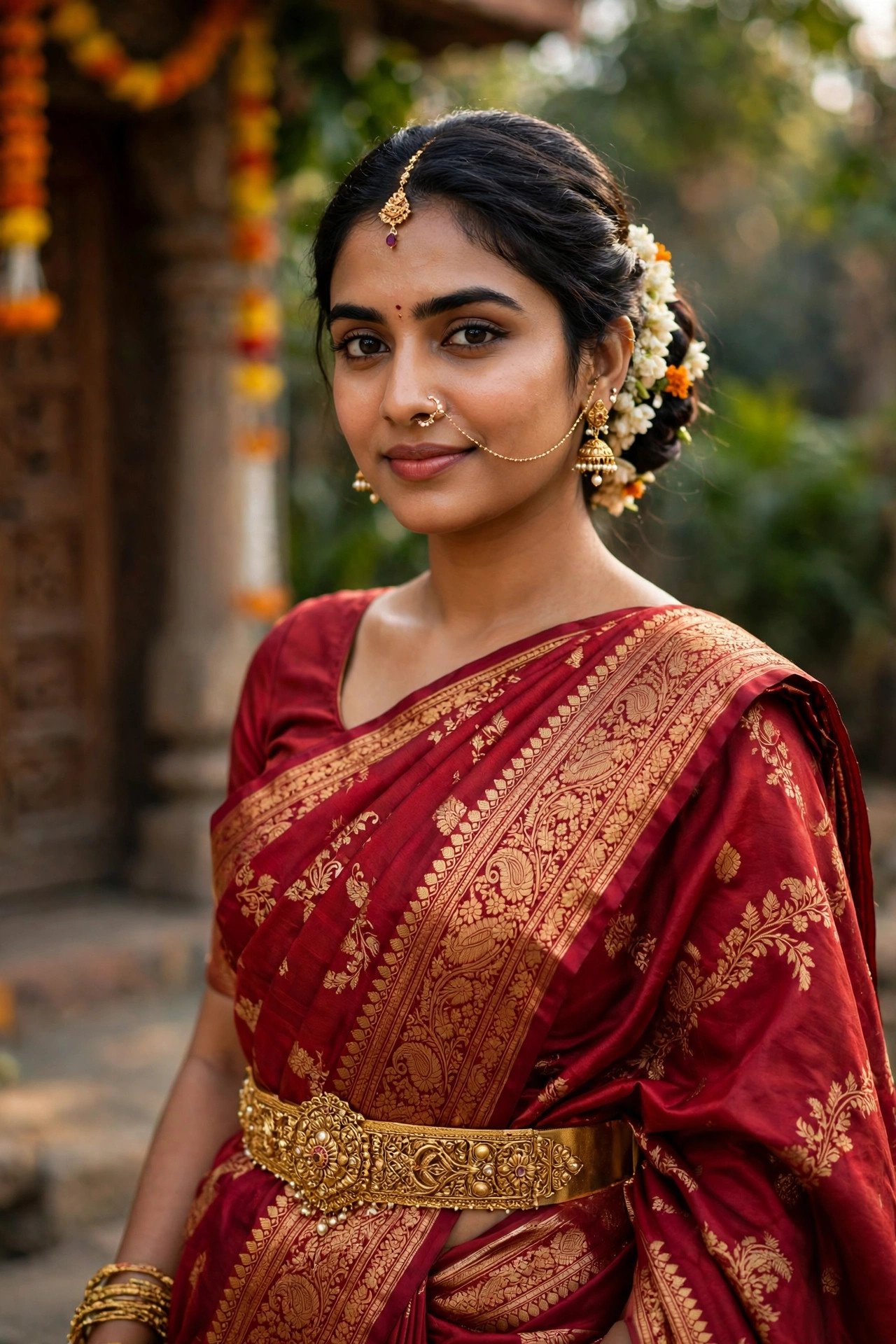
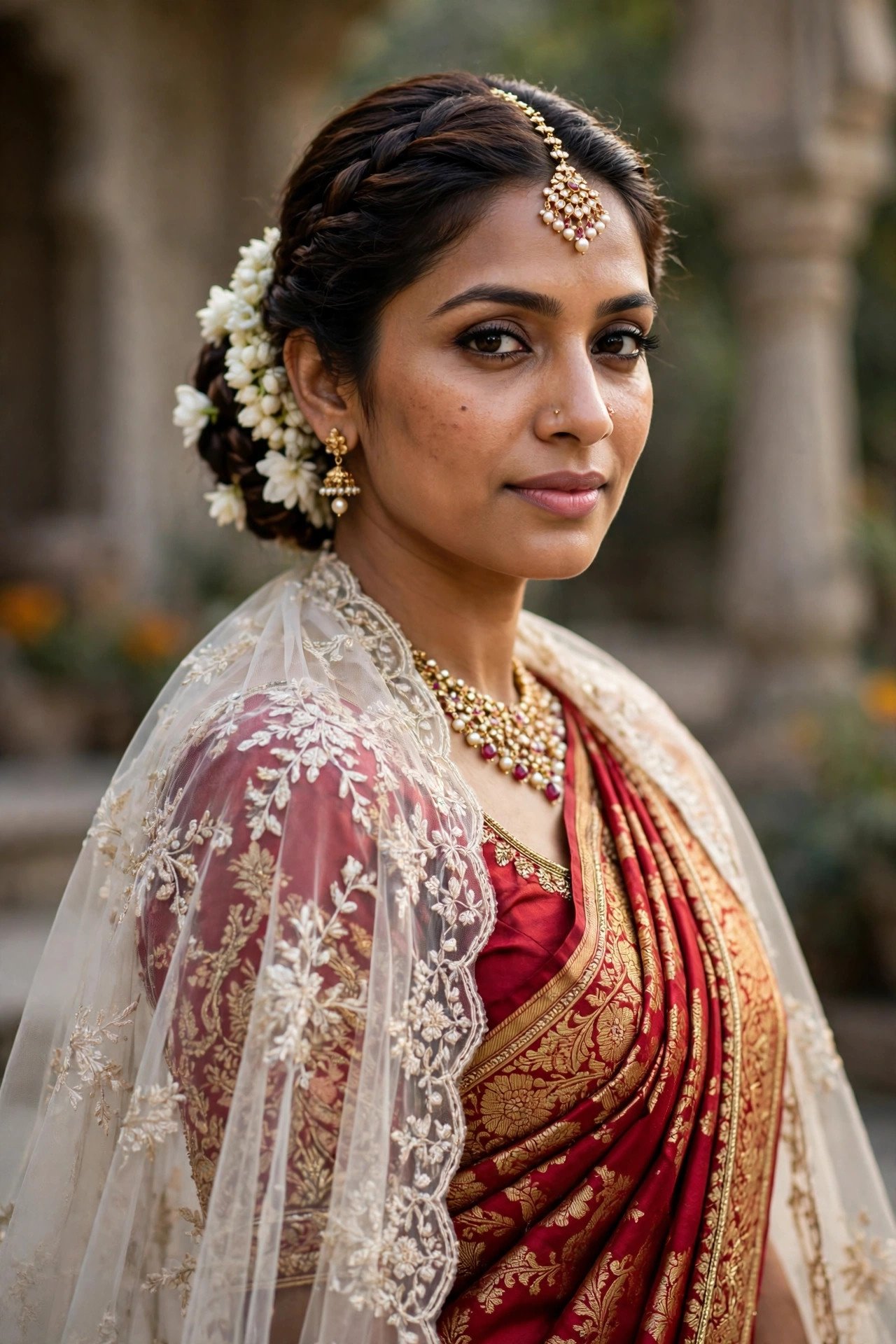
7. Cape-Style Drape
A cape-style drape layers a sheer cape over the saree’s blouse, adding drama and coverage in one piece. It is a modern bridal innovation that photographs beautifully in motion.
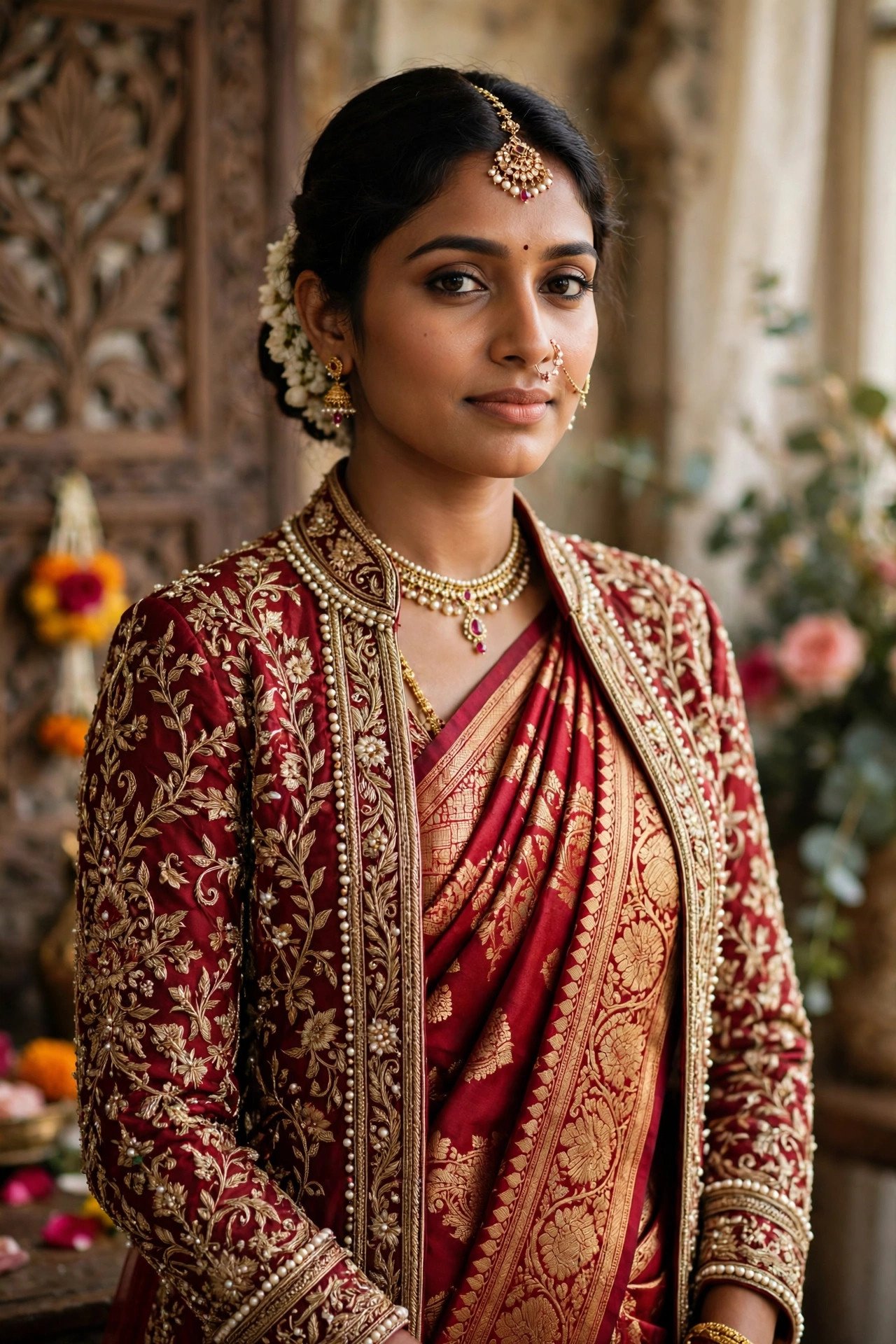
8. Jacket Drape
A long embroidered jacket worn over a saree drape gives the bride a regal, layered silhouette. The jacket adds warmth and structure, and it turns a simple saree into a statement outfit.
9. Double Pallu Drape
A double pallu drape uses two pallus, one over each shoulder, for a rich, symmetrical look. It suits heavily embroidered bridal sarees where both pallus deserve to be seen.
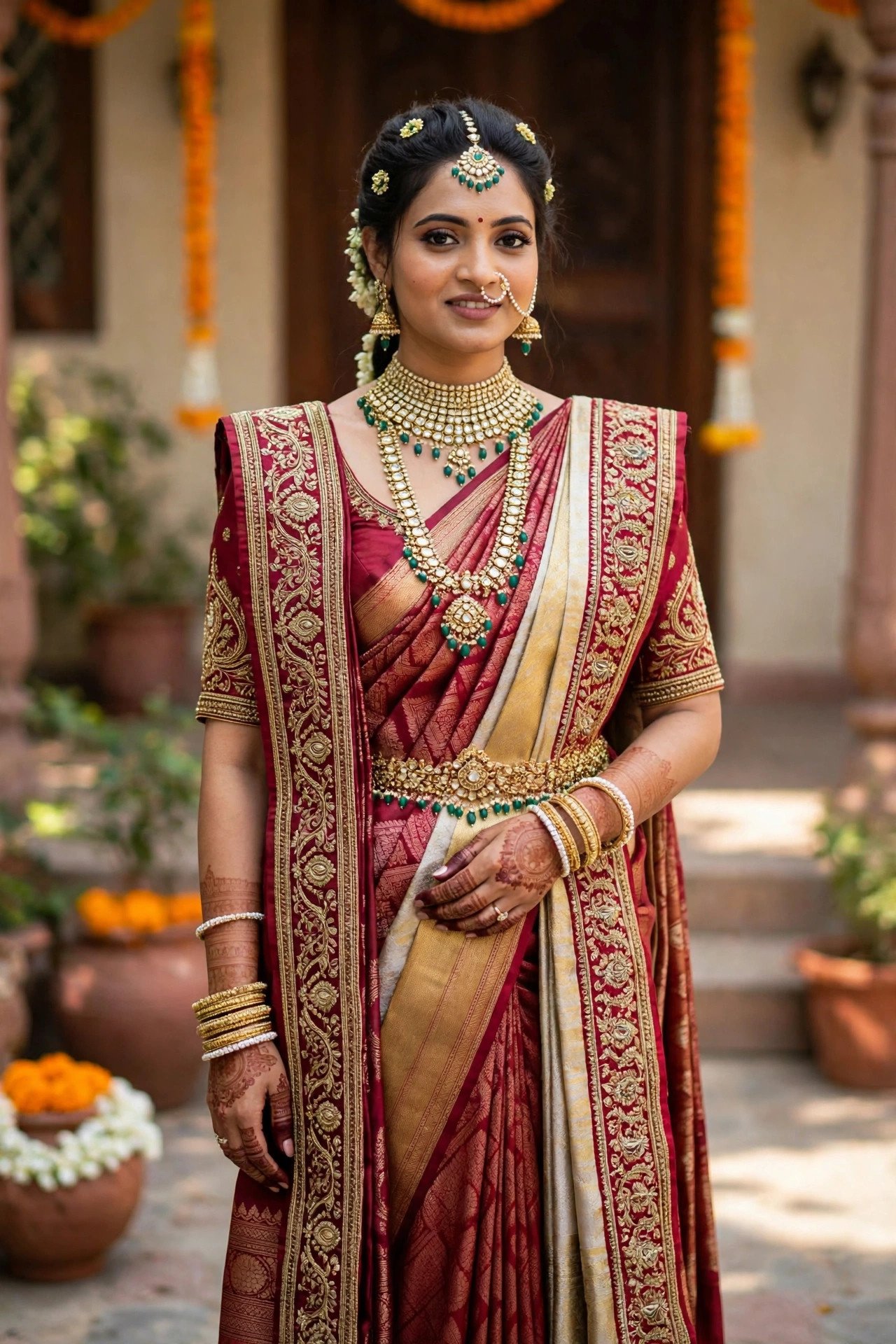
10. Open Pallu Drape
An open pallu drape lets the pallu fall freely without pleating, showing the full width of its embroidery or border. It is the drape for brides whose saree’s pallu is the star of the outfit.
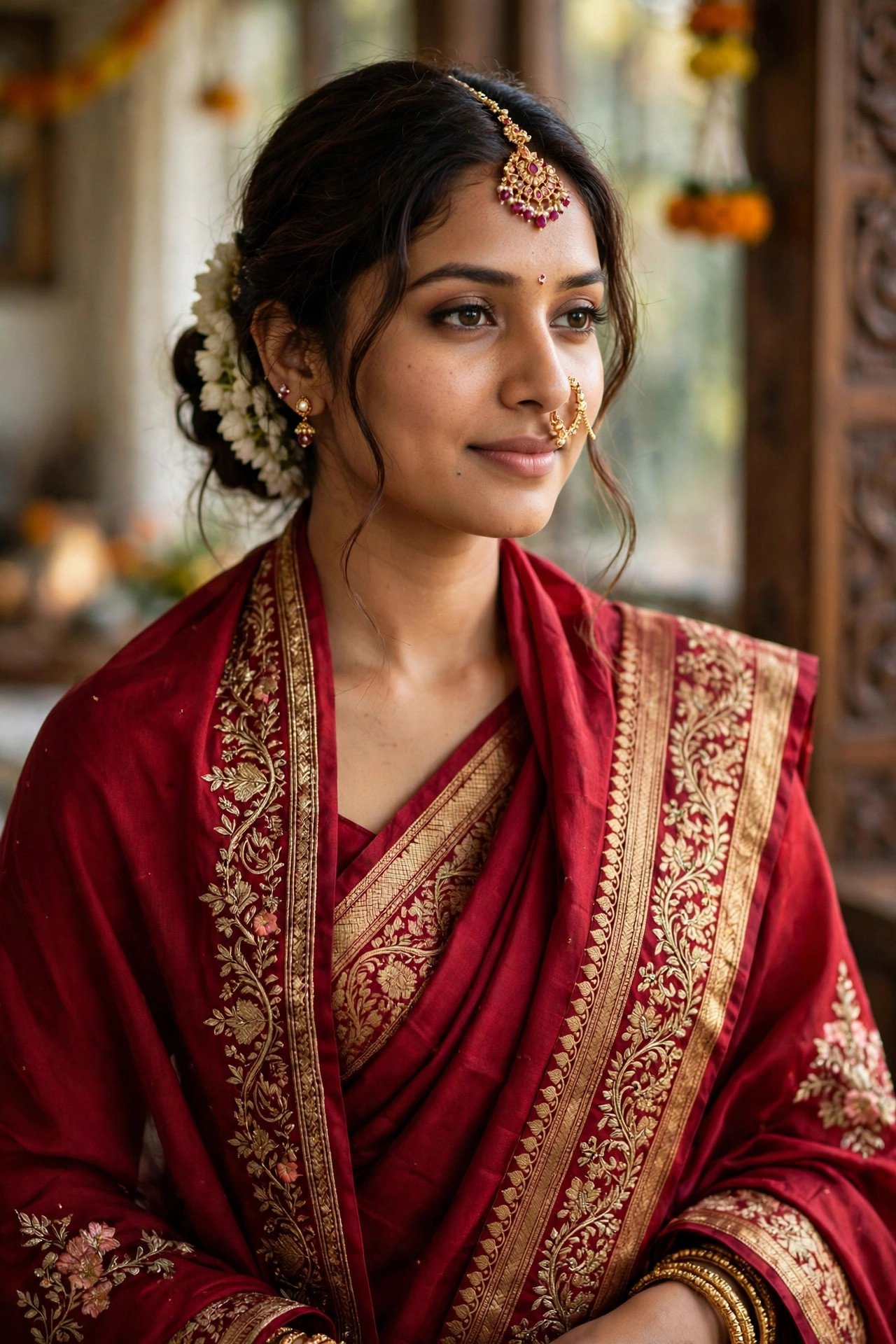
11. Pleated Pallu Drape
A pleated pallu folds the pallu into neat, narrow pleats over the shoulder, giving a crisp, structured line. It is the choice for brides who want their drape to look precise all day.
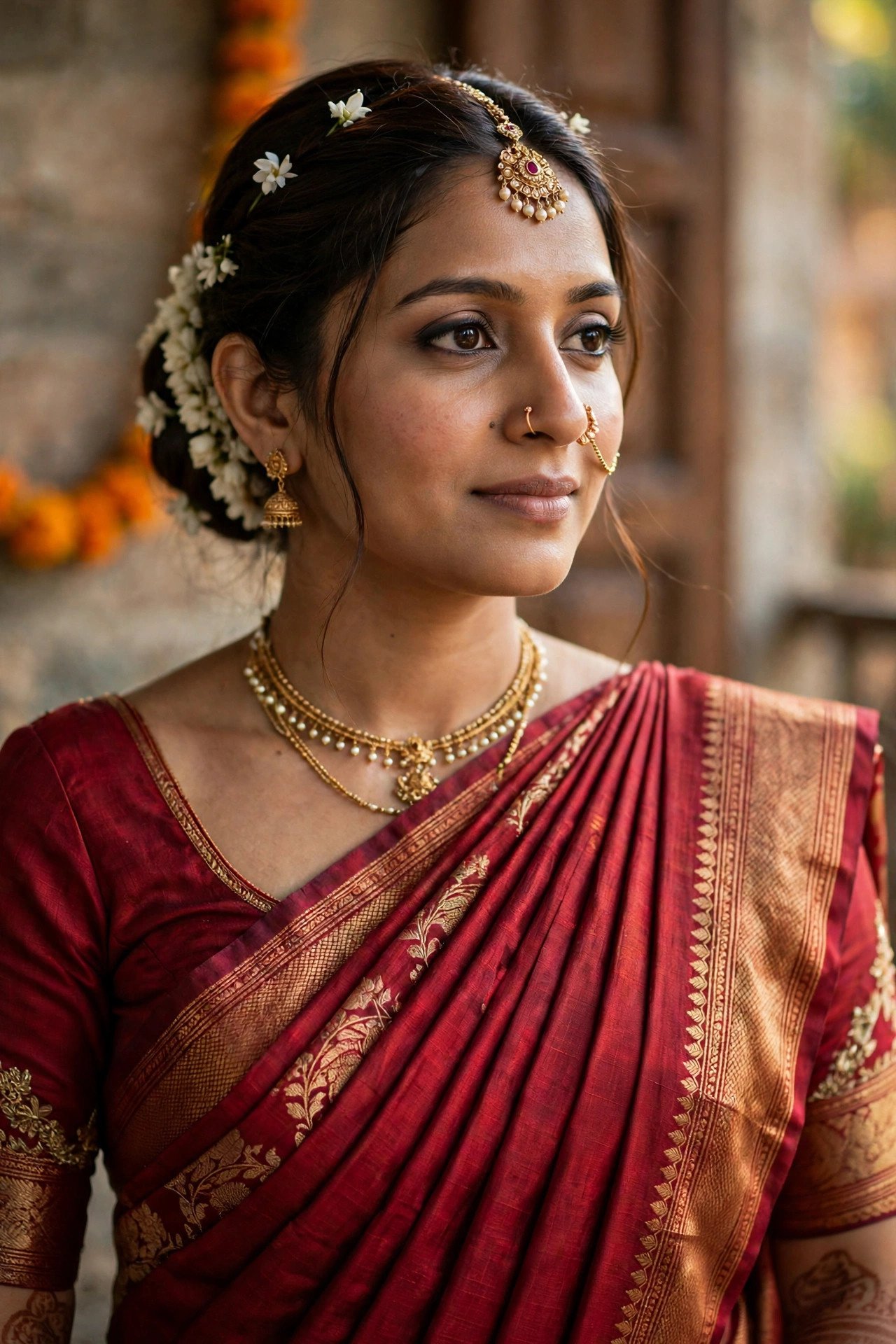
12. Trail Drape
A trail drape lets the saree’s end trail behind the bride like a train, giving a saree the drama of a gown’s train. It needs a clear aisle and a helper to manage the trail, but it photographs spectacularly.
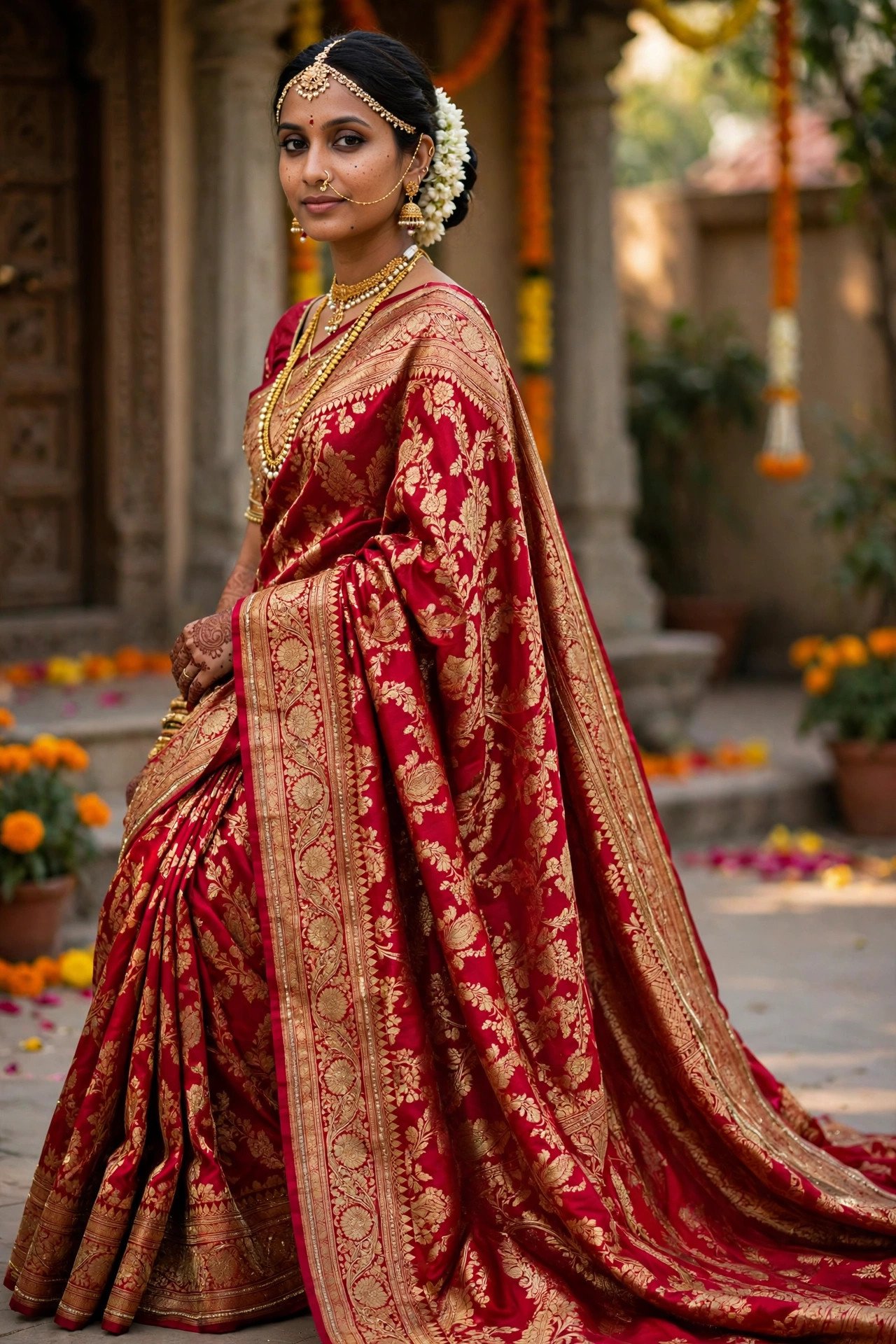
13. Contemporary Minimal Drape
A contemporary minimal drape strips the saree back to clean lines: a plain border, a simple blouse, no excess. It is the modern diaspora bride’s answer to heavy traditional draping.
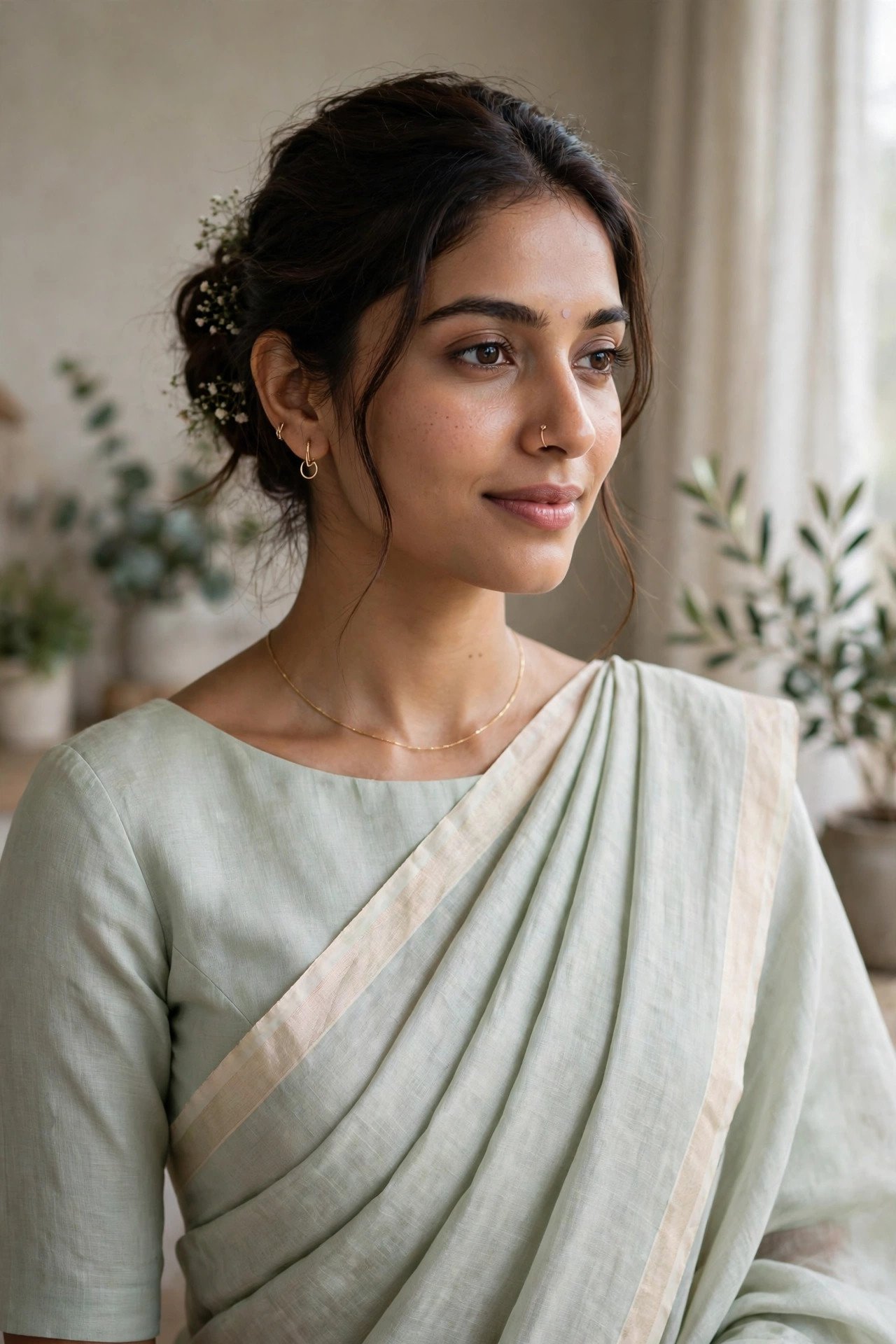
14. Drape with a Kamarbandh
A kamarbandh, the traditional waist chain, anchors the drape at the waist and adds a line of gold that catches the eye. It is both jewellery and engineering, holding the saree exactly where it should sit.