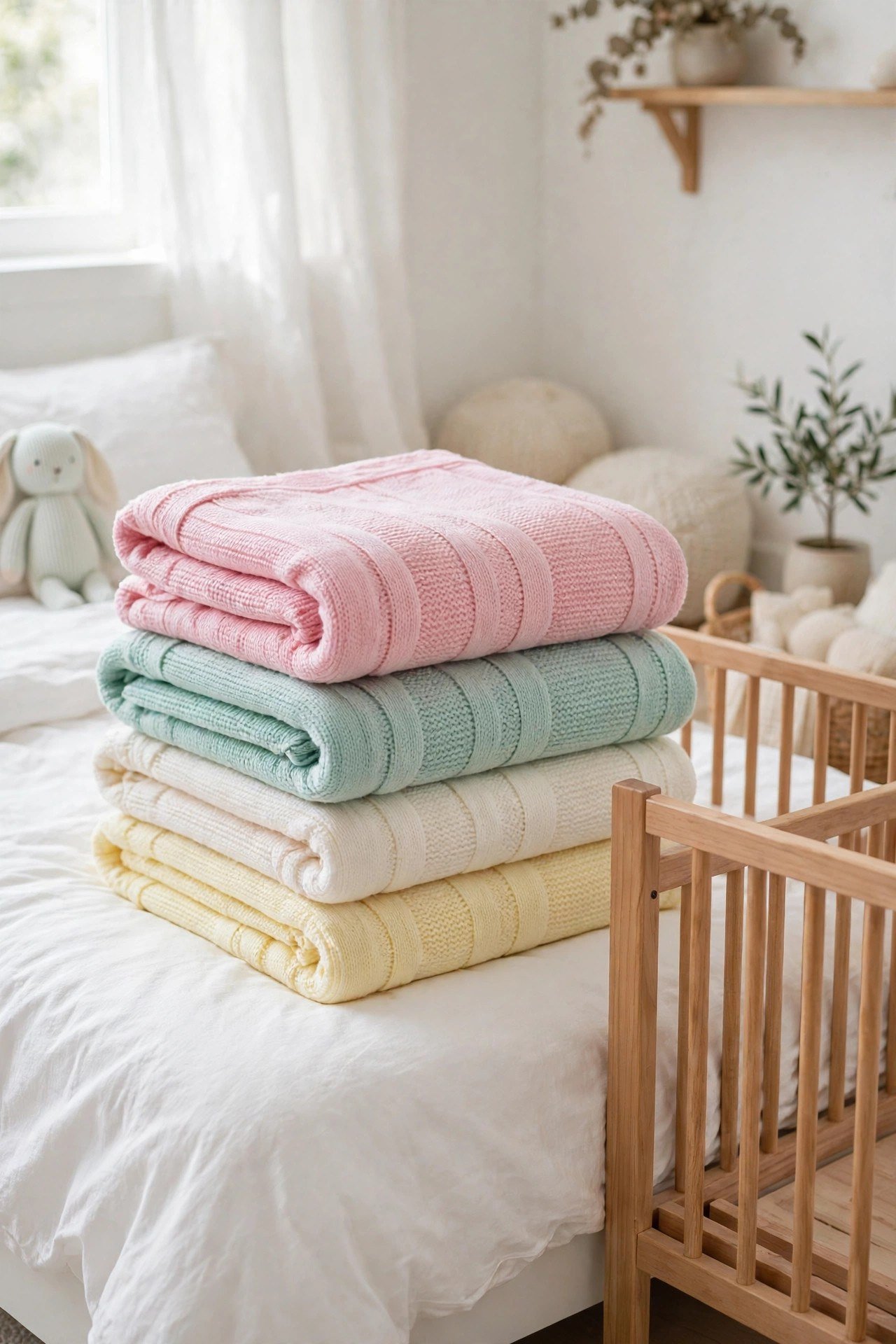
A handmade baby blanket is one of the most-loved crochet projects there is — soft, practical, and made to be kept long after the baby has outgrown it. Baby blankets are also the most popular crochet category, so every pattern here is written as a free step-by-step guide: what to make, how the stitches fit together, and how to finish it. Whether you are a confident beginner or an experienced maker, these 12 baby blanket crochet ideas use soft pastel yarns and simple, repeatable stitches, so you can crochet a blanket a new baby will actually be wrapped in.
Classic Granny Square Baby Blanket
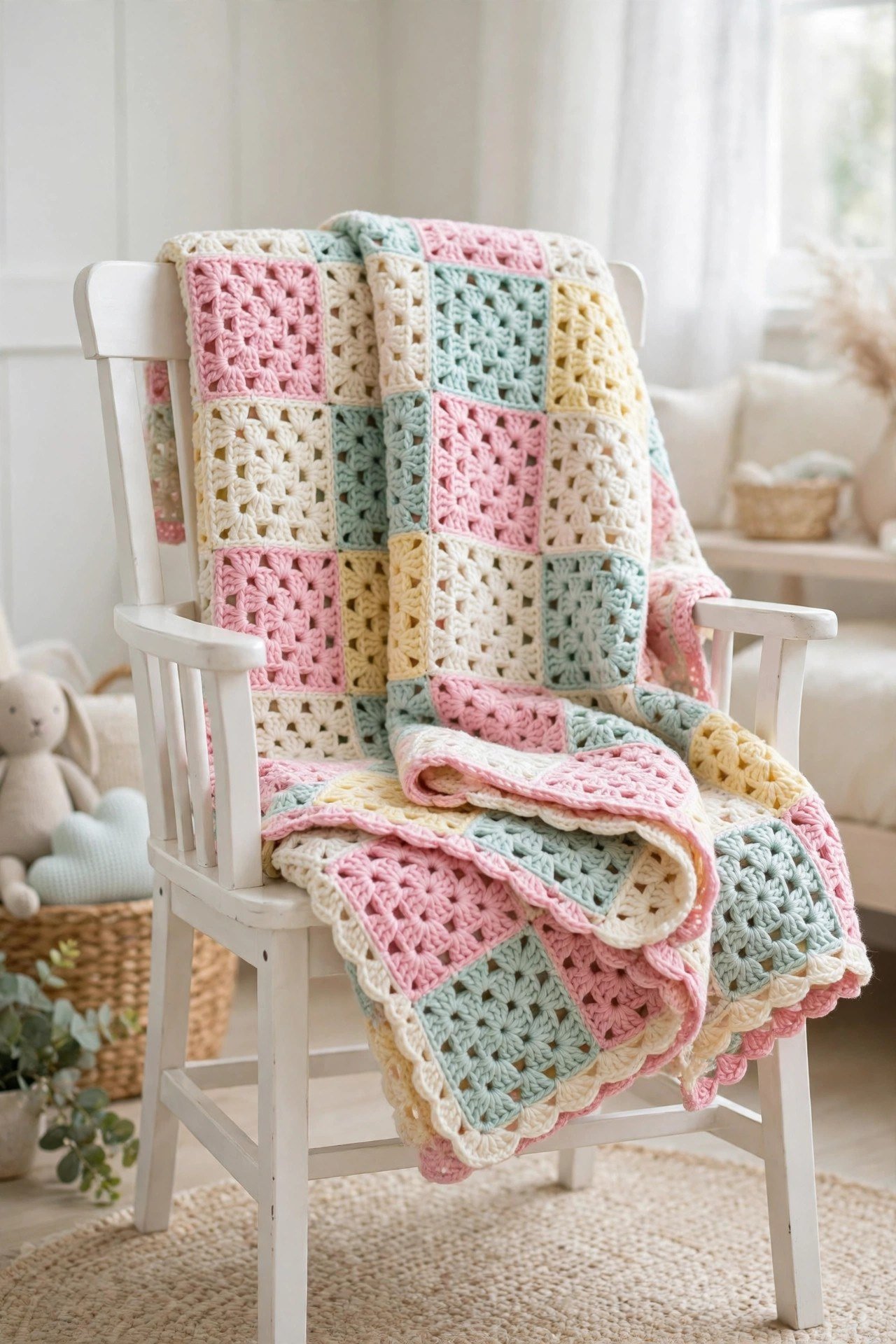
Start with small granny squares in soft pastel shades — pink, mint, cream and pale yellow — working each square in rounds from the centre out. Make enough squares to cover a cot-sized rectangle, then lay them out on a flat surface and join them in rows with a yarn needle or slip stitches, keeping the colours evenly scattered. Work a simple border of a few rounds around the whole blanket to neaten the edges and stop them curling. You will need soft baby yarn in three or four pastel colours, a crochet hook, a yarn needle, and a little patience; the squares are small and quick, so this is the perfect first baby blanket.
Ripple Chevron Baby Blanket
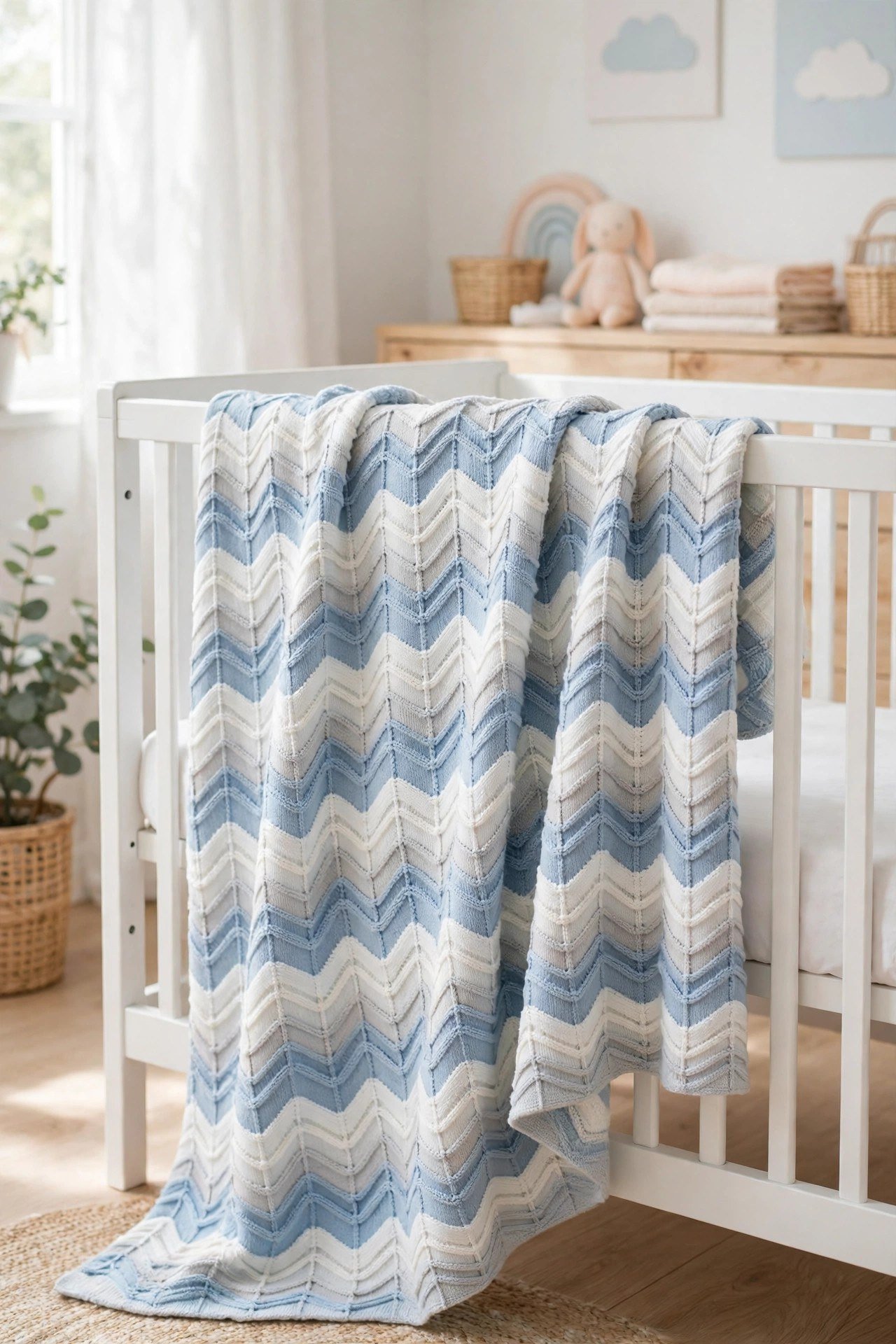
A ripple blanket is worked in rows from one short edge to the other, with a repeating wave of increases and decreases that forms gentle chevron peaks and valleys. Begin with a foundation chain, then work the ripple repeat across every row, changing colour every few rows for soft stripes of blue, white and pale grey. The wave pattern is easy to memorise once you have worked the first few rows, and it grows quickly. You will need soft baby yarn in two or three colours and a crochet hook; keep a stitch marker at the start of each row so the chevron edges stay straight.
Shell Stitch Baby Blanket
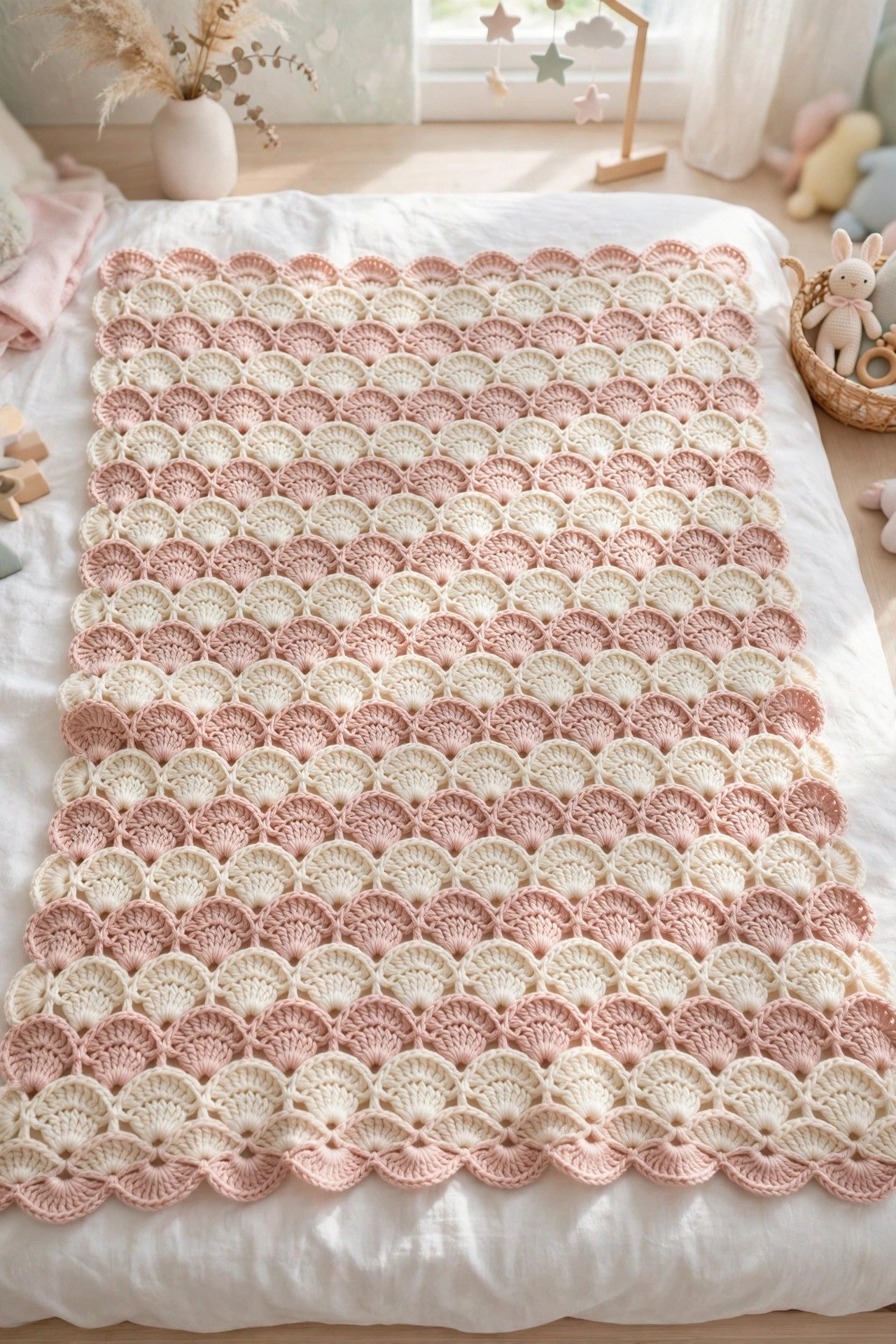
Shell stitch makes one of the prettiest baby blankets, with rows of fan-shaped shells that look like scallops. Work a foundation chain, then build each shell from a group of stitches worked into the same stitch, with a single stitch between shells to anchor them. Repeat the shell row, changing colour every few rows if you like, until the blanket reaches cot size. Finish with a border of one or two shell rows around the edges so the scallops run all the way round. You will need soft baby yarn in blush pink and cream, a crochet hook, and a yarn needle for weaving in the ends.
Star Stitch Baby Blanket
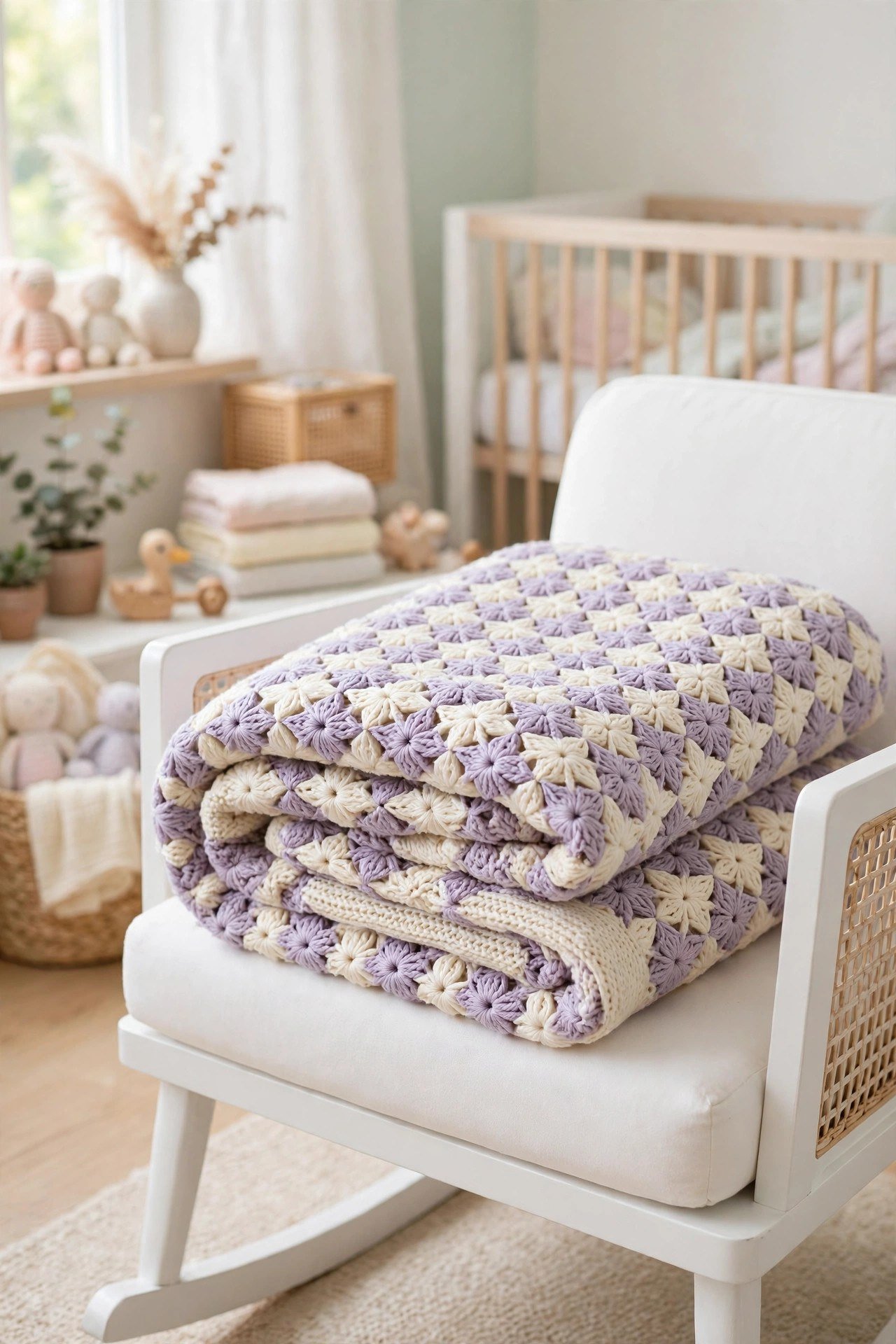
Star stitch gives a blanket a dense, cushioned texture that is warm and soft against a baby’s skin. Work it in rows: each star is formed by pulling up loops across several stitches and drawing them together, then a single stitch anchors the star before the next one begins. The first row takes concentration, but once the rhythm clicks the pattern repeats easily. Work the whole blanket in one soft colour, like lavender, or stripe it with cream every few rows. You will need soft baby yarn, a crochet hook, and a little patience for the first few rows — the finished texture is worth it.
Corner-to-Corner (C2C) Baby Blanket
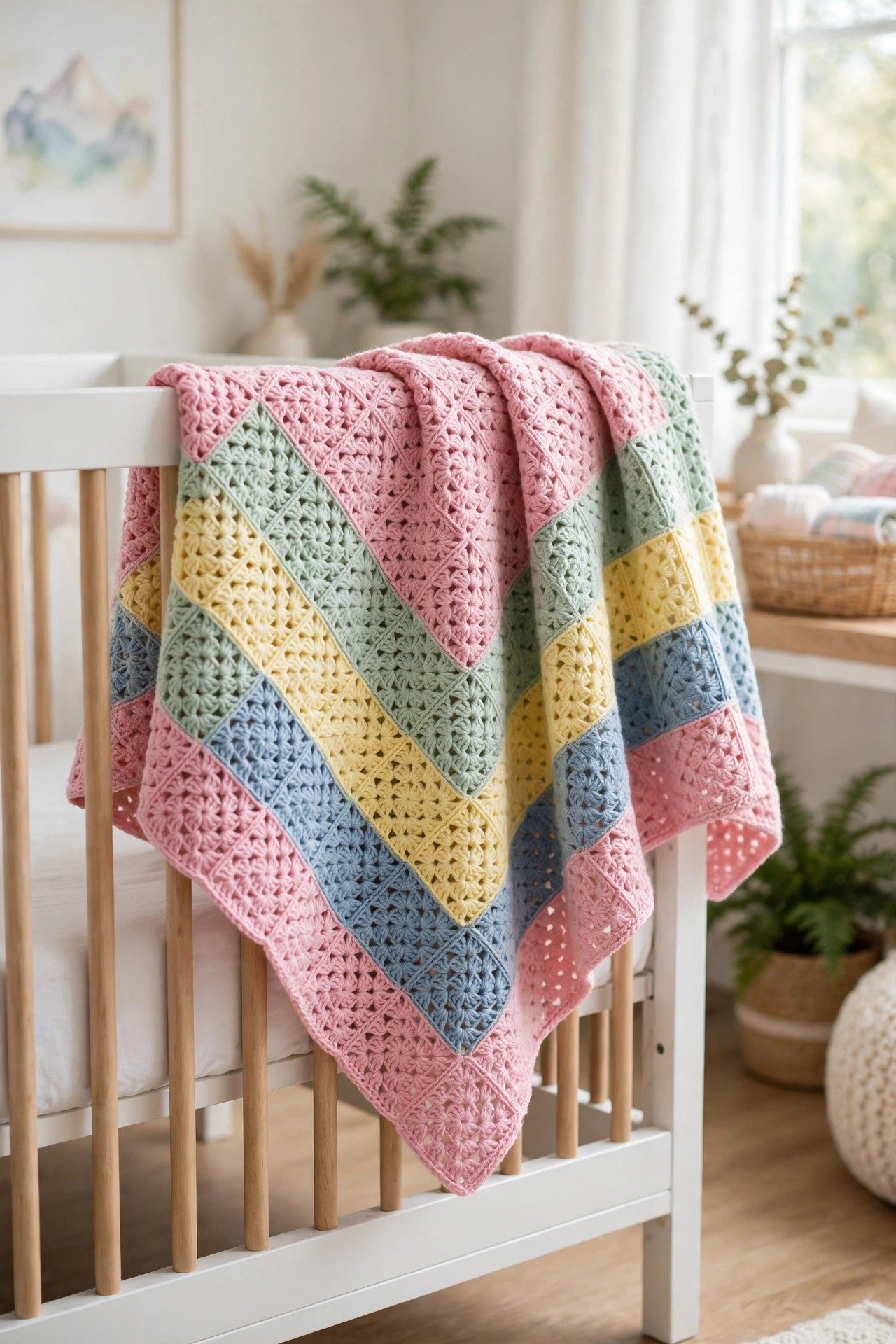
Corner-to-corner, or C2C, is worked diagonally: you start with a single small square in one corner and increase one square per row until the blanket is as wide as you want, then decrease back down to the opposite corner. Each square is a tiny block of stitches, so the blanket grows fast and the diagonal construction means you never have to count long foundation chains. Use pastel rainbow colours, changing colour every few rows for soft stripes. You will need soft baby yarn in several pastel shades and a crochet hook; graph paper helps if you want to plan the colour changes.
Waffle Stitch Baby Blanket
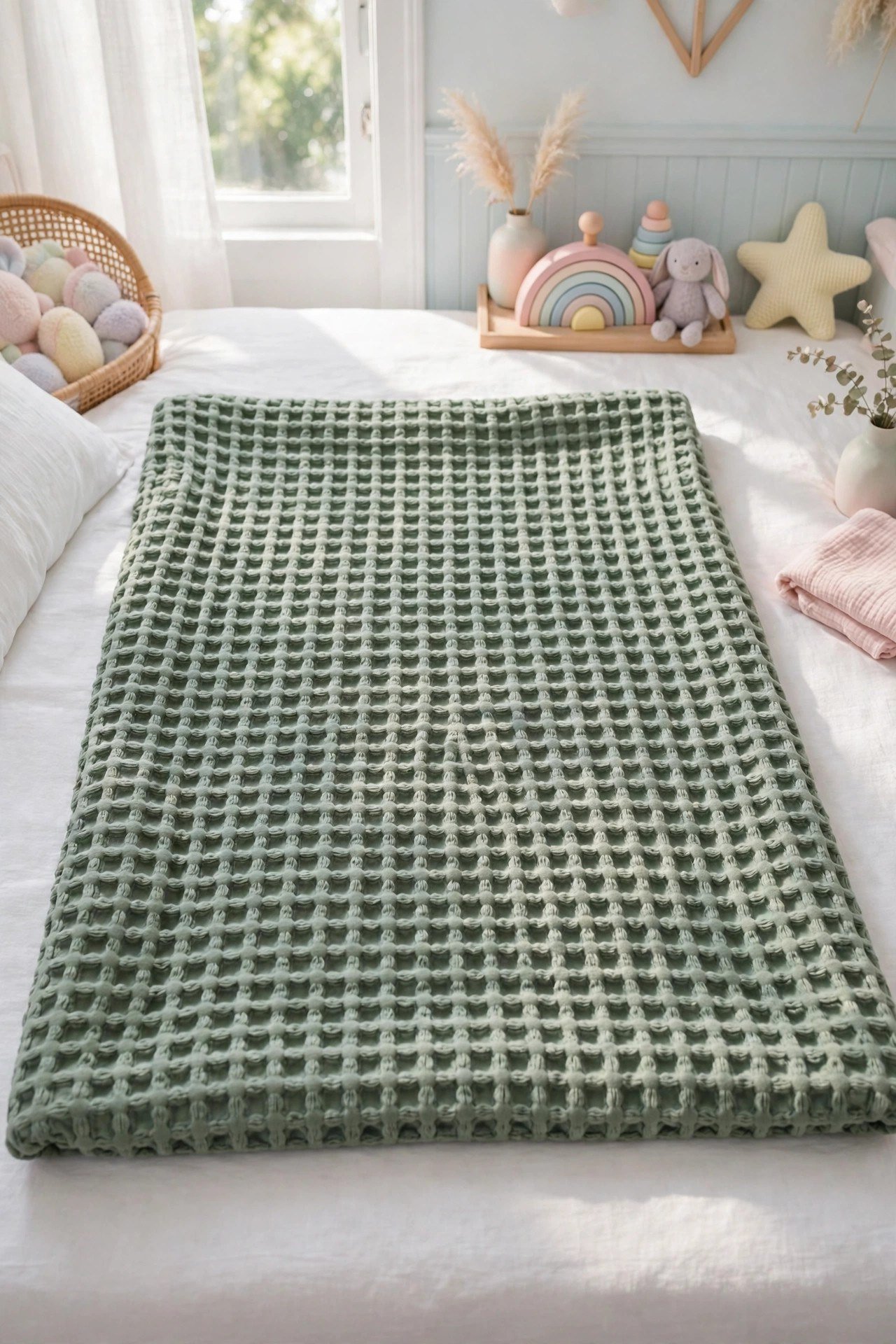
Waffle stitch creates a thick, squishy blanket with a raised grid texture that traps warmth — ideal for cooler nurseries. It is worked in rows using a mix of front-post and regular stitches, which push the stitches forward to form the waffle squares. The pattern repeats every two rows, so once you have the first few rows worked it becomes easy to follow by feel. Work it in a single soothing colour like sage green so the texture does the talking. You will need soft, slightly chunky baby yarn and a crochet hook one size up from usual, so the thick texture stays soft and drapey.
Woodland Animal Baby Blanket
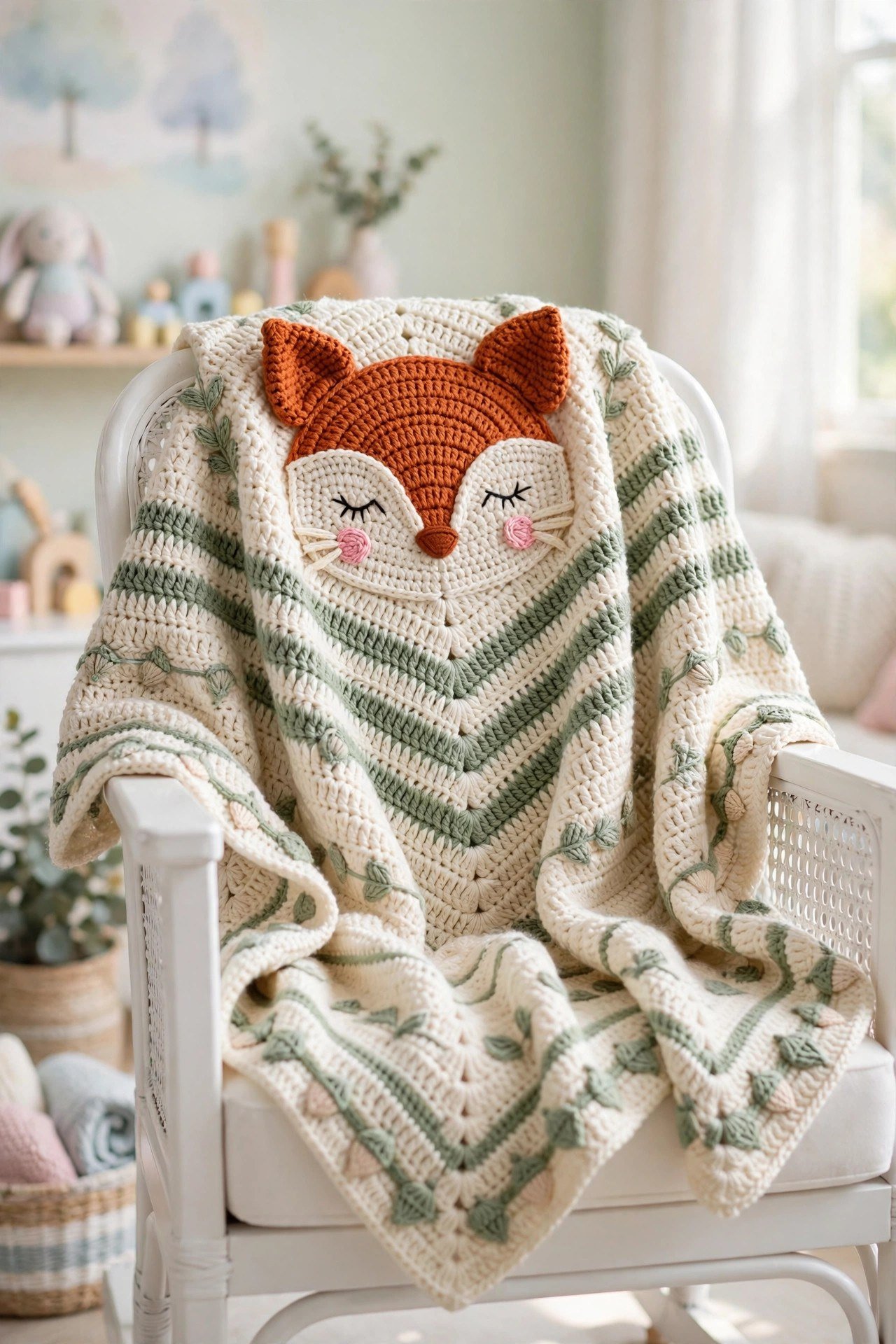
A woodland blanket starts as a simple solid-colour blanket — cream or sage works beautifully — and the magic comes from the animal appliques sewn on top. Crochet a fox face, a bear, or an owl from small circles and triangles in rust orange, brown and cream, then stitch each piece onto the blanket with a yarn needle, adding tiny embroidered eyes and a nose. Keep the appliques flat and firmly attached, with no loose buttons or small parts. You will need soft baby yarn in cream, sage, rust and brown, a crochet hook, a yarn needle, and a little black yarn for the embroidered details.
Rainbow Stripe Baby Blanket
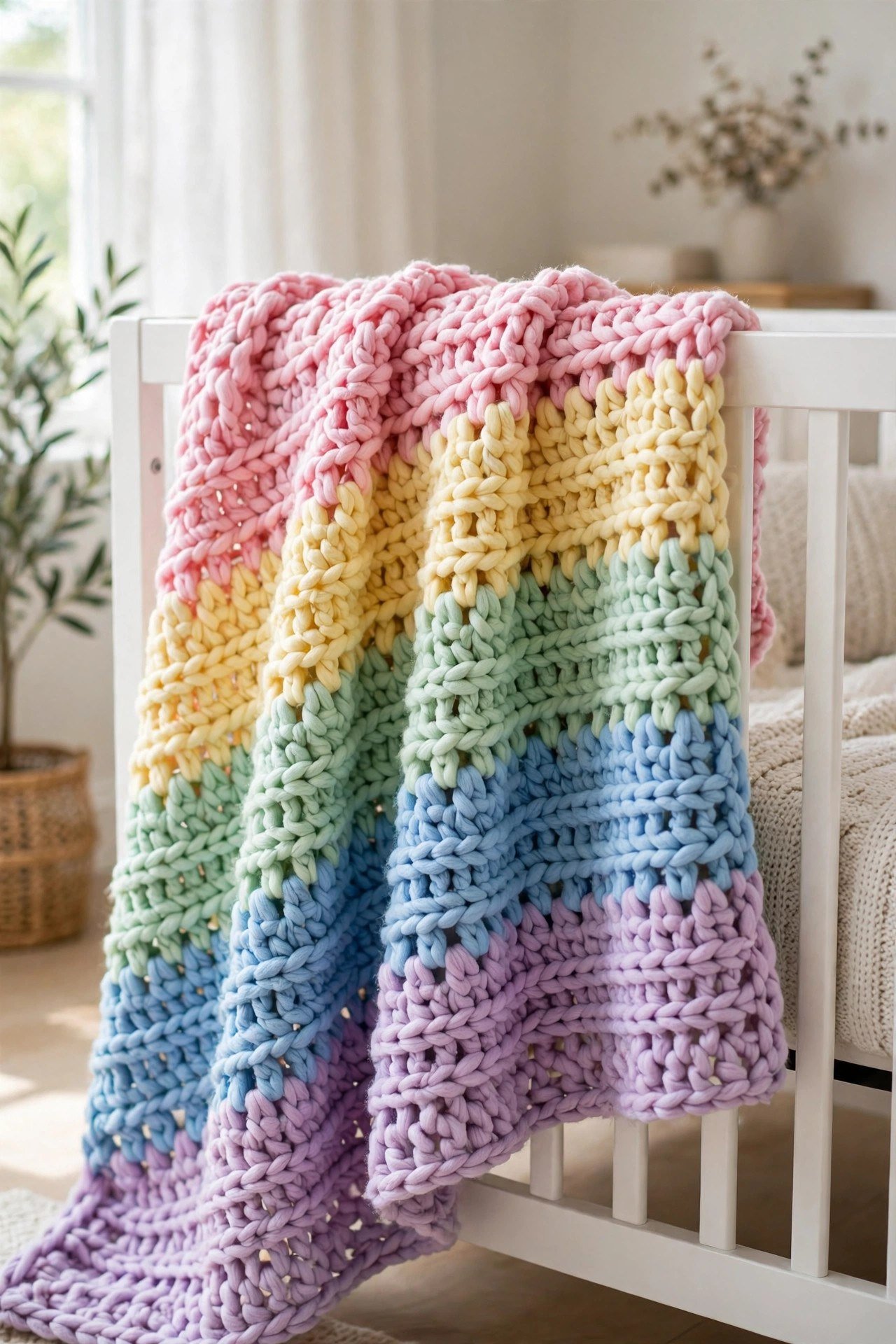
Rainbow stripes are the simplest way to make a cheerful baby blanket: work plain rows of stitches and change colour every few rows to build soft bands of pink, yellow, mint, blue and lilac. Use simple stitches throughout so the colours carry the design, and carry the yarn up the side edge when you change colour so you do not have dozens of ends to weave in. Finish with a border in white or cream to frame the rainbow. You will need soft baby yarn in five or six pastel colours and a crochet hook; this is a wonderful stash-busting project and a great first blanket for a confident beginner.
Heart Motif Baby Blanket
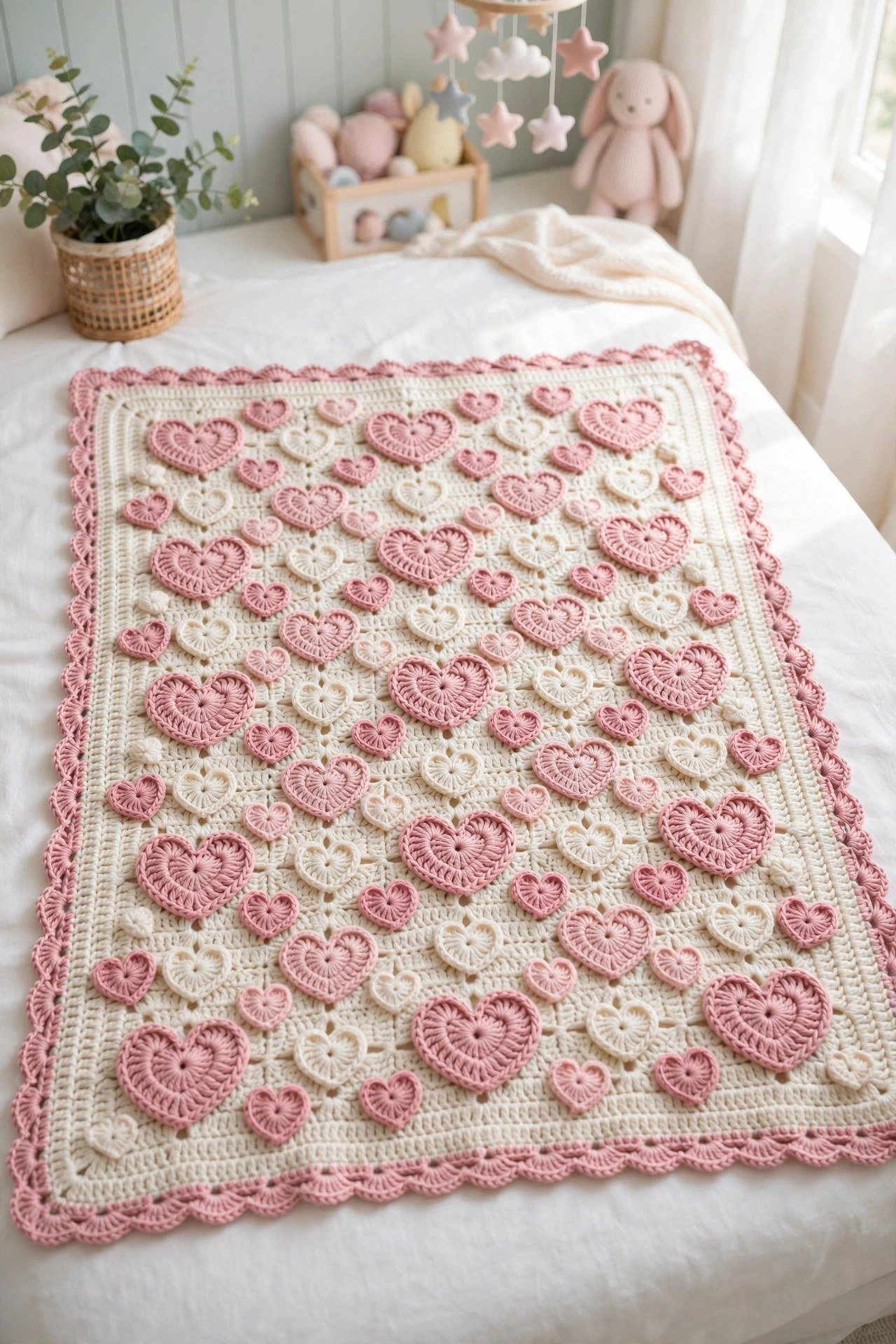
Hearts make a baby blanket feel made with love. Work the blanket base in soft rose pink or cream using plain stitches, then crochet small heart motifs separately — each heart is worked in rounds with increases and decreases that shape the two lobes and the point — and sew them onto the blanket in neat rows with a yarn needle. Space the hearts evenly and use a contrasting colour, like cream hearts on pink, so they stand out. You will need soft baby yarn in rose pink and cream, a crochet hook and a yarn needle; make one heart first to check the size before you crochet the full set.
Lacy Heirloom Baby Blanket
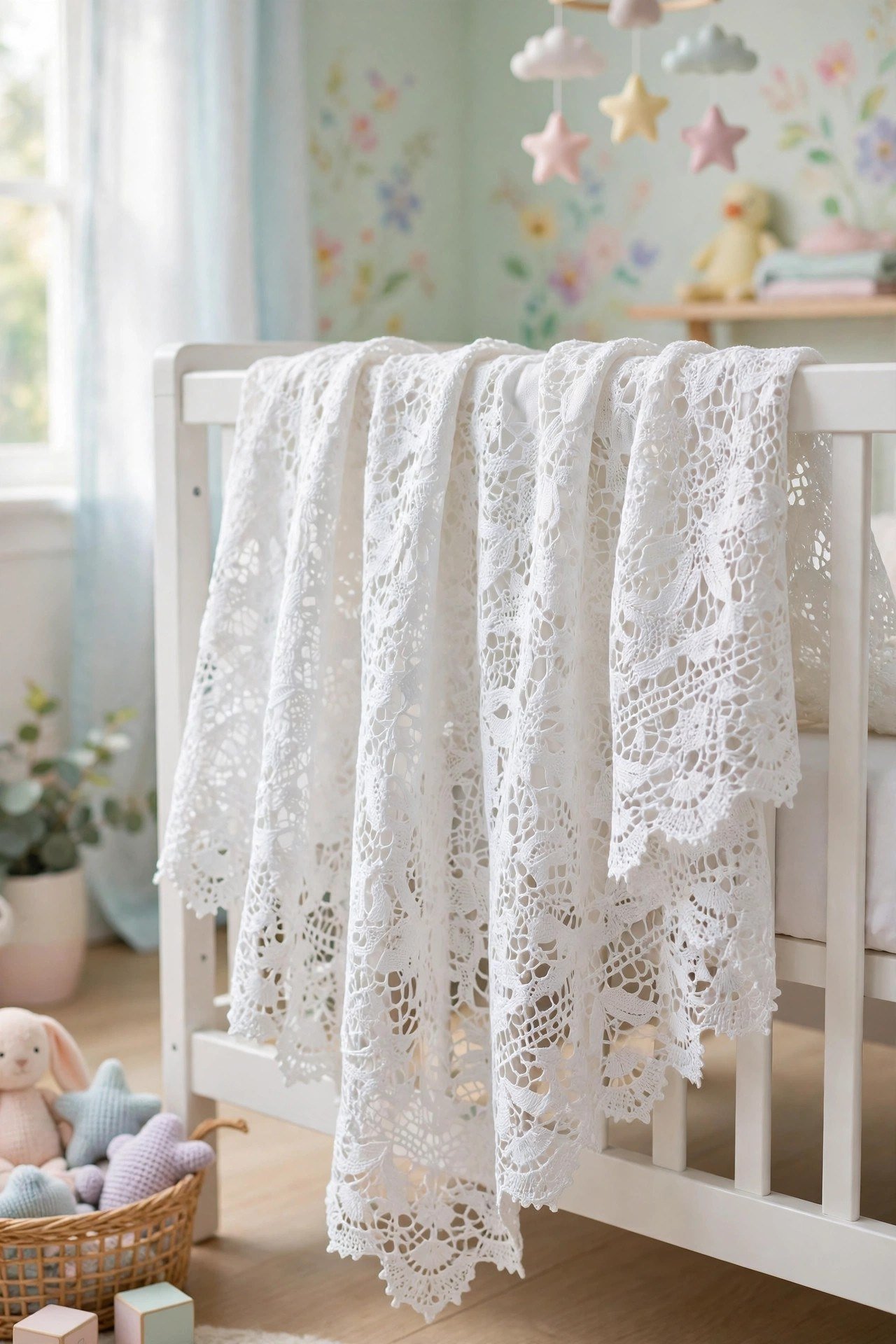
A lacy heirloom blanket is the one made to be kept and handed down. Work it in fine white or cream baby yarn with an openwork stitch pattern — chains and clusters that form diamonds or fans with small gaps between them — so the blanket is light and airy. The openwork looks delicate but is worked in simple repeats, so take it one row at a time and use stitch markers to keep the pattern lined up. Finish with a wide lace border of scallops or shells around all four edges. You will need fine soft baby yarn, a smaller crochet hook, a yarn needle, and a little more time than a chunky blanket — the result is a keepsake.
Hooded Bunny-Eared Baby Blanket
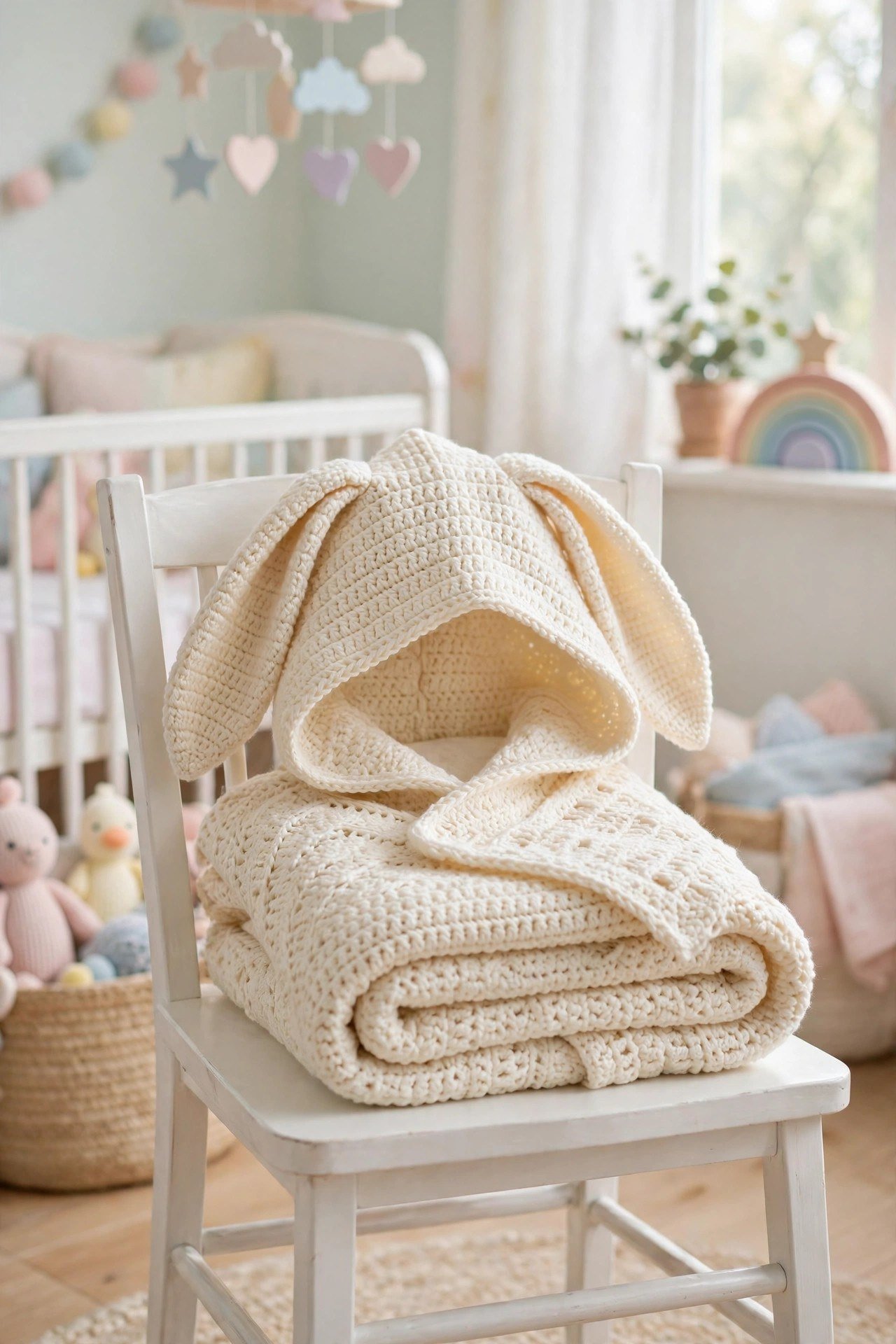
A hooded blanket with bunny ears is part blanket, part cuddle toy. Crochet the blanket itself in soft cream using plain stitches, then work a hood as a separate rectangle folded in half and joined along the top, and sew it to one short edge of the blanket. The ears are two long, slightly tapered pieces worked in the round and stuffed very lightly, then stitched to the top of the hood so they flop gently to the sides. Add a soft pink inner-ear panel for a sweet touch. You will need soft baby yarn in cream and pale pink, a crochet hook, a yarn needle, and a little toy stuffing for the ears.
Textured Bobble Stitch Baby Blanket
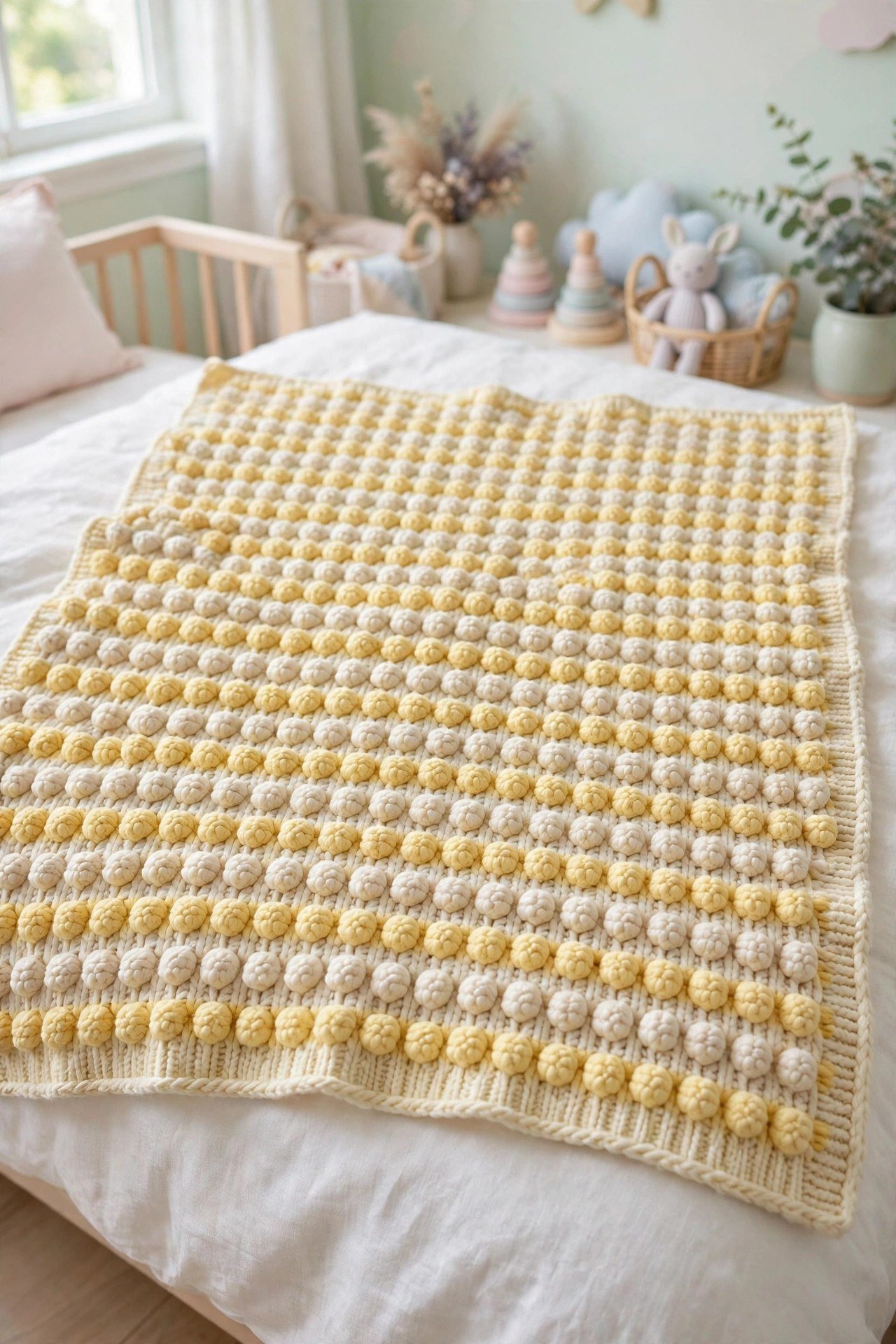
Bobble stitch turns a plain blanket into a sensory delight, with rows of soft raised dots a baby can feel. Work the blanket in plain stitches, then place a bobble — a cluster of stitches worked into one stitch and drawn together into a little puff — at regular intervals across every few rows, keeping the spacing even so the dots form neat lines. Use pale yellow and cream, alternating the bobble colour with the background for a gentle contrast. You will need soft baby yarn in pale yellow and cream, a crochet hook and a yarn needle; count the stitches between bobbles carefully on the first bobble row, then follow the same spacing all the way down.