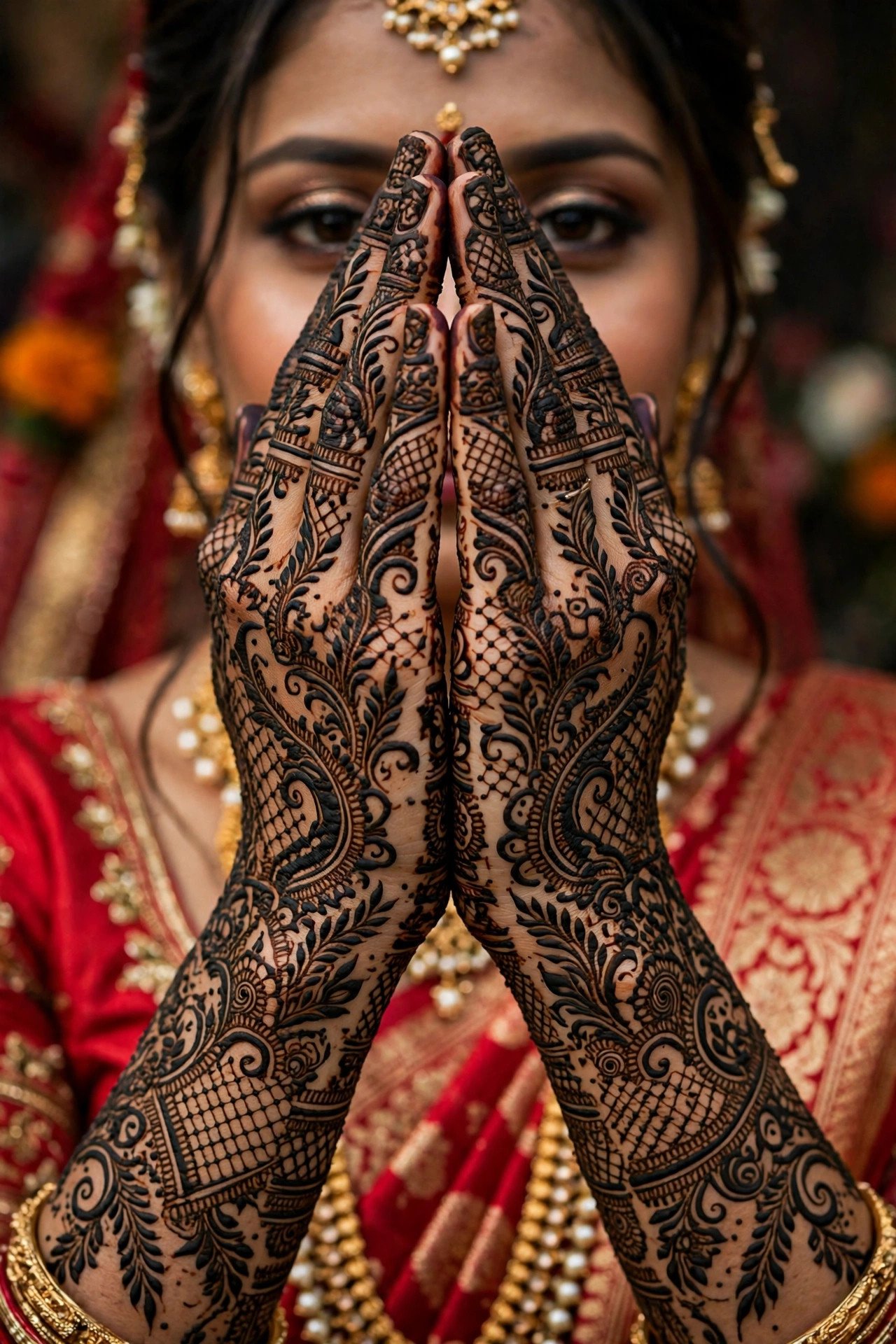
Indo-Arabic fusion bridal mehndi takes the best of both traditions: the bold, flowing vines and open spaces of Arabic work, and the dense, detailed palms and mandalas of Indian bridal mehndi. Together they make a bridal design that reads clearly from across the room and rewards a closer look — deep, dark henna, sweeping curves, and fine fill work in a single pair of hands. These 12 Indo-Arabic fusion bridal mehndi designs cover the full range, from paired full hands to the forearm to light fusion for the modern bride, so whether you are the bride or her closest family, there is a design here for your big day.
Paired Full Hands to the Forearm
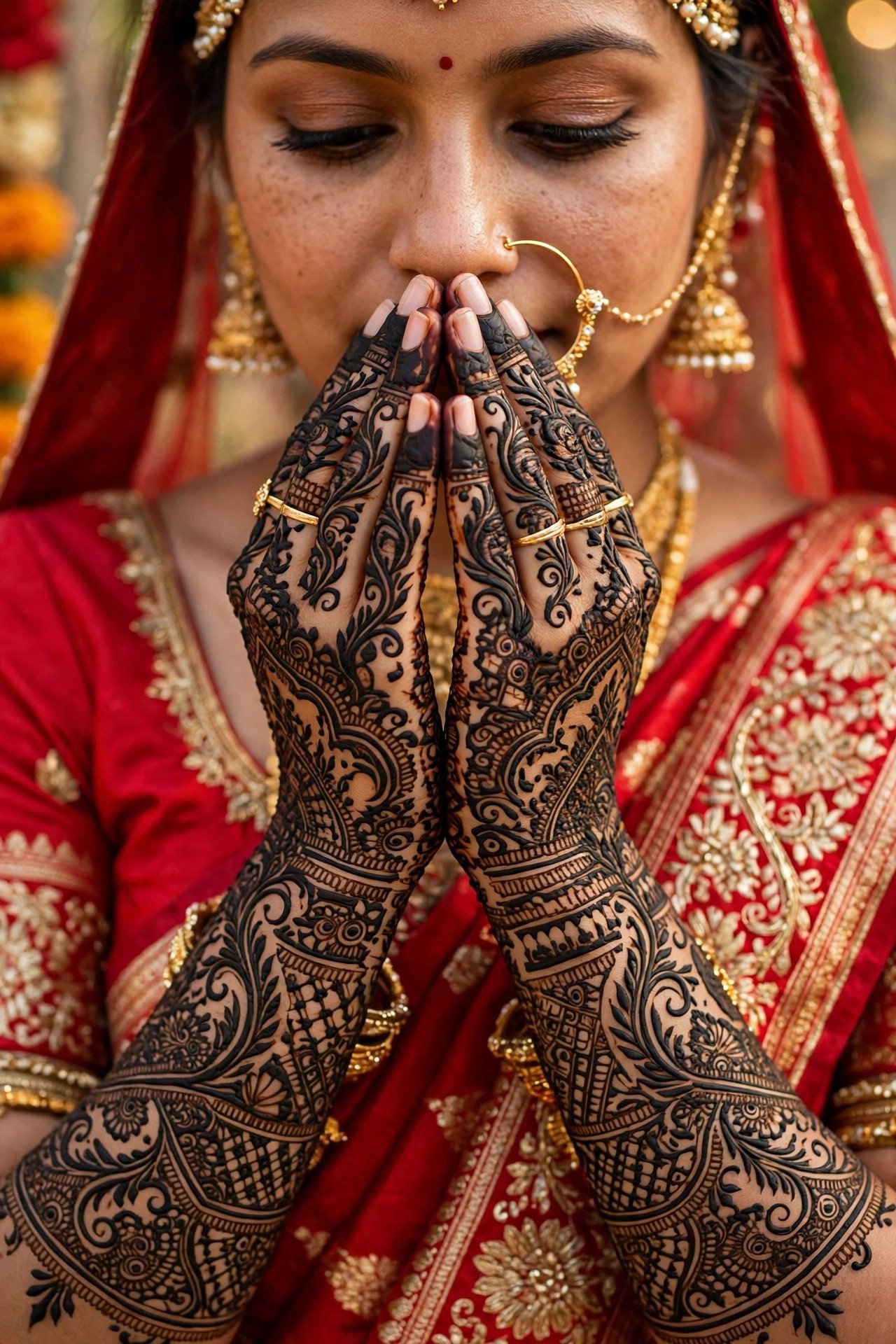
The paired full hands are the bridal classic: both hands covered from fingertips to forearm, so the mehndi reads as one grand design in every photo. Arabic vines sweep boldly across the palms while dense Indian fill work packs the spaces between them, giving the hands a deep, almost black-red stain once set. This is the design for the bride herself — wear it with your red sari and gold jewellery, and hold your hands together near your face for the photograph; it is the shot every bridal album needs. Give the henna a full night to develop, and keep the hands warm so the colour turns as dark as possible.
Fusion Palm Mandala with Arabic Vines
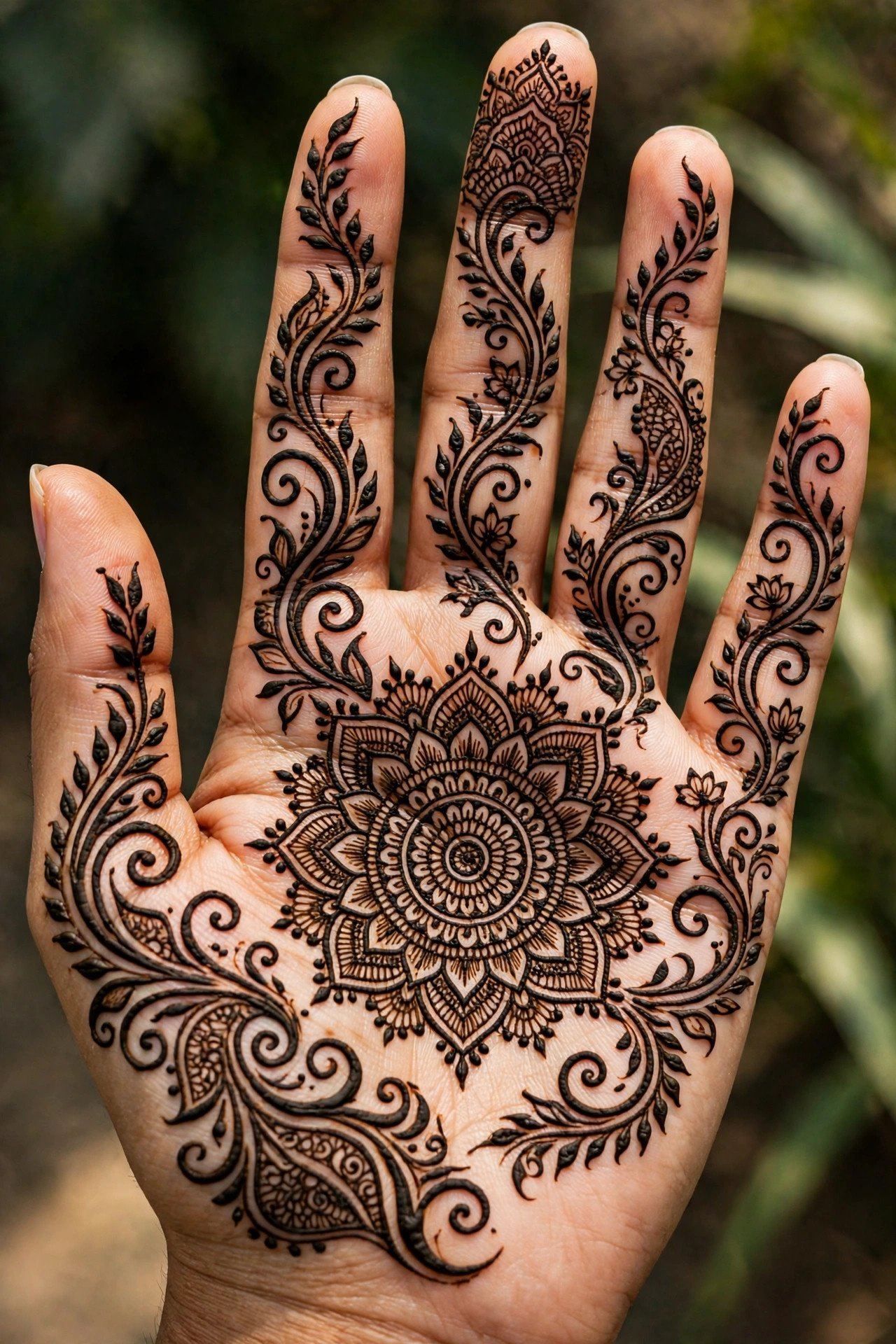
A detailed Indian mandala sits in the centre of the palm, and bold Arabic vines curl out from it across the palm and up the fingers — the two traditions in a single frame. The mandala gives the design its bridal density, while the vines give it movement, so the hand looks rich from a distance and rewards a closer look. It suits the bride and her closest family, and photographs beautifully against a red or jewel-toned outfit. Ask your artist to keep the mandala rings fine and even; the contrast between the dense centre and the sweeping vines is what makes this fusion work.
Bold Arabic Trail with Indian Fill Work
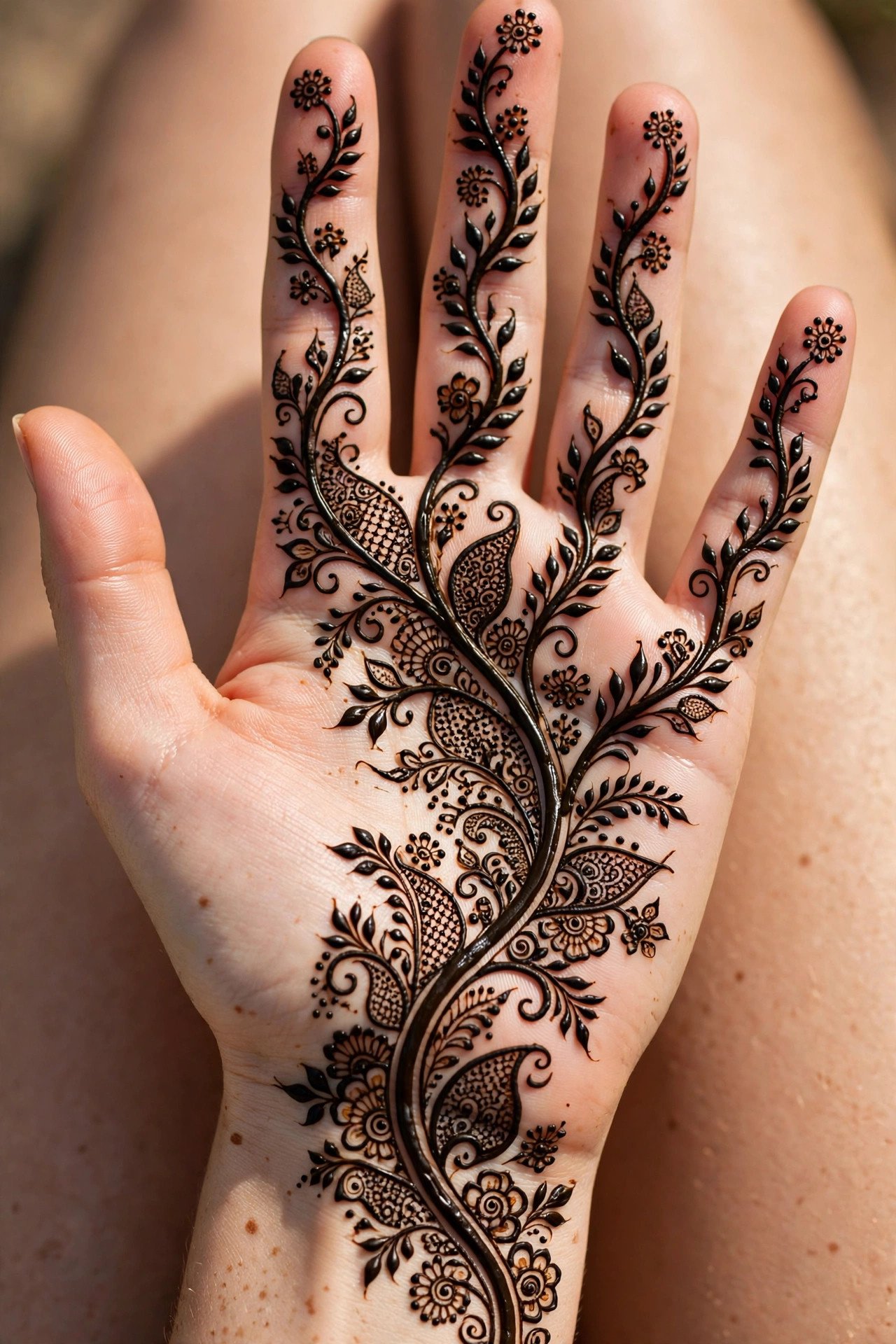
Here the Arabic trail leads and the Indian work fills: one thick, flowing vine sweeps from the wrist across the palm to the fingertips, and inside the vine sits fine, dense dotwork and tiny floral details. The bold outline reads clearly in photos, while the fill gives the design its bridal richness up close. It is a lovely choice for a bride who loves Arabic style but wants the depth of a full Indian stain. The thick vine stains very dark, and the fine fill softens into a warm brown around it — a beautiful two-tone effect by the next morning.
Dense Bridal Palms with Open Finger Spaces

Dense bridal palms with open finger spaces give you the full bridal look without the heavy fingers: the palms are covered completely in mandalas and lace-like fill, while the fingers carry only light trails. The contrast makes the palms look even richer, and your rings stay visible — a small practical win on the wedding day. This is a great pick for a bride who wants maximum colour on the palms for photographs but still wants her hands to feel light. Let the palms set overnight under a wrap; the dense fill is what delivers that deep bridal stain.
Mandala Centre with Flowing Vine Trails
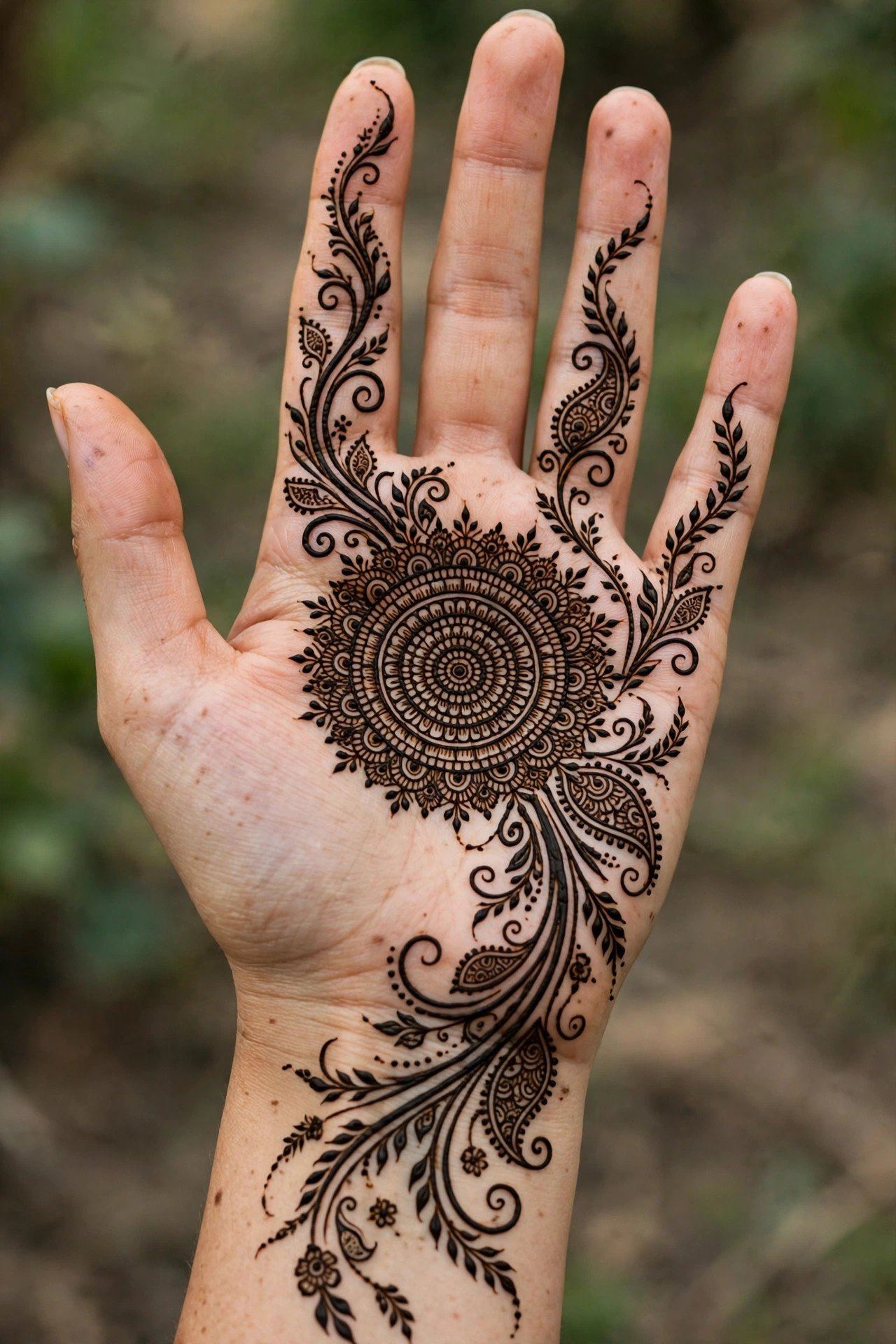
A mandala anchors the palm while long vine trails flow out from it in every direction — across the wrist, over the palm and up the fingers. The mandala gives the design its formal bridal centre, and the vines give it the free, flowing feel of Arabic work, so the hand looks both structured and romantic. It is made for the bride’s mehndi ceremony and the wedding day itself, and it pairs beautifully with bangles stacked above the wrist, where the vines meet the jewellery. Keep the vine lines bold and the mandala fill fine; the contrast is the whole charm of this fusion.
Wrist Cuff Fusion with Full Palm

An ornate henna cuff wraps the wrist in bold Arabic style, with delicate chains trailing onto a full, densely detailed Indian palm. It is mehndi as jewellery: the cuff frames the hand, and the dense palm fills it, so the whole design looks like a bridal bangle set drawn in henna. Wear it with a sleeveless or short-sleeved bridal outfit so the cuff is fully visible, and skip real bracelets on that wrist — the henna is the bracelet. The cuff stains deep and dark, while the fine palm detail softens around it.
Finger-Focused Arabic Trails with Detailed Palms
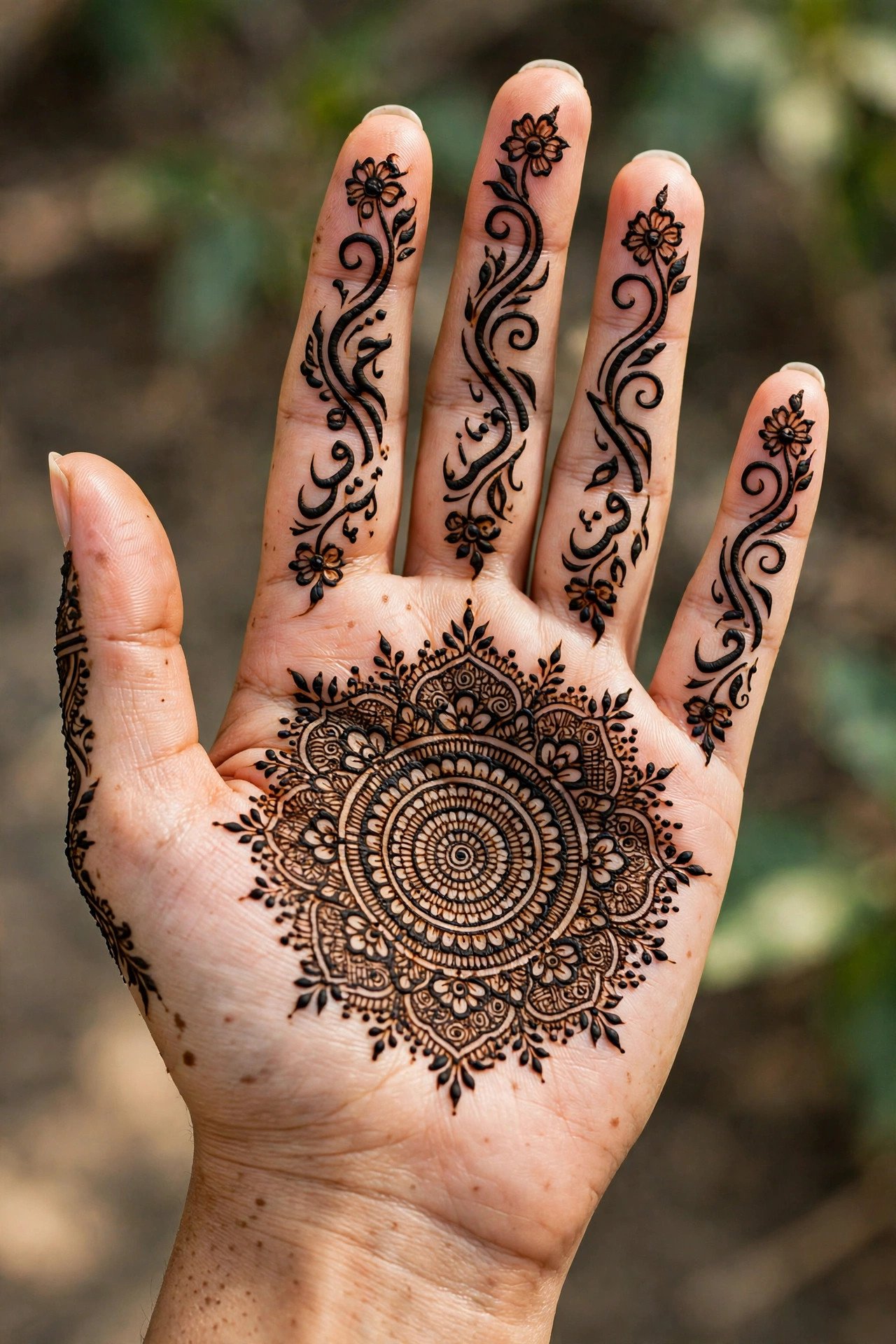
The fingers take the lead here: bold Arabic trails run along each finger with floral tips, while the palms carry fine, detailed Indian mandalas underneath. It is a striking balance — the fingers read clearly from across the room, and the palms reward anyone who looks closer. This design suits a bride who loves the finger-focused Arabic look but still wants her palms to carry bridal density for the close-up photographs. The fingertip henna stains the darkest of all, so the trails will look beautifully deep by the wedding morning.
Paisley Fusion Bridal Hands
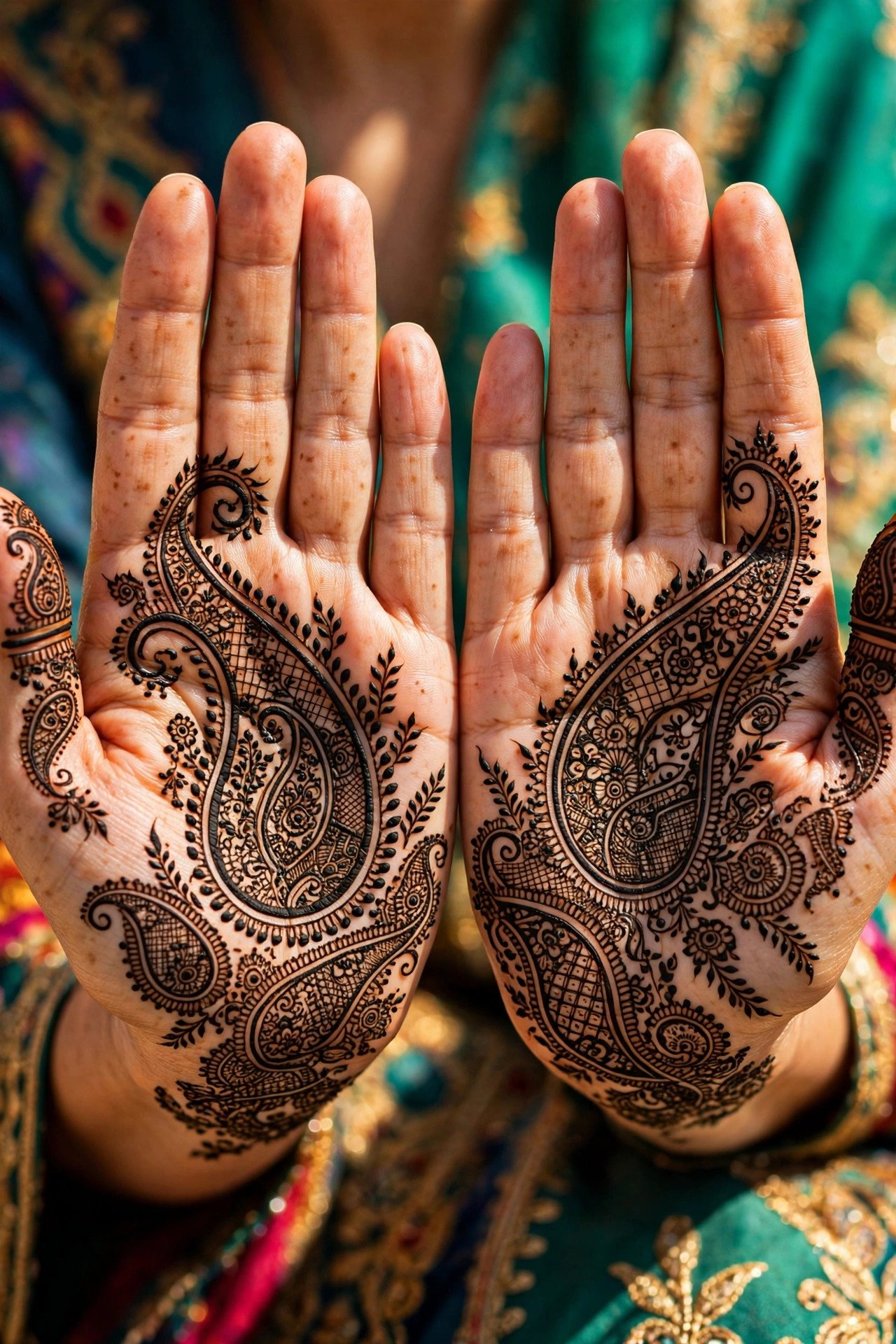
Large paisleys sweep across both palms in bold Arabic style, and each paisley is filled with fine, dense Indian detail work — a design that is both graphic and intricate at once. Paisleys never go out of fashion for bridal mehndi, and the fusion fill gives them a richness that plain outlines cannot match. It is a safe, beautiful choice for any bride, and it works with every bridal outfit from a red lehenga to a pastel sari. The paisley bodies fill in dark and warm, while the fine outlines keep the hands feeling graceful rather than heavy.
Lotus and Vine Bridal Fusion
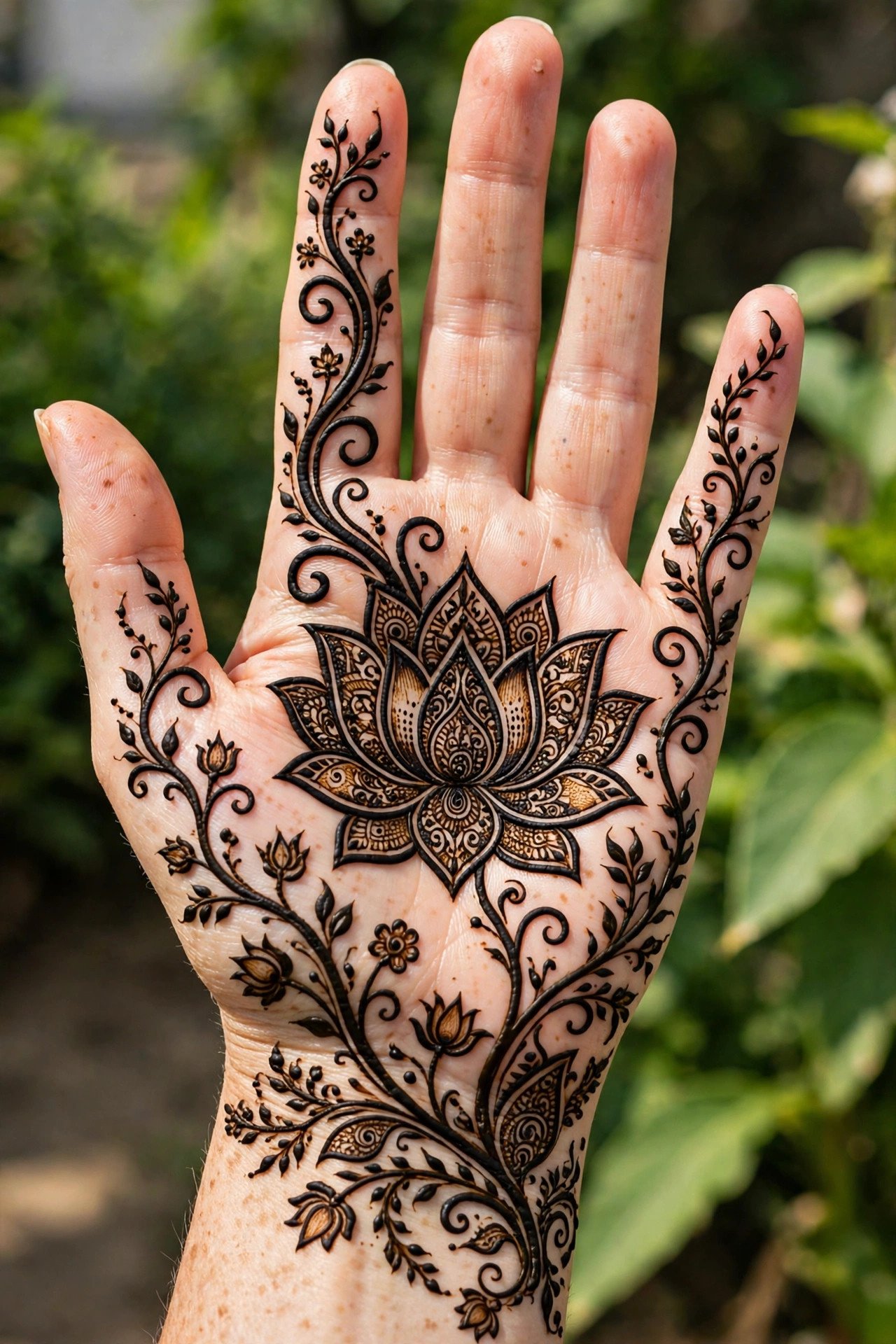
A blooming lotus sits in the centre of the palm, and bold Arabic vines curl around it toward the fingers and wrist — softness and flow in one design. The lotus gives the hand a gentle, graceful centre, while the vines keep it feeling modern and bridal at the same time. It is a natural pick for a bride who wants something feminine rather than purely geometric, and it photographs beautifully because the flower sits exactly where the eye lands. The layered petals stain with lovely depth — darker at the heart of the flower, softer at the petal tips.
Half-and-Half Fusion: Arabic One Hand, Indian the Other

Why choose one tradition when you can wear both? One hand carries bold Arabic trails with generous open spaces; the other carries dense, intricate Indian bridal detail from palm to fingertips. Held side by side, the pair tells the whole fusion story in a single photograph — and it is the most talked-about design at any mehndi ceremony. It suits a bride who loves both styles equally, and it gives photographers two completely different hands to play with. The contrast also shows off the stain beautifully: the Arabic hand stays graphic and bold, the Indian hand turns deep and rich.
Dark Dense Bridal Fusion with Jewellery Cuff
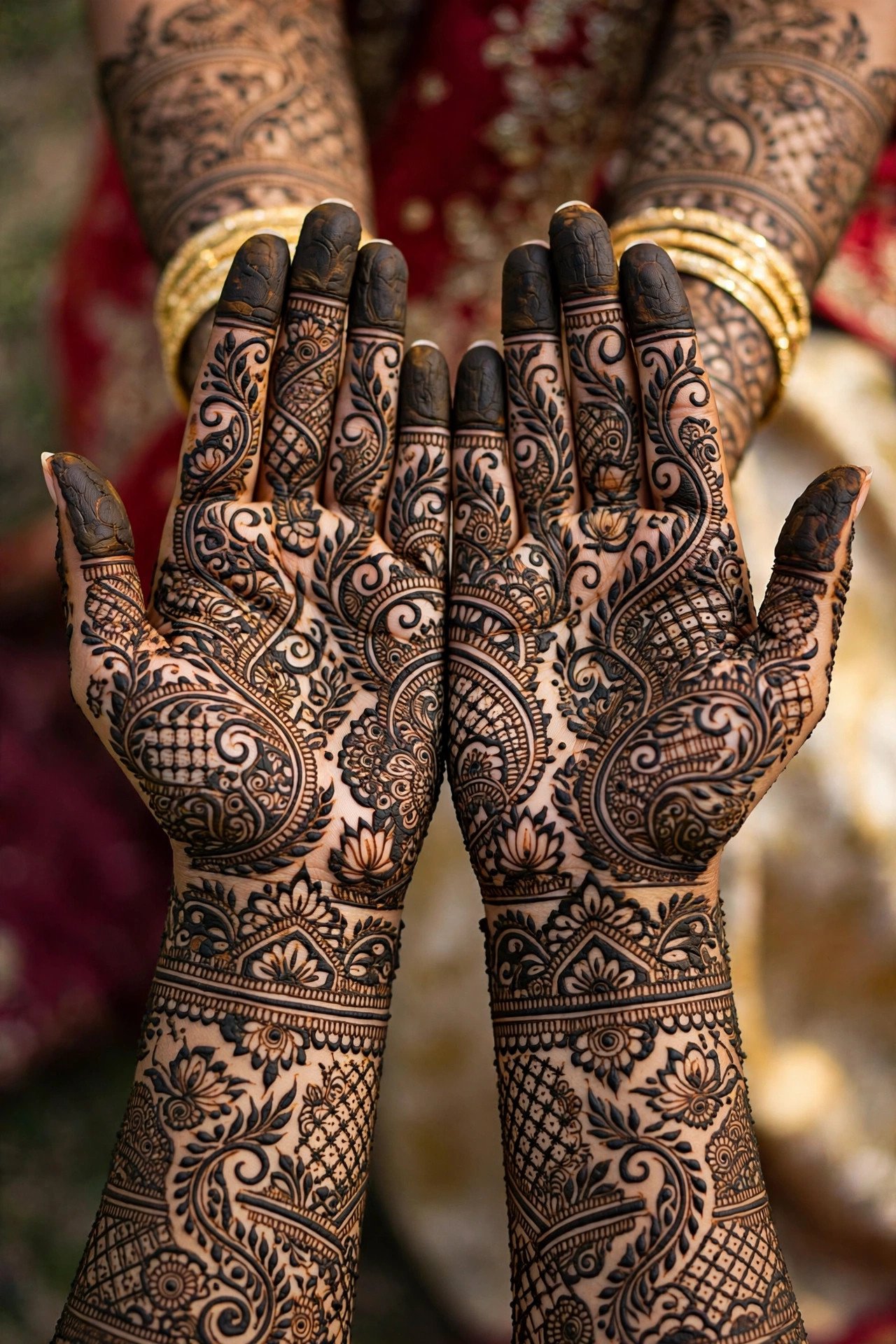
This is the fullest fusion in the list: both hands and forearms covered in intricate henna with almost no bare skin, bold Arabic vines woven through dense Indian fill, and an ornate henna jewellery cuff around each wrist. It is made for the bride on her wedding day, when the mehndi is the centrepiece and the deep, dark stain is the whole point. Give it a full evening and night to set — the denser the work, the darker the colour develops, often reaching a rich reddish-brown by the next day. Wear gold bangles above the cuffs and let the hands be photographed on their own; they deserve the frame.
Light Fusion for the Modern Bride

Light fusion is for the modern bride who wants the Indo-Arabic look without the weight: fine Arabic vine curves blended with small Indian motifs, scattered sparsely across the palm and fingers with plenty of open skin breathing between them. It is done quickly, it suits a daytime ceremony or a summer wedding, and it pairs beautifully with a contemporary bridal outfit and minimal jewellery. The stain stays soft and delicate by design — like fine lace drawn on the hand — and it fades evenly, which makes it a gentle first choice for a bride trying mehndi for the first time.