Matching bride and groom outfits are not about wearing identical clothes — they are about looking like one celebration, not two separate ones. The best-coordinated couples share a palette, an accent or a detail, and leave the rest to their own outfits. This guide covers 12 coordination rules, with examples of how they work in practice. For the outfits themselves, start with our two catalogues: 14 bridal lehenga ideas for women for the bride’s lehenga, and 12 sherwani outfit ideas for grooms for the groom’s sherwani — then use the rules below to tie the two looks together.
1. Share One Colour Palette
Start by choosing one palette family — jewel tones, pastels, earth tones or monochrome — and let both outfits live inside it. The bride’s lehenga and the groom’s sherwani do not need the same colour; they need colours that belong to the same family, so the couple reads as one picture. Our bridal lehenga ideas cover every palette family, so pick the family first and choose both outfits from it.
2. Match an Accent, Not the Whole Outfit
The easiest coordination trick is accent matching: the groom’s pocket square, safa or stole picks up one accent colour from the bride’s lehenga border or dupatta. The accent should be visible but small — a flash of colour, not a second outfit. This is how couples coordinate without looking like they are wearing a uniform.

3. Keep the Embroidery Metal the Same
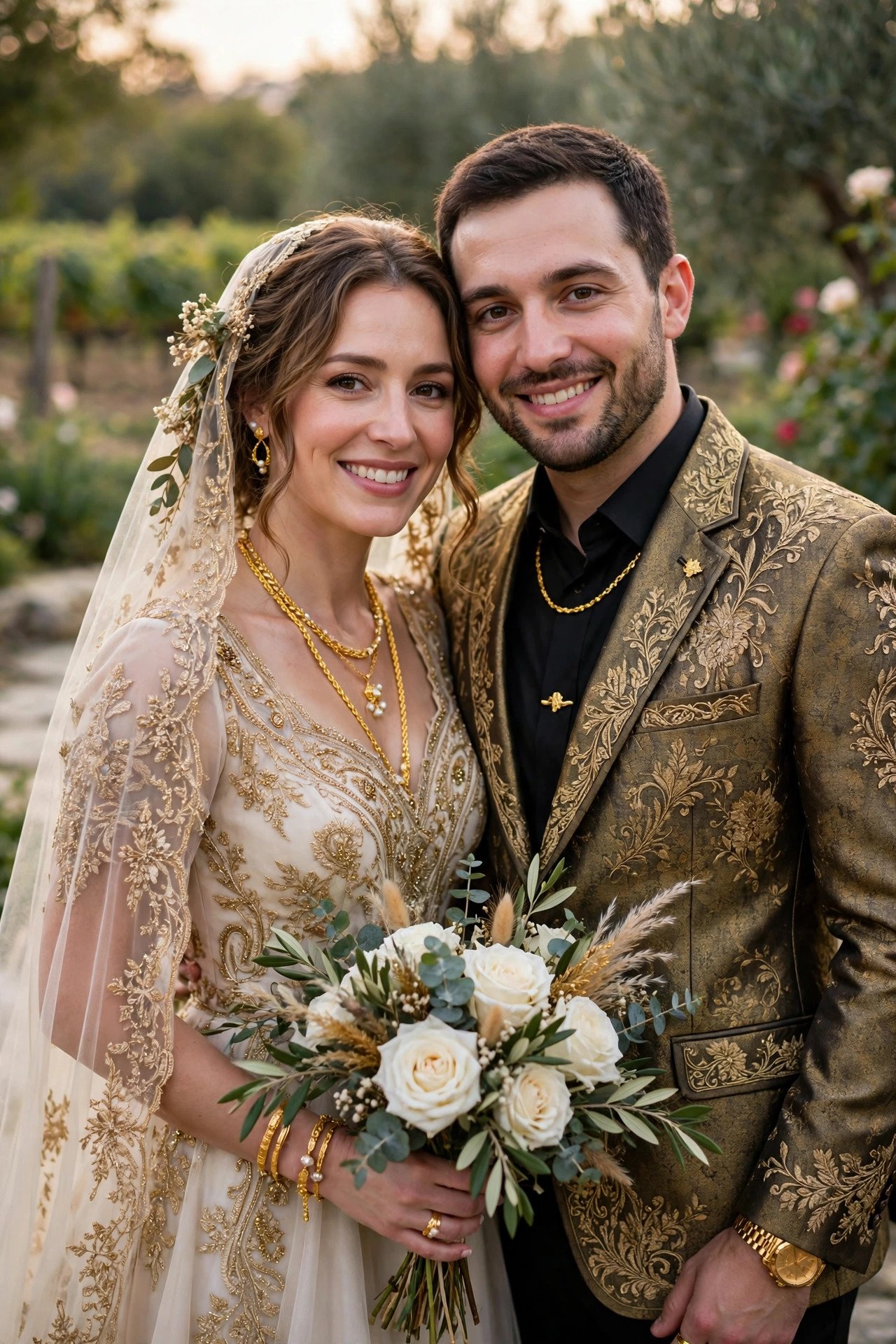
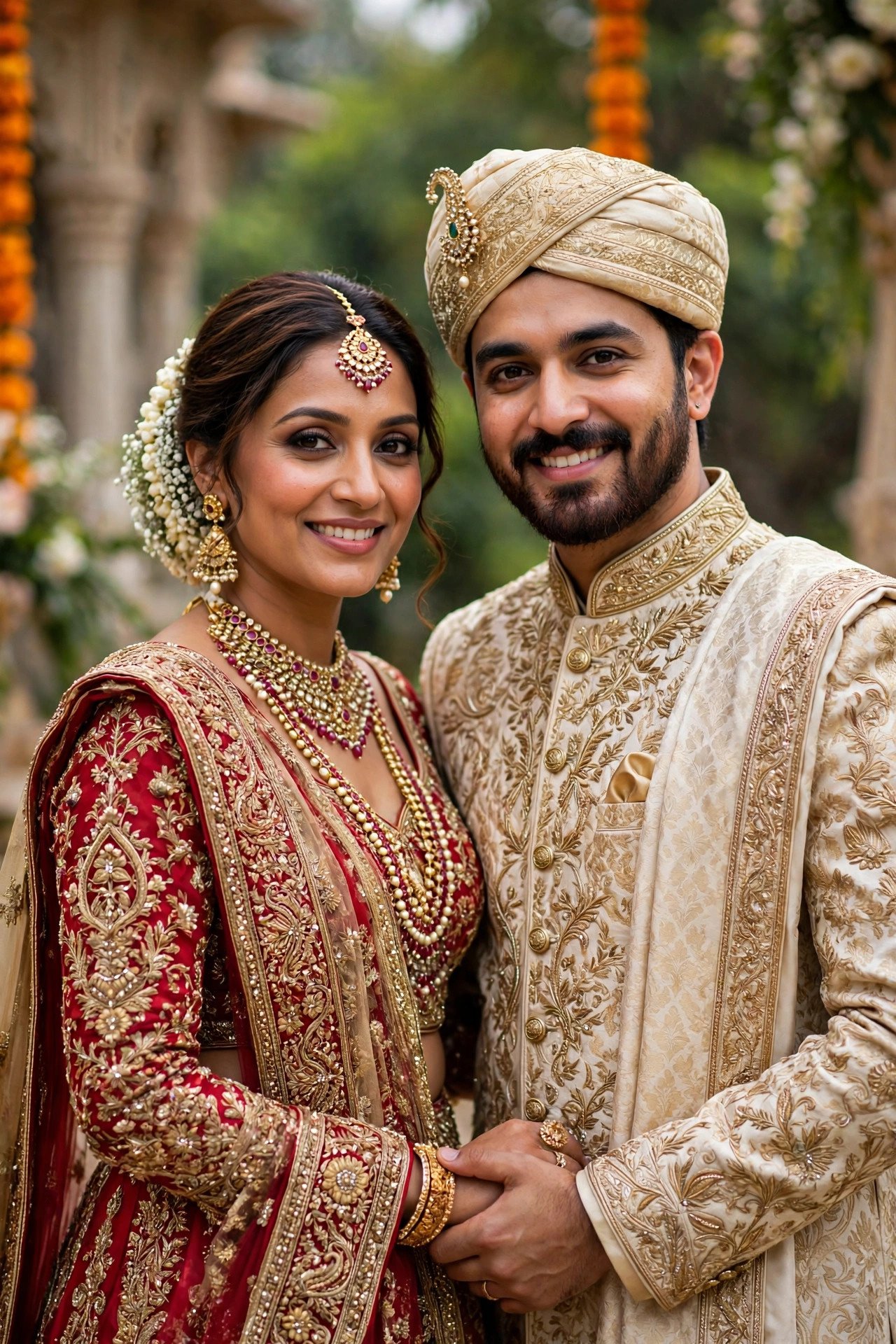
Gold embroidery on one outfit and silver on the other is the most common coordination mistake, and it shows in photographs. If the bride’s lehenga uses gold zardozi, the groom’s sherwani buttons, brooch and stole border should be gold too. Match the metal, and the two outfits will feel related even in different colours.
4. Contrast, Don’t Clash
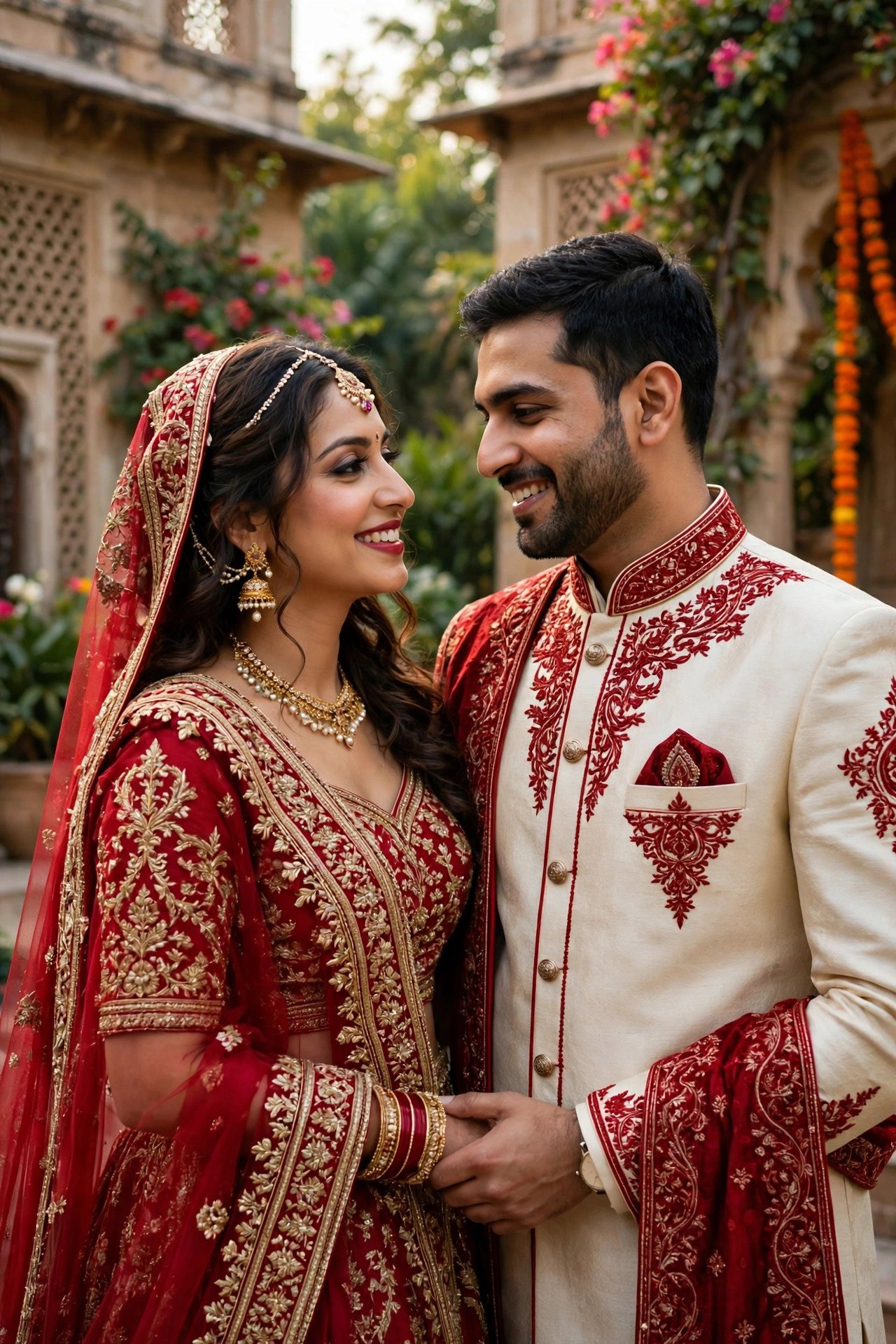
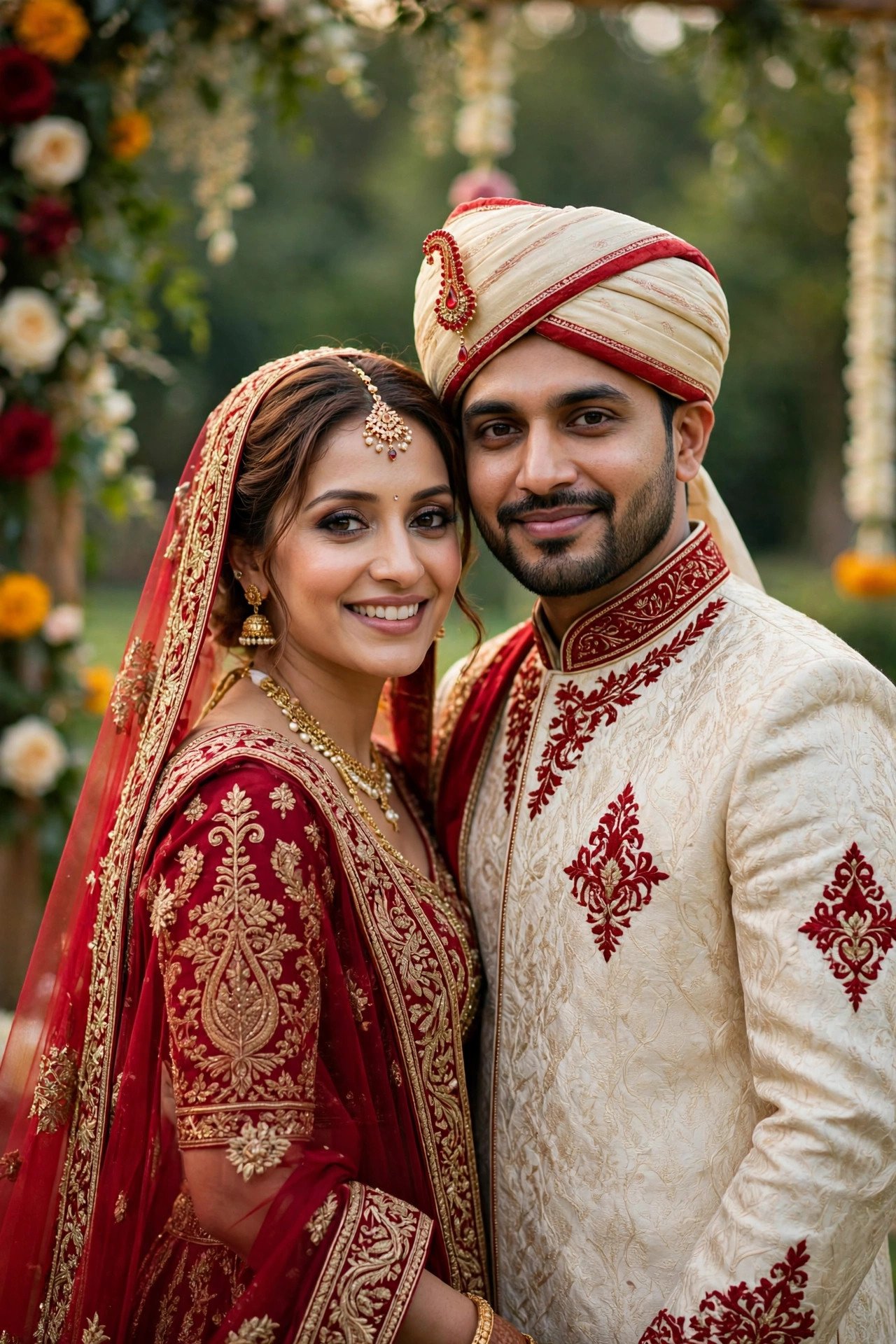
Contrast is coordination done well: a deep red lehenga with a cream sherwani, or a navy sherwani with a blush lehenga. The rule is that contrasting colours should share a temperature — both warm or both cool. Warm red with cool mint clashes; warm red with warm cream harmonises. Test the pair side by side before the day.
5. Match the Formality Level
A heavily embroidered bridal lehenga next to a plain kurta looks unbalanced, however good each outfit is alone. Match formality: ornate with ornate, minimal with minimal. If the bride wears a regal lehenga, the groom needs a sherwani or bandhgala with equal ceremony weight — our sherwani ideas are built for exactly that pairing.
6. Coordinate the Safa with the Dupatta
The groom’s safa and the bride’s dupatta are the two most visible head-and-shoulder elements in portraits, so coordinating them pays off disproportionately. The safa does not need to match the dupatta exactly — the same colour family, or a border colour picked up from the dupatta, is enough to tie the portraits together.
7. Let the Season Set the Tone
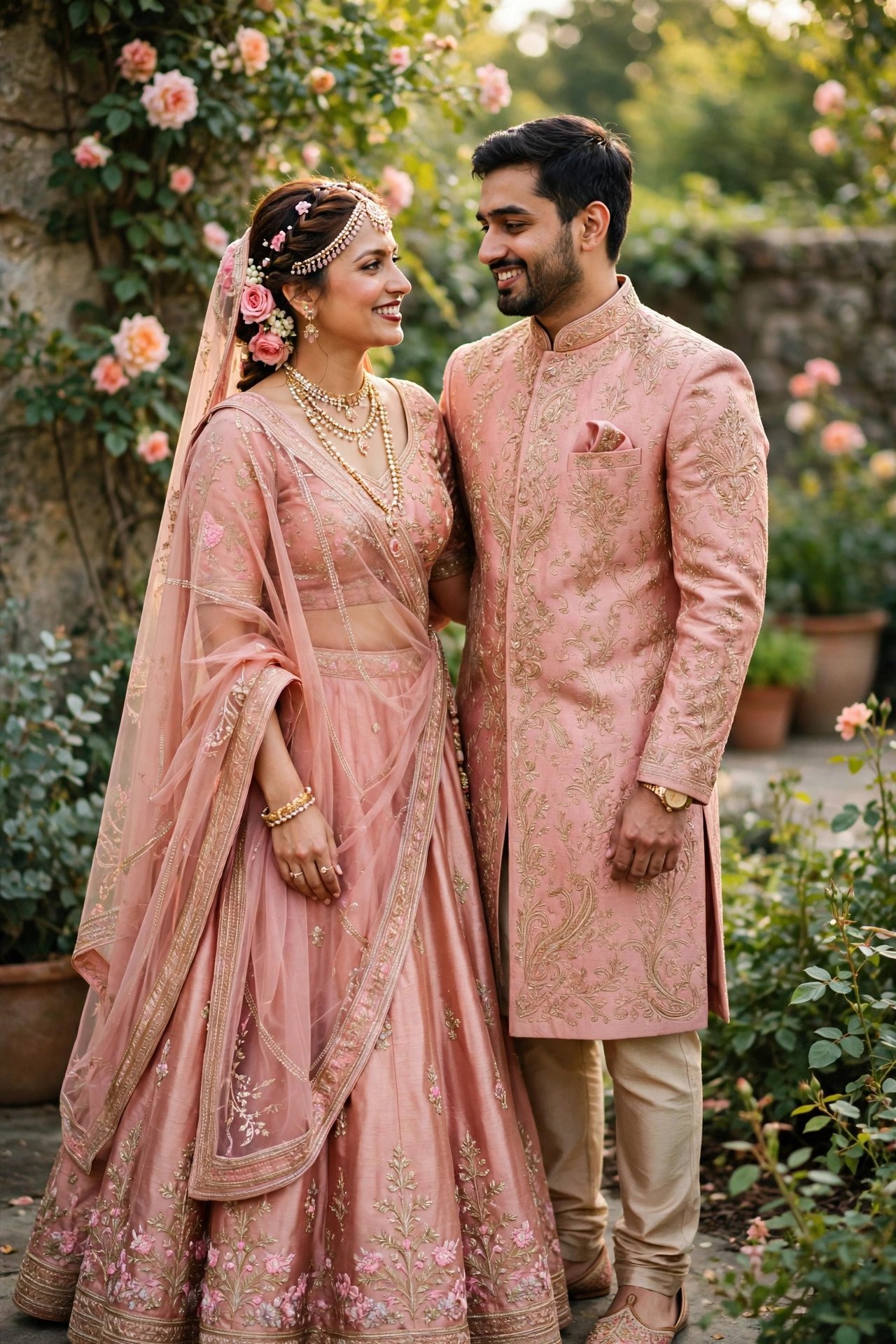
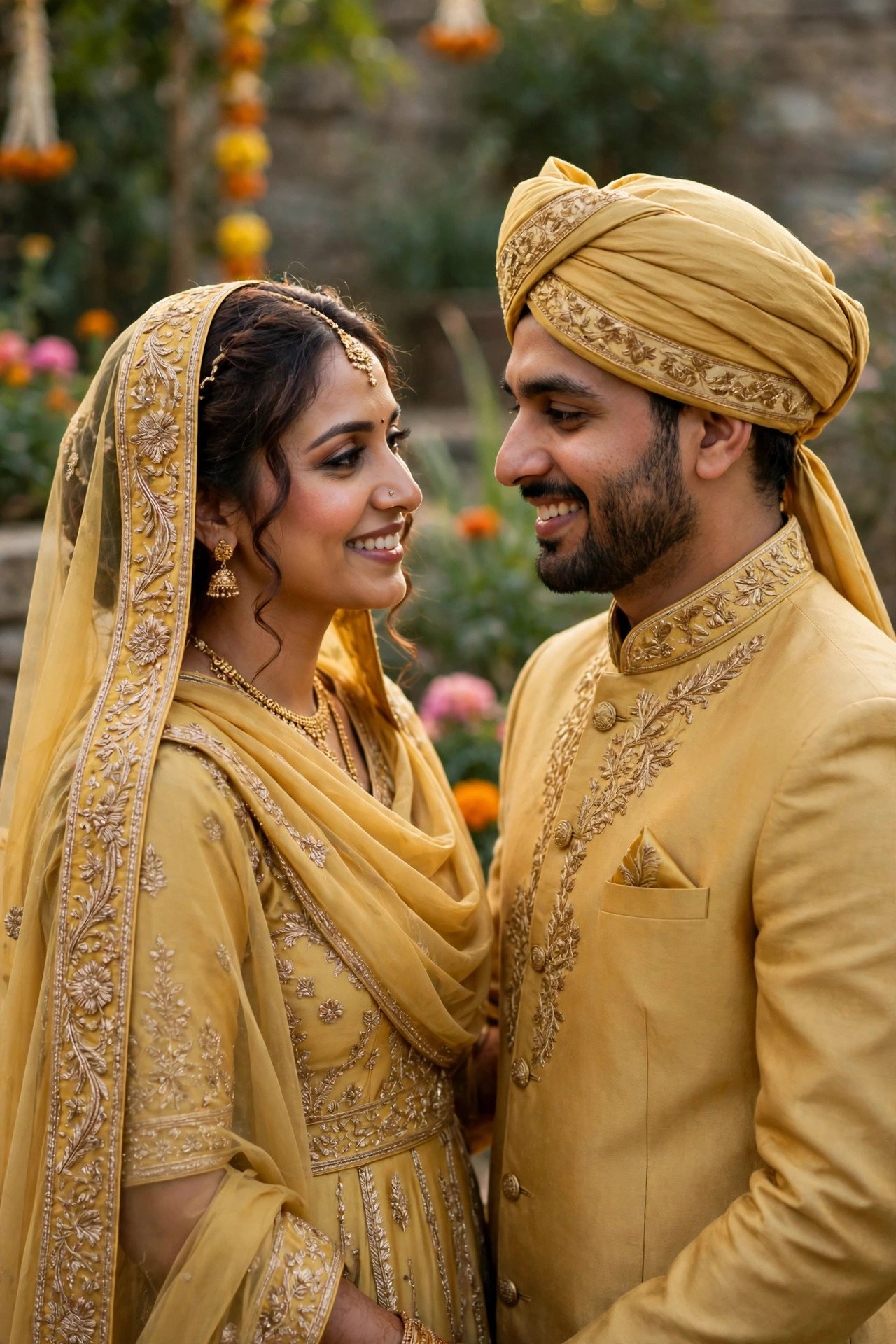
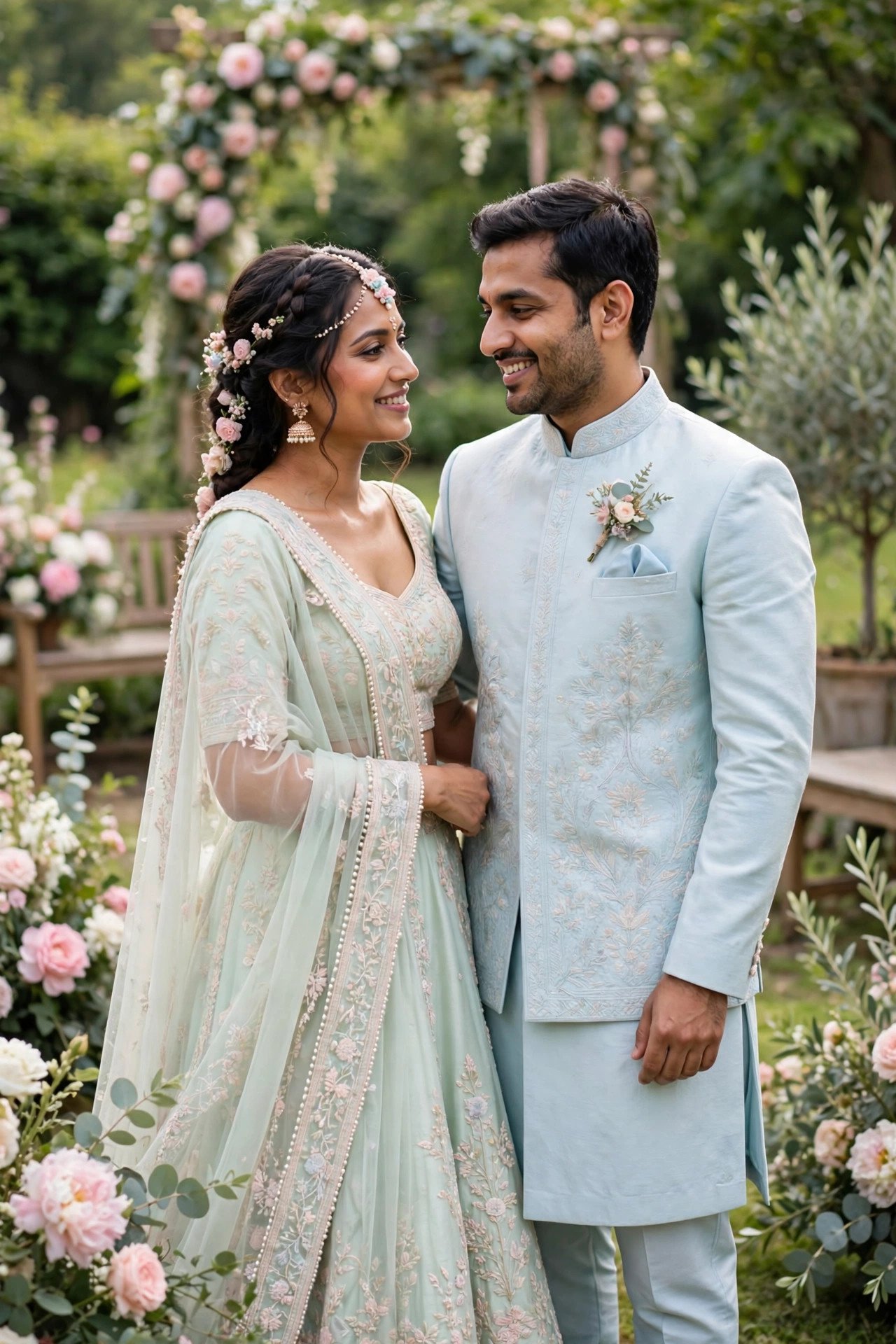
Daytime garden weddings suit pastels and light fabrics on both sides; evening winter weddings suit velvet, wool and jewel tones. When both outfits respect the same season, coordination happens almost automatically. Agree the season’s palette before either outfit is finalised, not after.
8. Do the Photograph Test
Colours that look coordinated on a hanger can behave differently on camera. Take one photo of both outfits together — in daylight and under indoor light — before the wedding week. If one outfit dominates the frame or the colours fight, adjust the accent, not the whole outfit. This single test prevents most coordination regrets.
9. Coordinate the Family Without Twinning
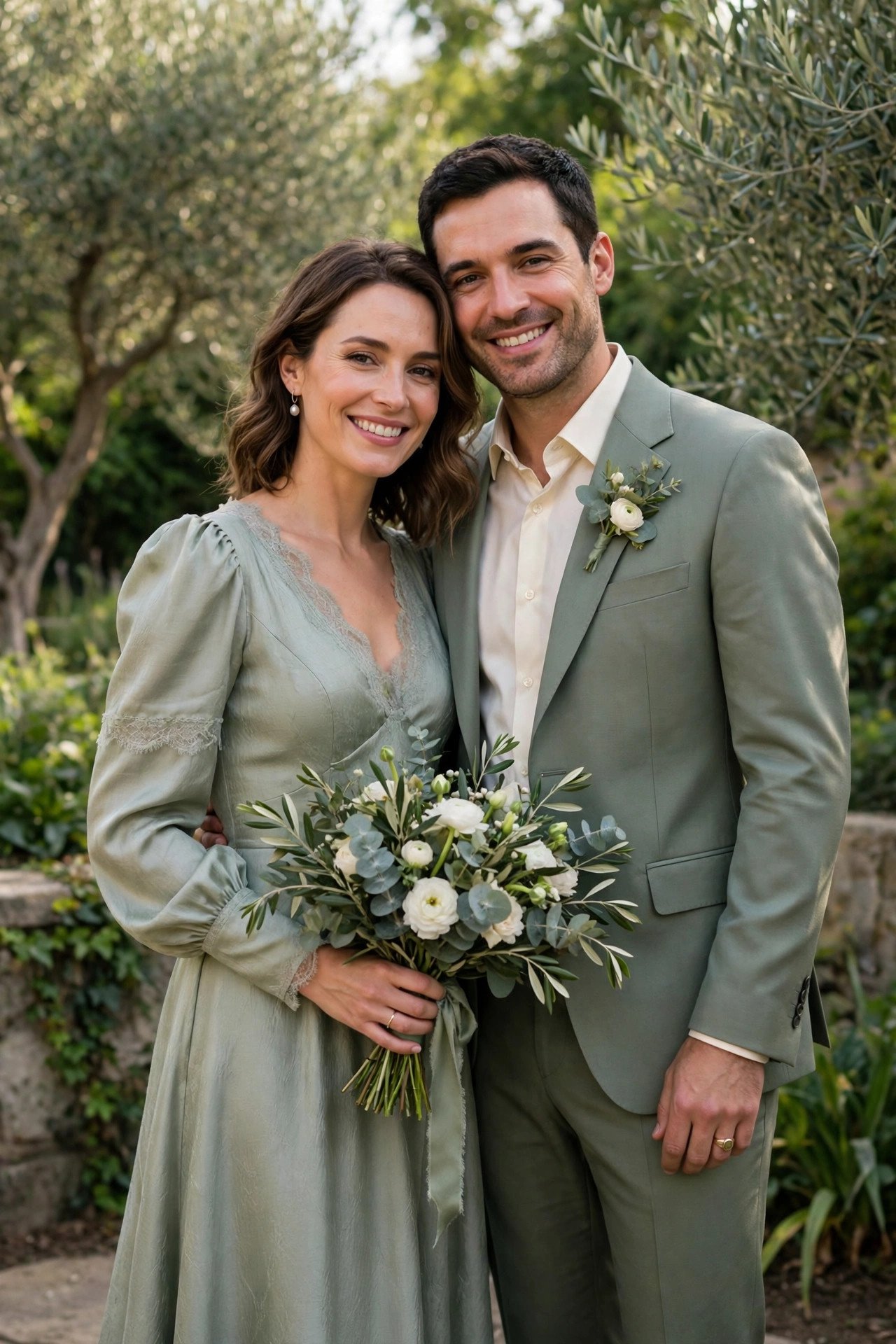
The couple should be the visual centre of the celebration, with family in complementary — not identical — colours. If the couple wears red and gold, family in softer golds, creams and muted reds supports the picture without competing with it. Never dress the wedding party in the couple’s exact palette.
10. Echo Accessories, Not Outfits
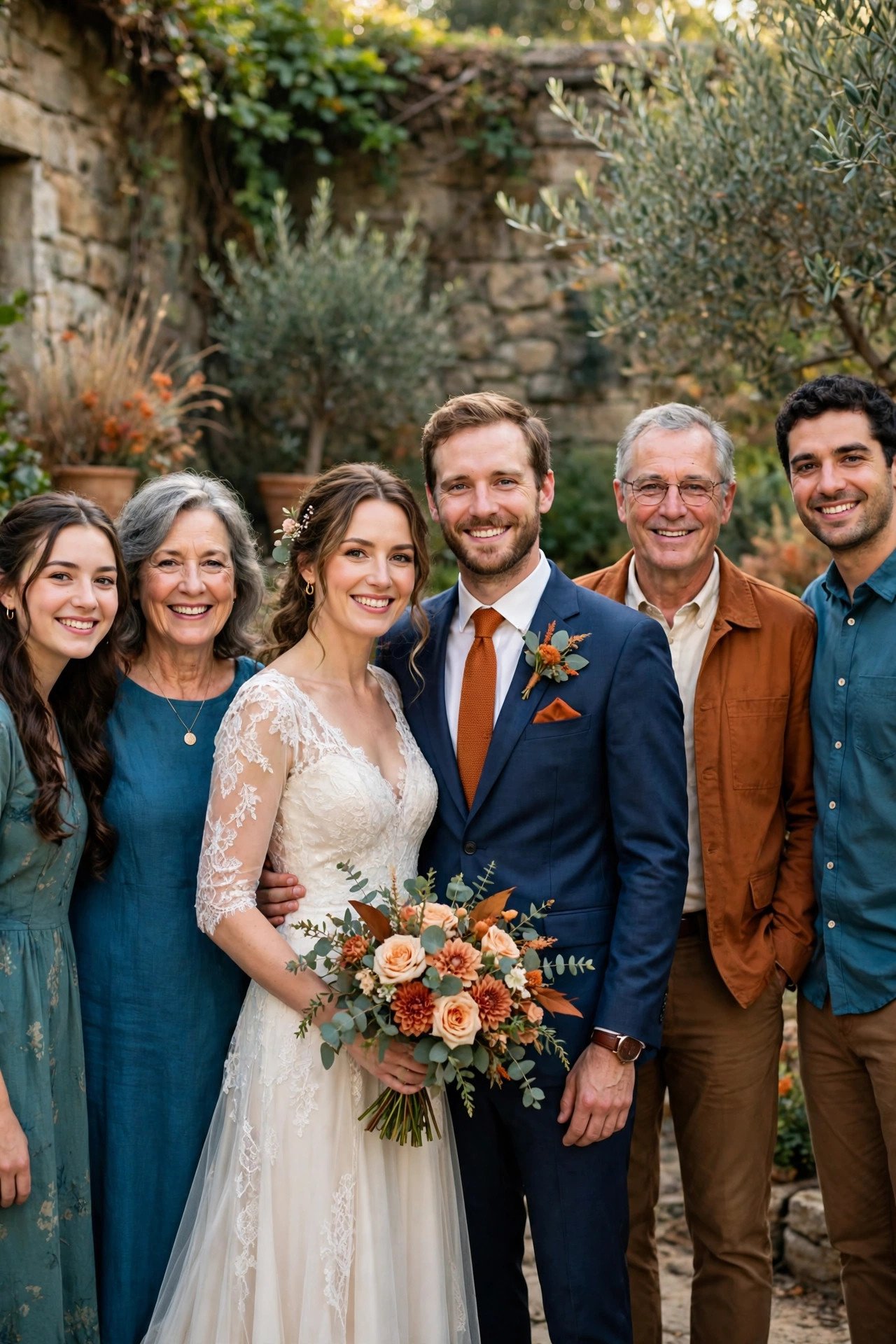
When full coordination feels too much, echo accessories instead: the same jewellery metal, a shared motif in the groom’s brooch and the bride’s tikka, or matching stole borders. Accessory echoes are subtle, photograph beautifully, and leave both outfits free to be themselves.

11. Shift Together from Ceremony to Reception
If the bride changes for the reception, the groom should shift too — a lighter jacket, a different stole, or a change of accent colour. A couple that changes together stays coordinated all day; a couple where only one changes looks mismatched by evening. Plan both changes as one decision.
12. The One Shared Element Rule
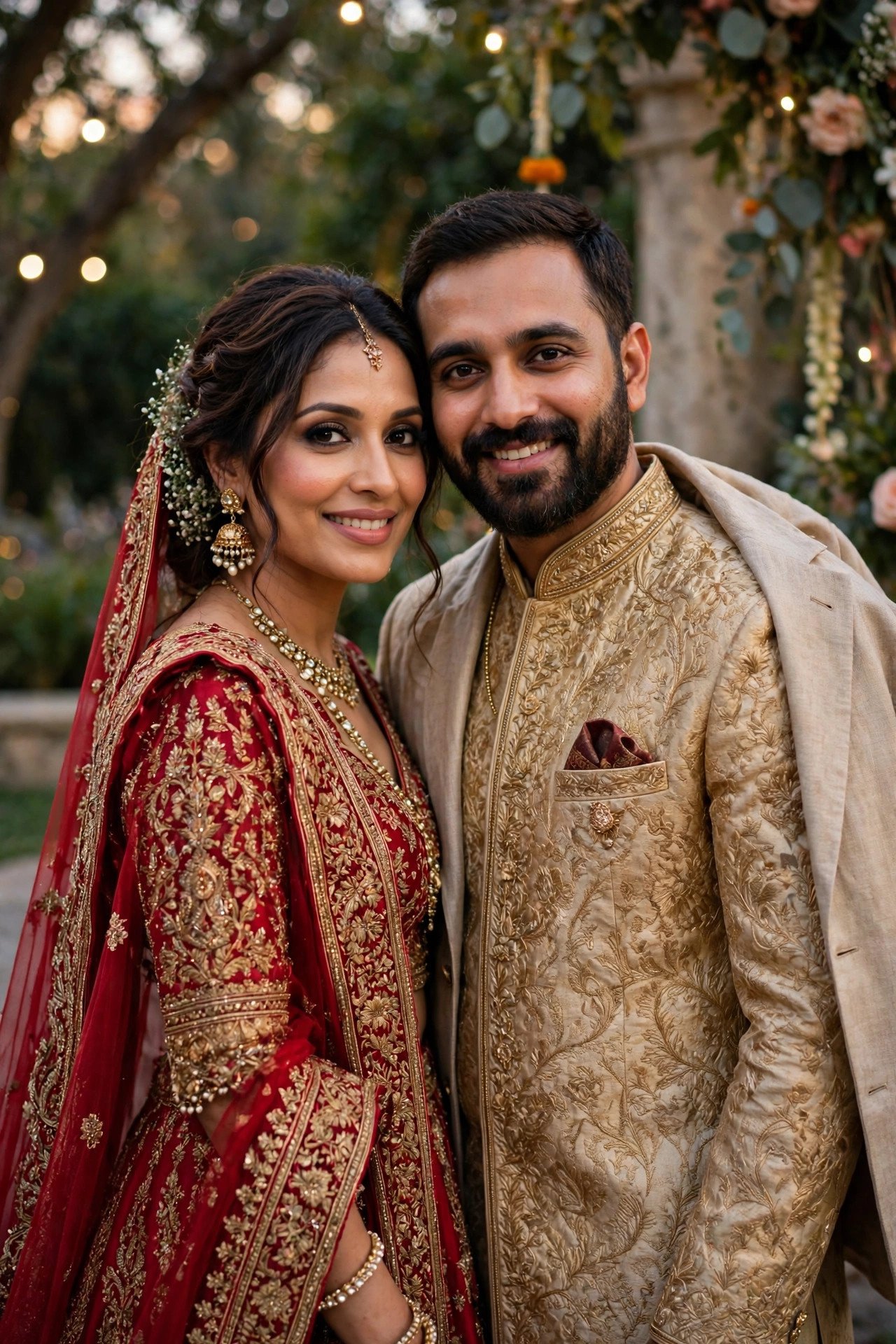
If you remember one rule, make it this: share exactly one element — one colour, one metal, or one motif — and let everything else differ. One shared element reads as intentional; two or three start to look like matching costumes. Pick the element together, then build each outfit around it independently.
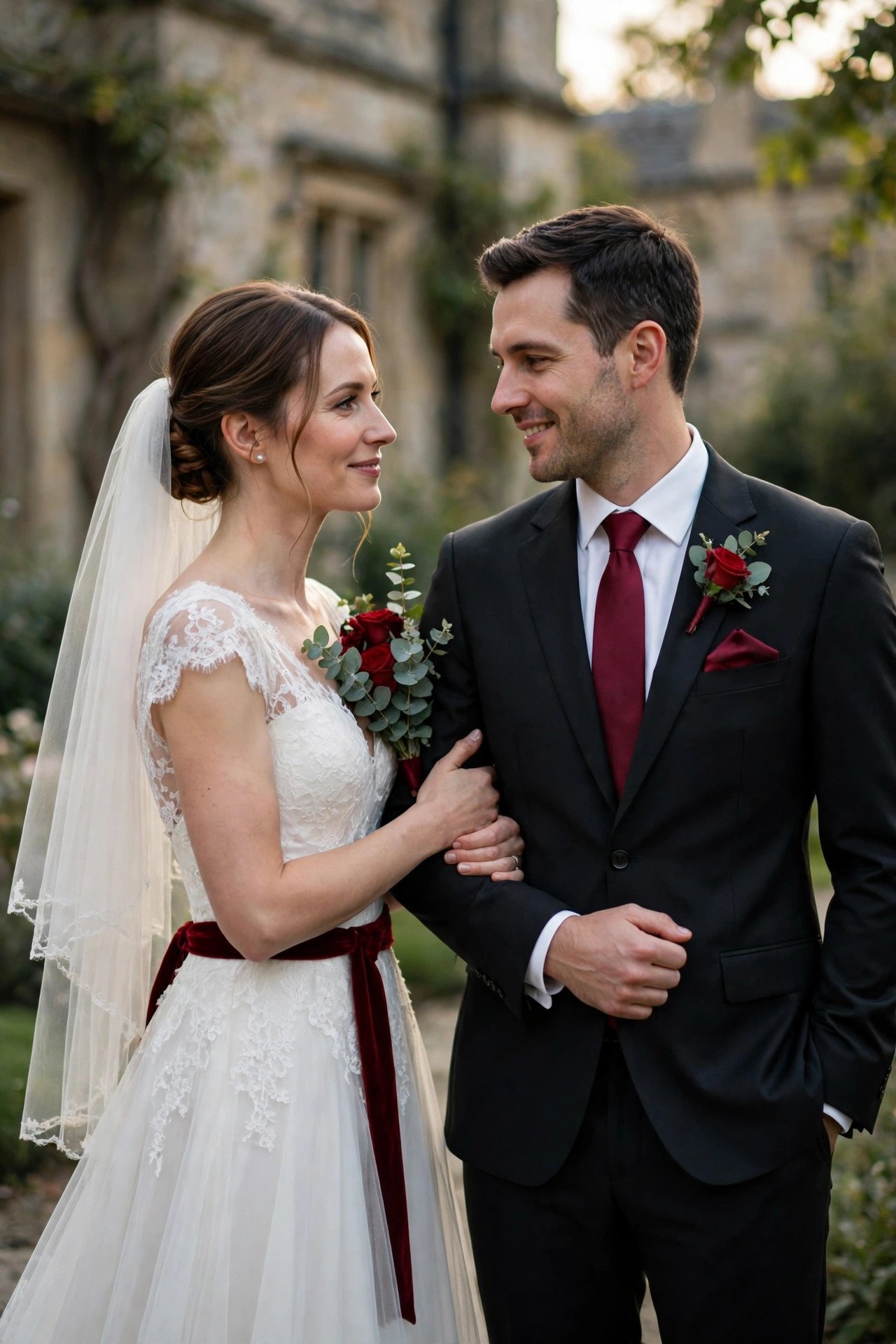
Coordination is a finishing touch, not a second wardrobe: pick one shared element, test it in a photo, and let each outfit stand on its own. If you are still choosing the outfits themselves, browse the bridal lehenga ideas and the sherwani outfit ideas first, then come back and apply the rule that fits your pair best.