


Acubi fashion gets its name from the way an oversized blazer or coat cinches in at the waist, borrowing its shape from Korean street style while keeping the quiet, put-together feel of minimalist tailoring. For men, it is less about logos and more about proportion: room through the shoulders, a defined middle, and enough drape in the leg to make even simple basics look considered. If you have been scrolling outfit boards and keep landing on the same loose blazers, wide trousers, and clean sneakers, that is acubi. This guide pulls together twenty ways to build the look, from your first oversized blazer to full monochrome fits you can wear to work, on weekends, or out at night. Nothing here requires an overhauled wardrobe or a big budget. Most of it comes down to buying certain pieces a size up, choosing better fabrics, and being intentional with color. Scroll through the ideas below, save the ones that fit your existing wardrobe, and treat the photos as a starting point rather than a strict template. It also helps to think of acubi less as a single outfit formula and more as a lens for editing what you already own: anything too tight, too bright, or too logo-heavy tends to fall outside it, while simple, well-cut pieces in calm colors almost always fit right in.
The Building Blocks of Acubi Style
Acubi outfits are built on three simple rules. The first is proportion: something in the fit is oversized, usually the blazer, coat, or shirt, while something else stays closer to the body so the whole look does not read as sloppy. The second rule is fabric quality. Wool blends, brushed cotton, and structured tailoring materials hold their shape even when cut loose, which is why acubi outfits photograph so cleanly and hang so well in person. The third rule is a quiet color palette: beige, taupe, grey, black, cream, and the occasional muted olive or navy. Bright colors and busy patterns work against the calm, deliberate feeling that defines the aesthetic. Once these three rules click, you can build endless outfit combinations from a fairly small wardrobe, which is part of why the style has caught on with people who want to dress well without constantly buying new pieces. It is also worth paying attention to how pieces fall when you move, not just how they look standing still, since a lot of the ease associated with this style comes from soft, structured drape rather than a perfectly stiff line.
20 Outfit Ideas to Try
Oversized Tailoring
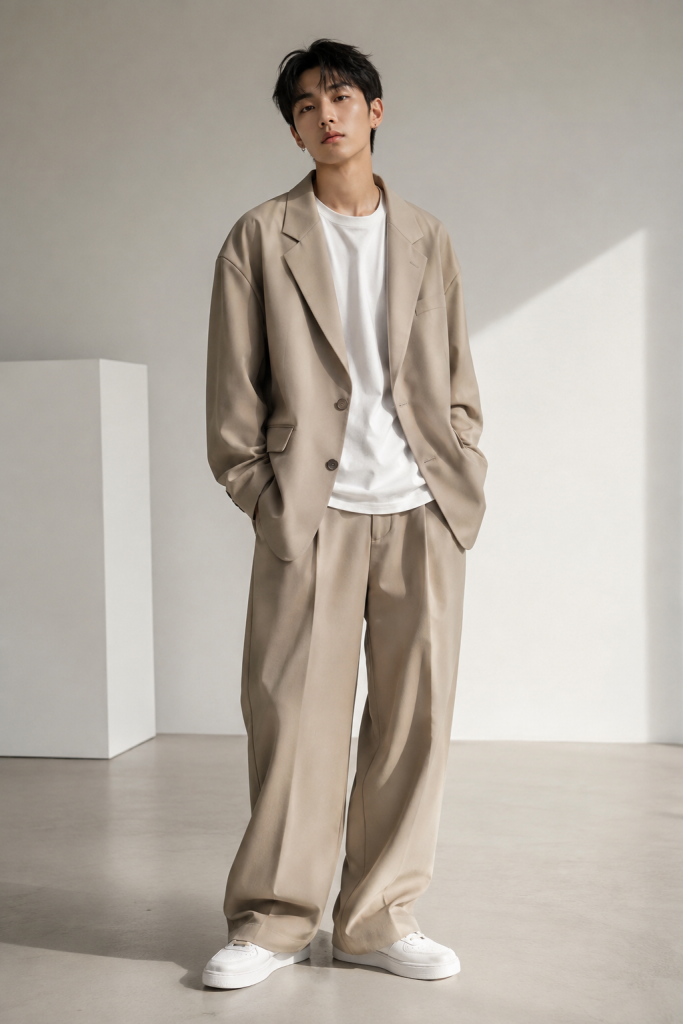
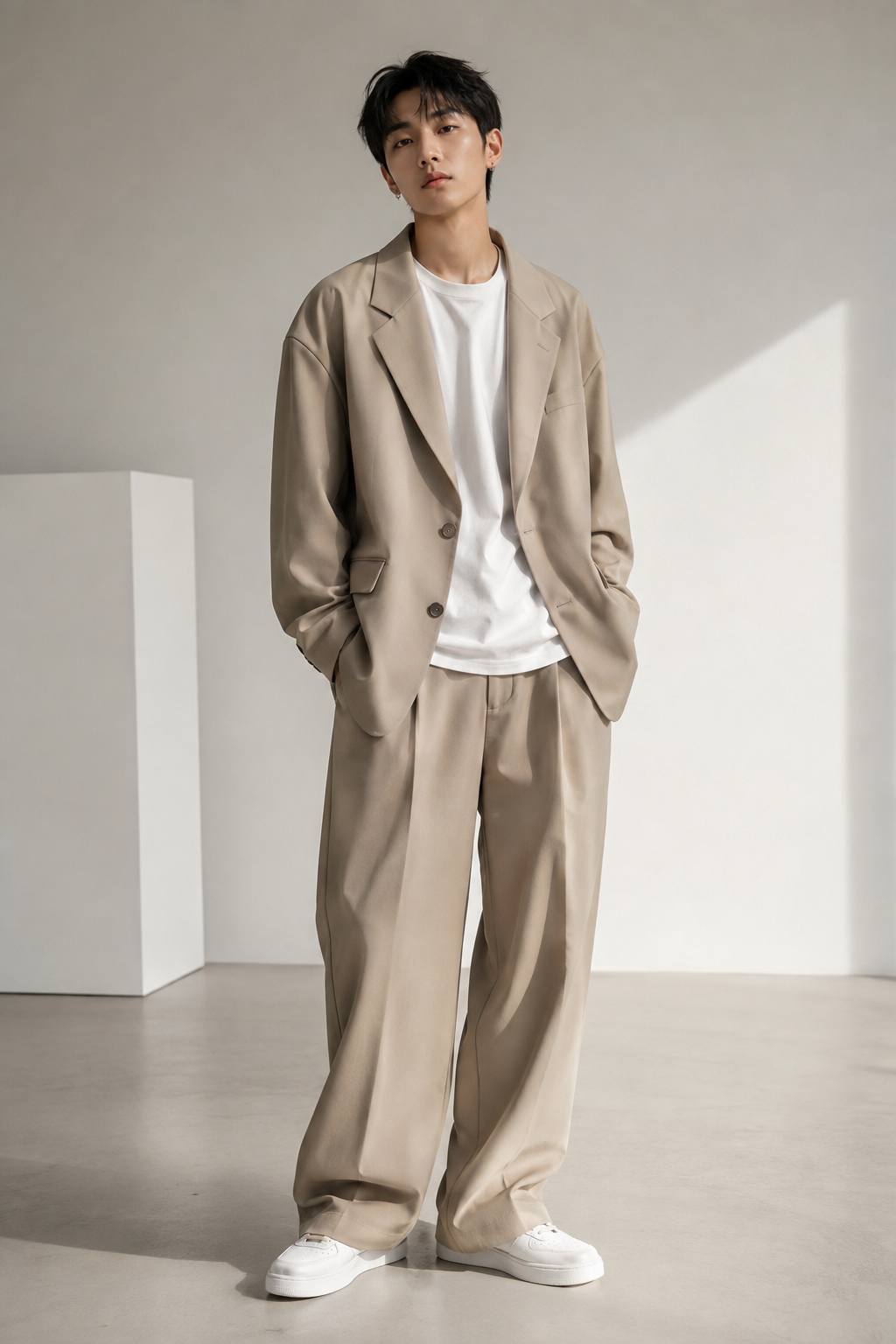
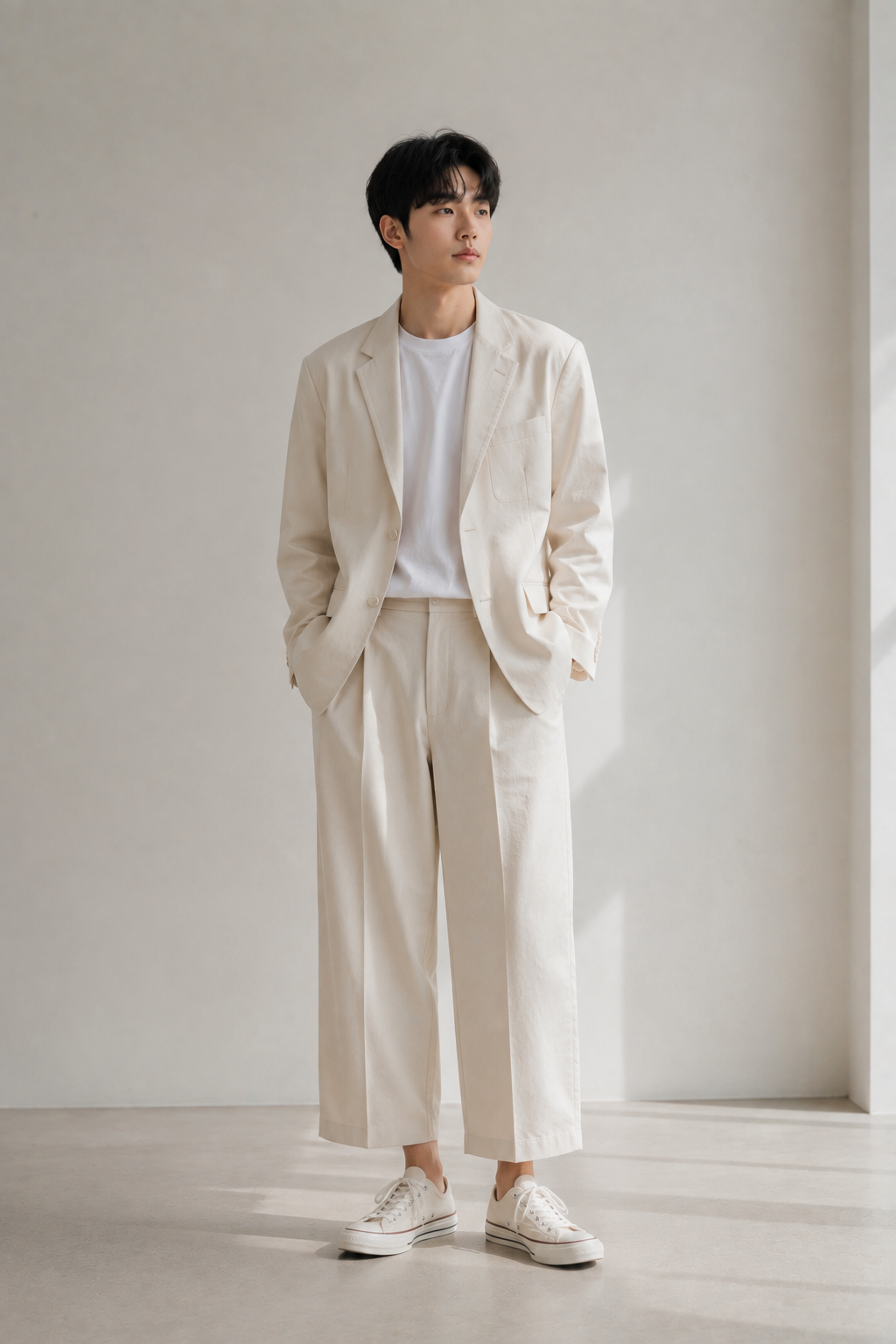
- Beige double-breasted blazer with matching wide-leg trousers and white leather sneakers for a soft, monochrome tailored look.
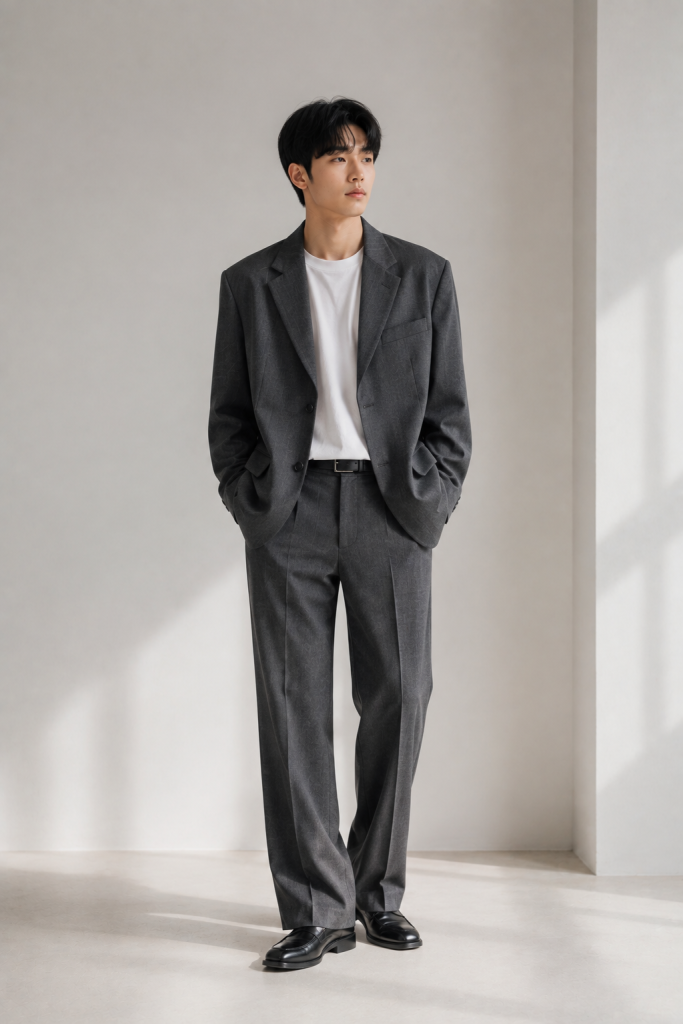
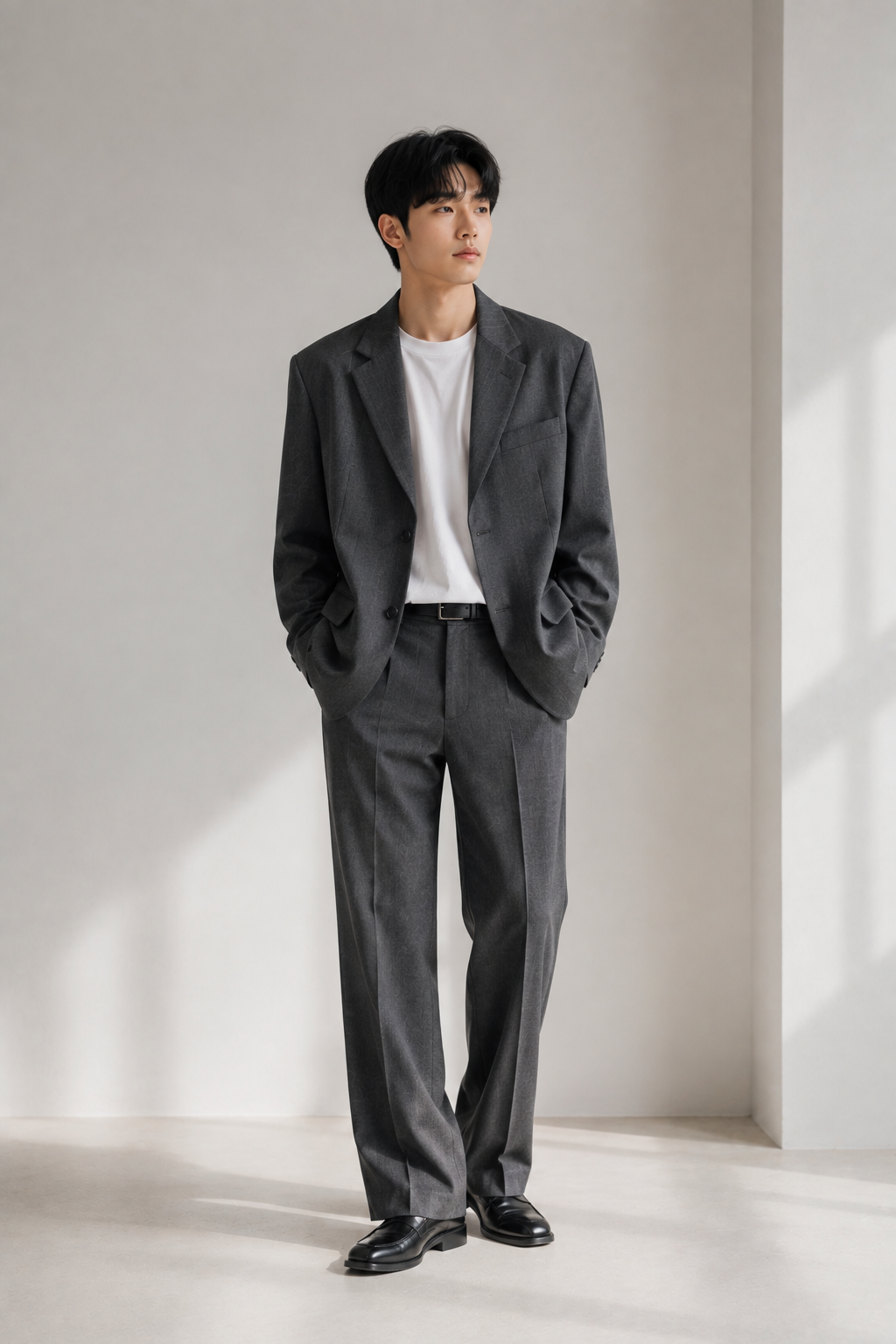
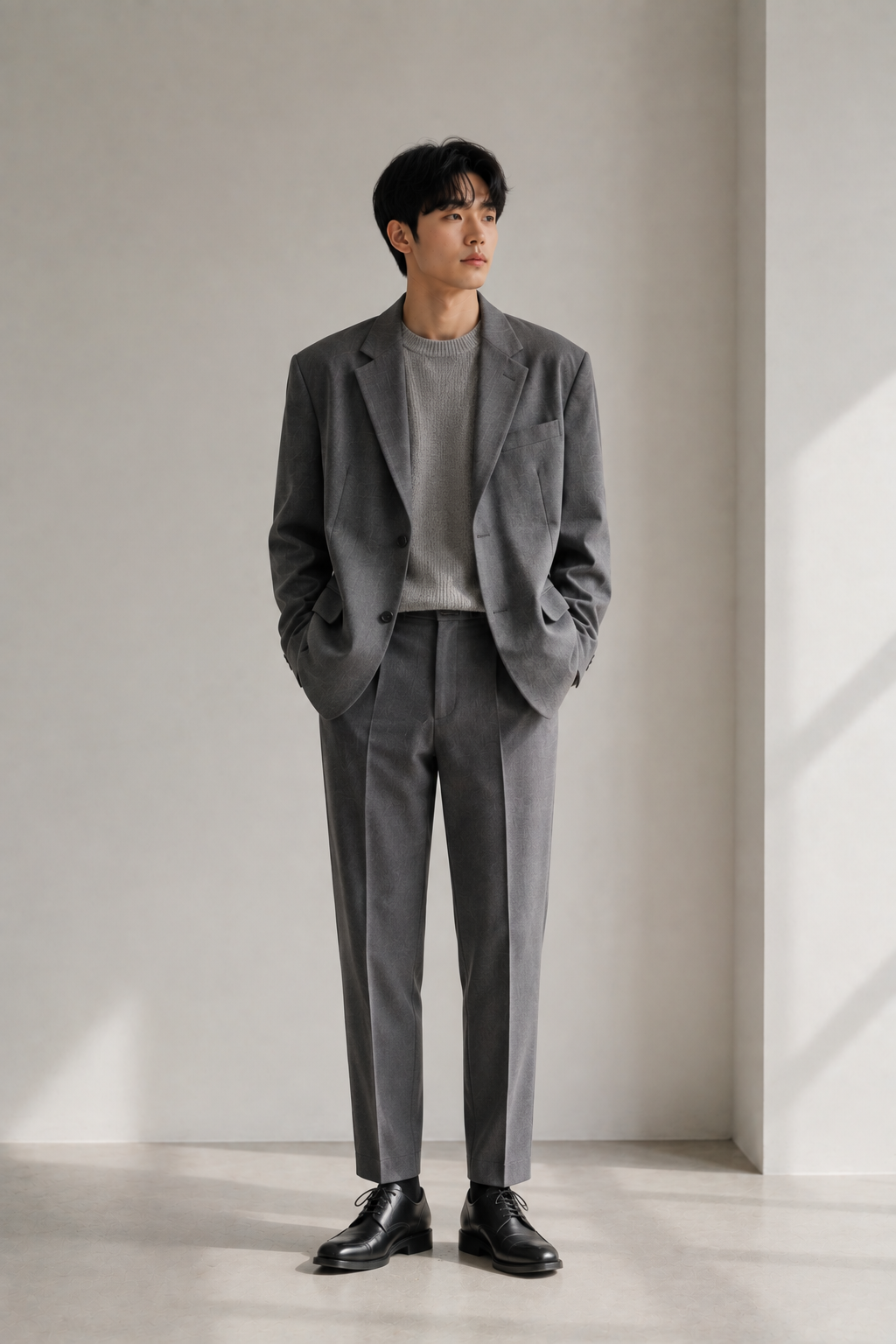
- 2. Charcoal oversized blazer over a plain white tee with straight-leg trousers and black loafers for an easy smart-casual fit.
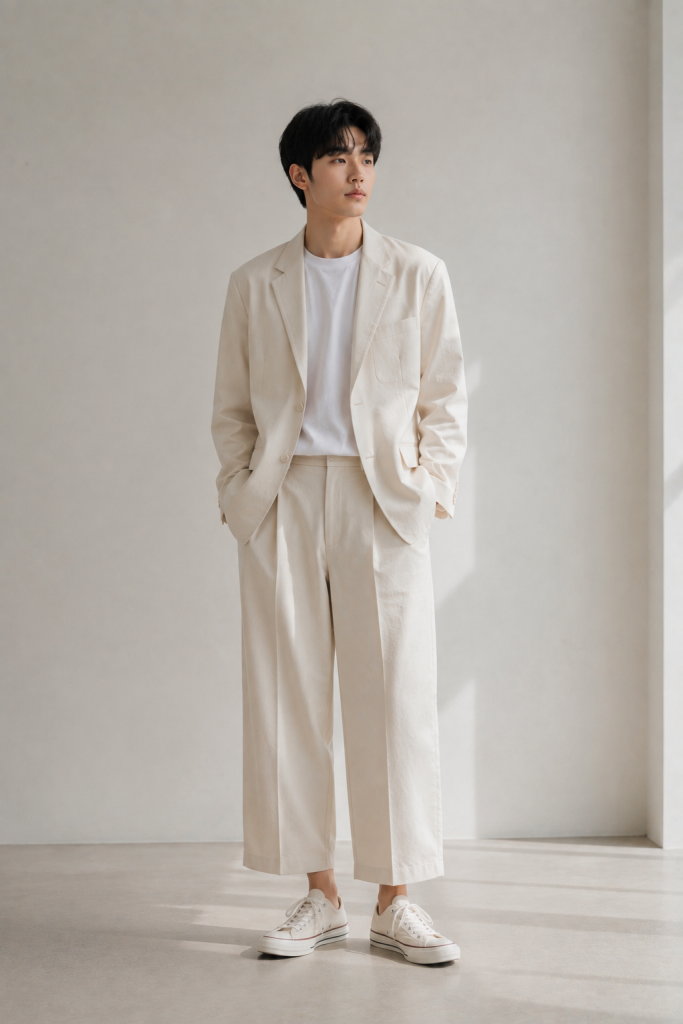
- 3. Cream single-breasted blazer paired with cropped wide trousers and canvas sneakers for a lighter warm-weather version.
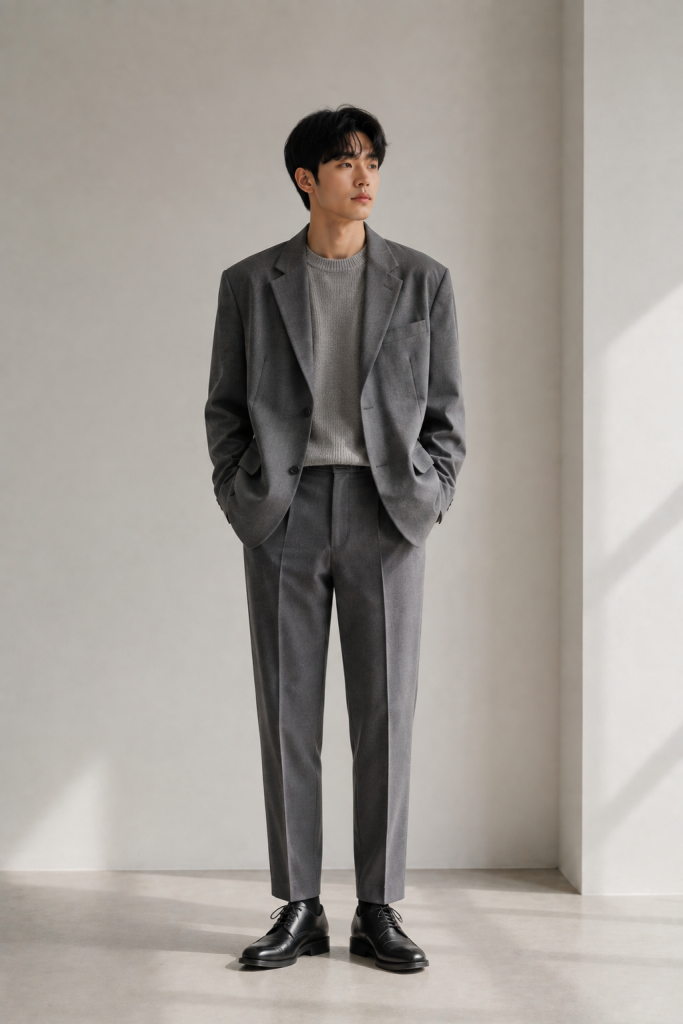
- 4. Grey wool blazer layered over a fine-knit sweater with tapered trousers for a transitional autumn outfit.
Relaxed Streetwear Layering
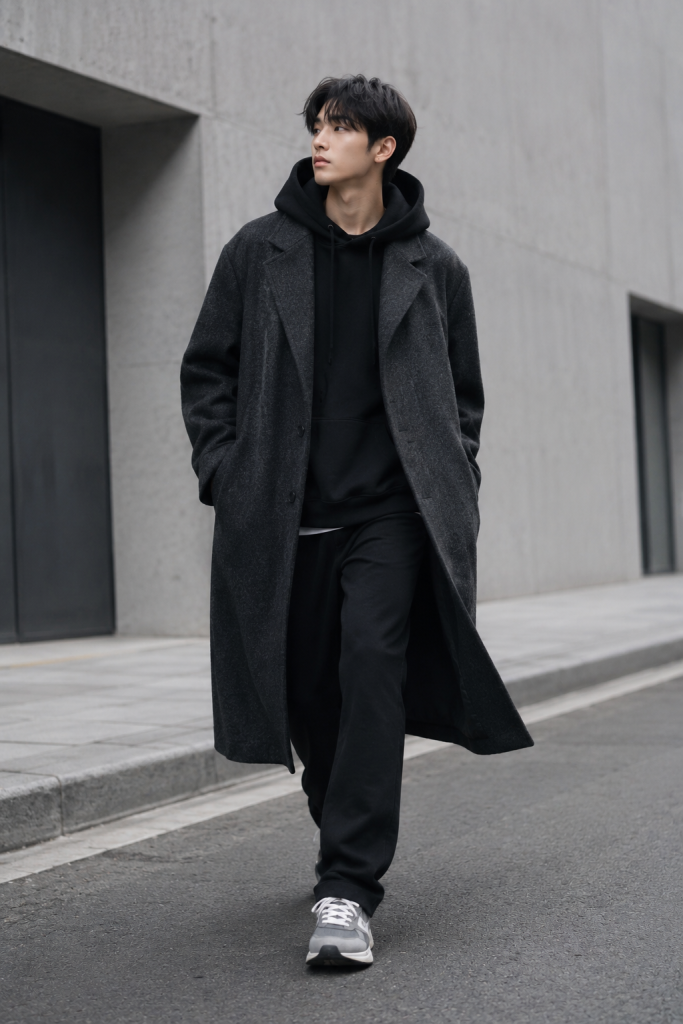
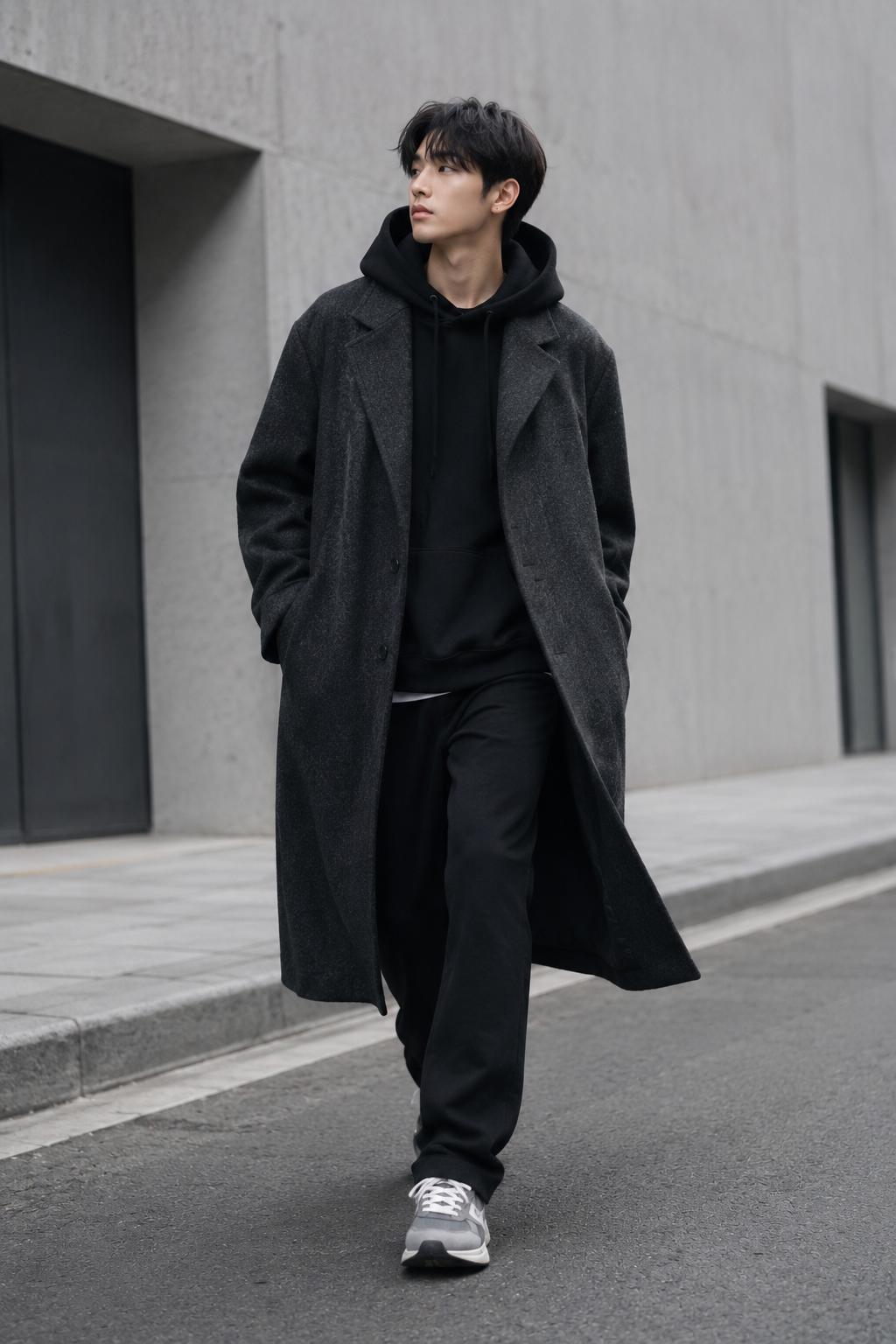
5. Oversized hoodie under a long wool overcoat with joggers and chunky trainers for a cold-weather streetwear staple.
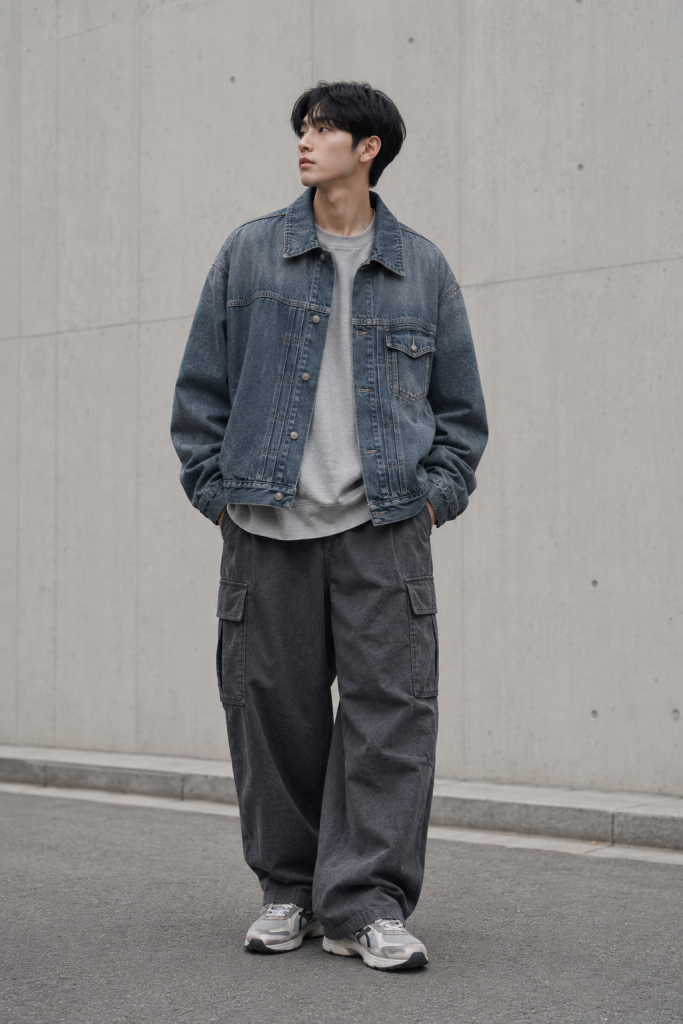
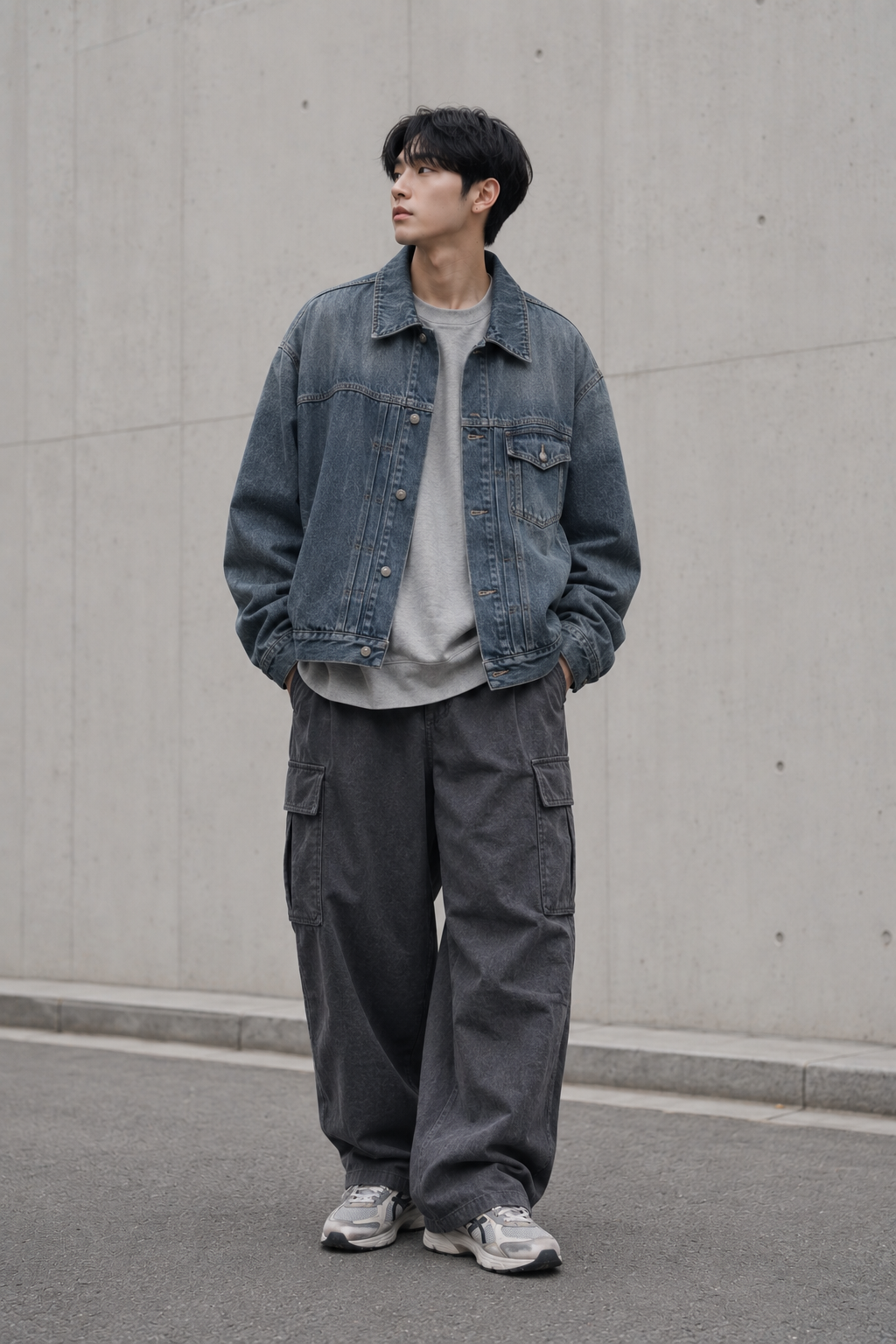
6. Boxy denim jacket over a plain sweatshirt with wide cargo trousers and retro running shoes.
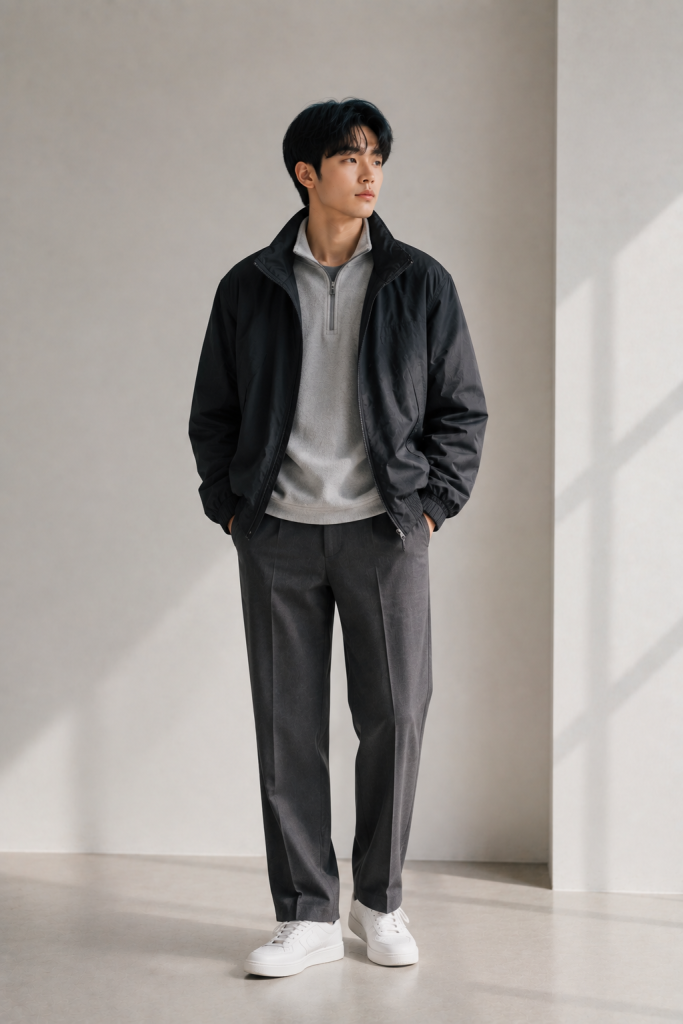
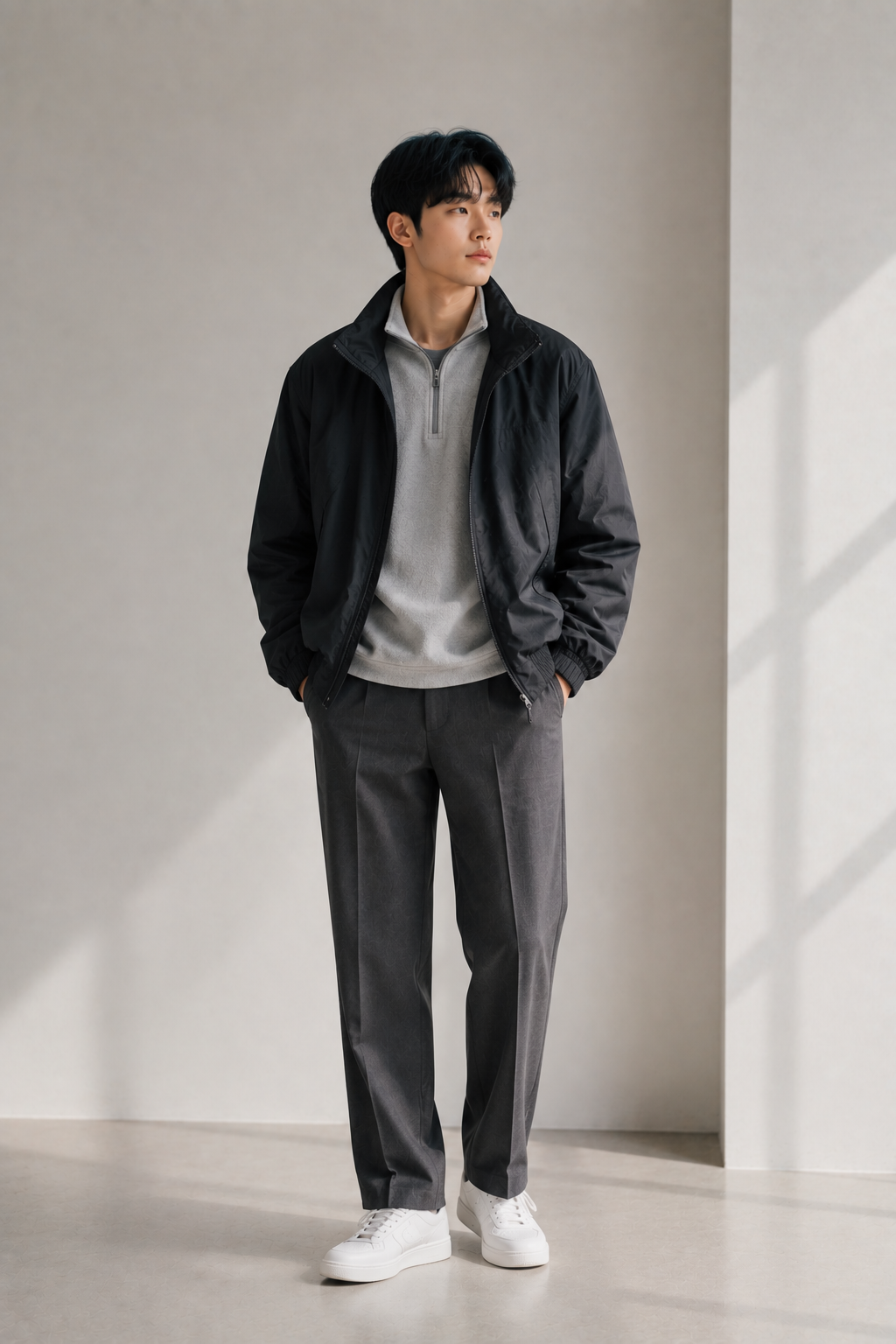
7. Quarter-zip fleece layered under a nylon shell jacket with straight trousers for a technical, outdoorsy take on acubi.
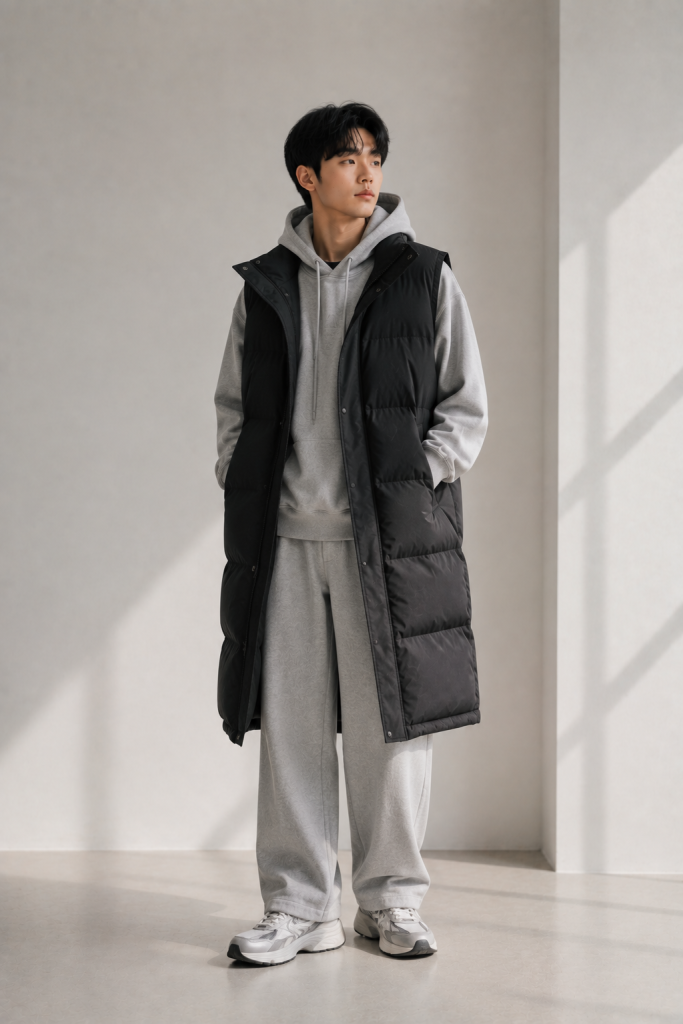
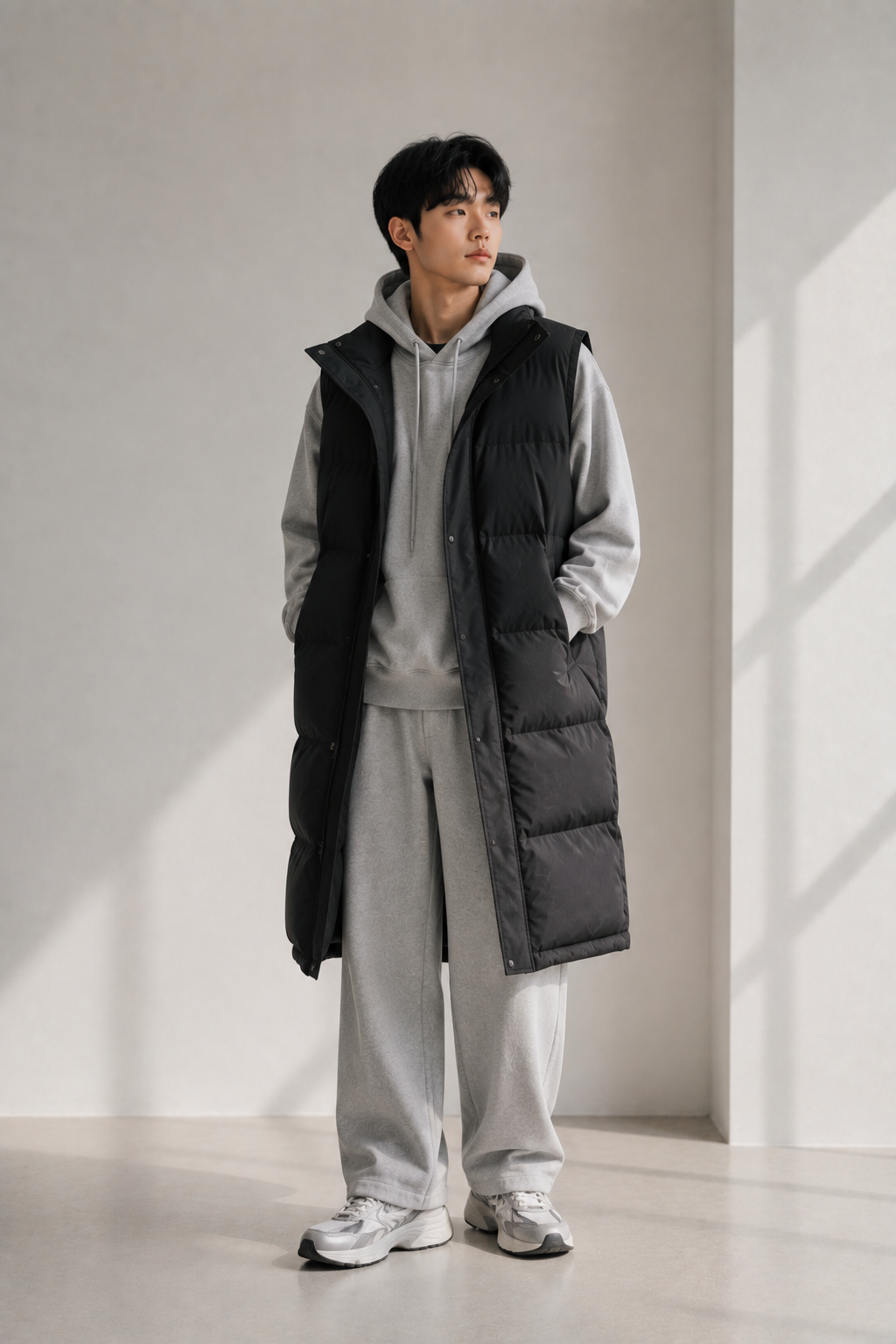
8. Long-line puffer vest over a hoodie with wide sweatpants for an off-duty athletic mood.
Monochrome and Neutral Combinations
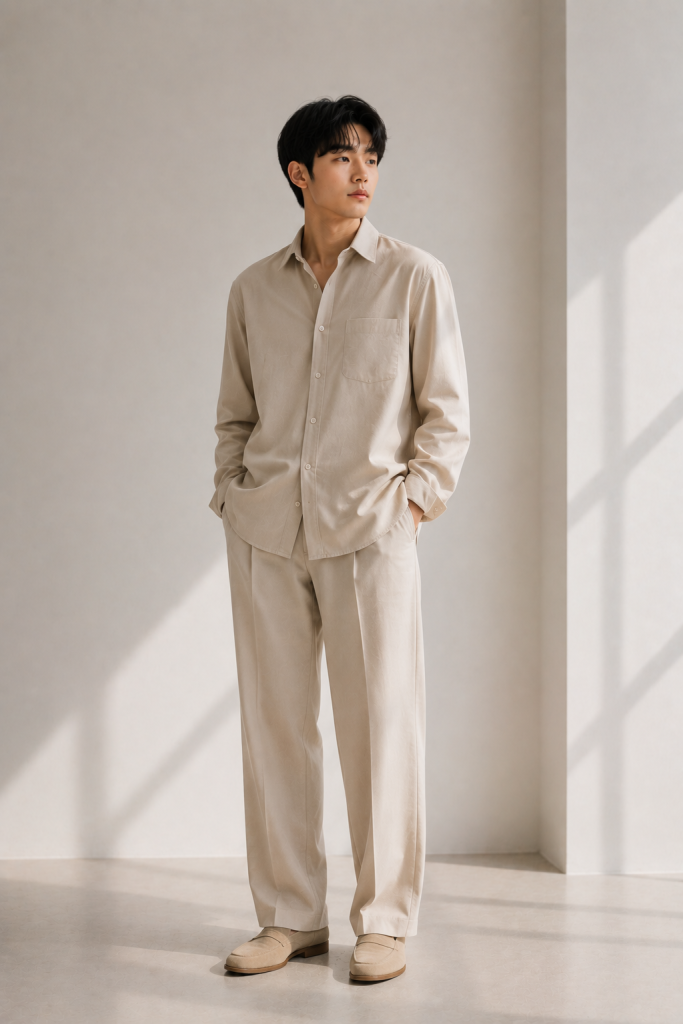
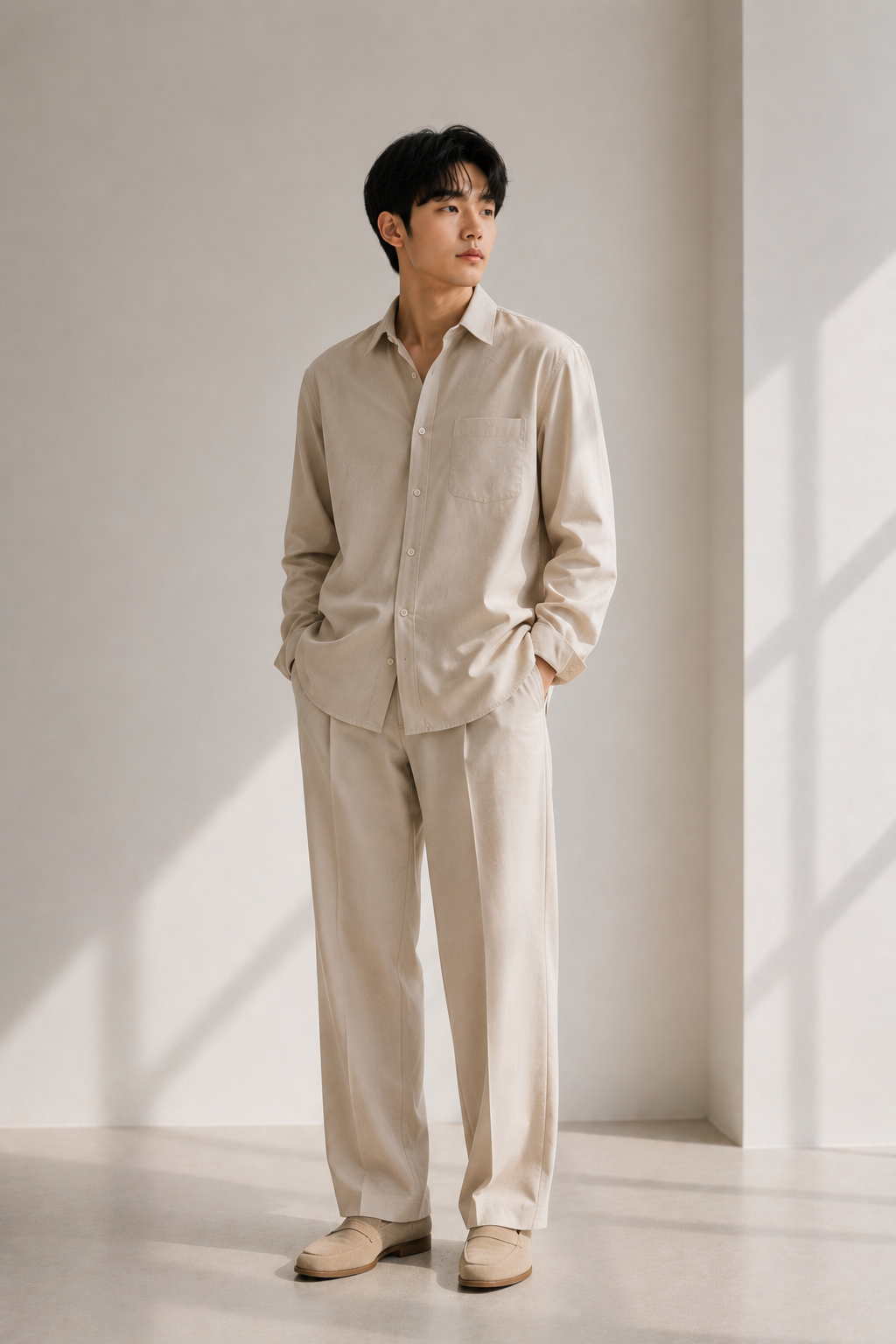
9. All-beige outfit combining a relaxed shirt, matching trousers, and suede loafers for a head-to-toe tonal look.
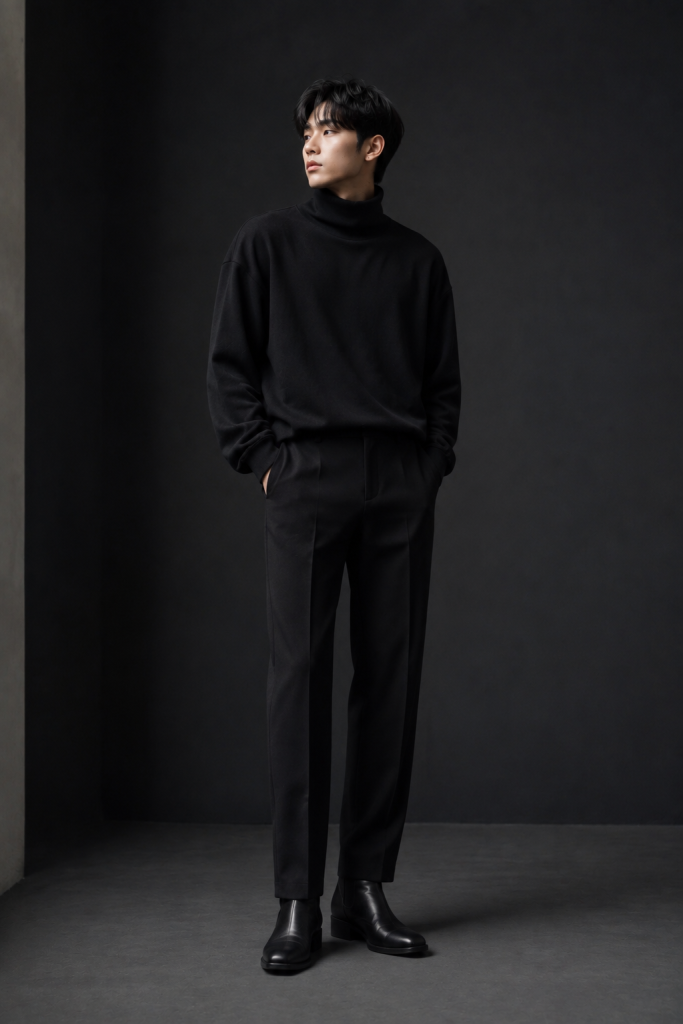
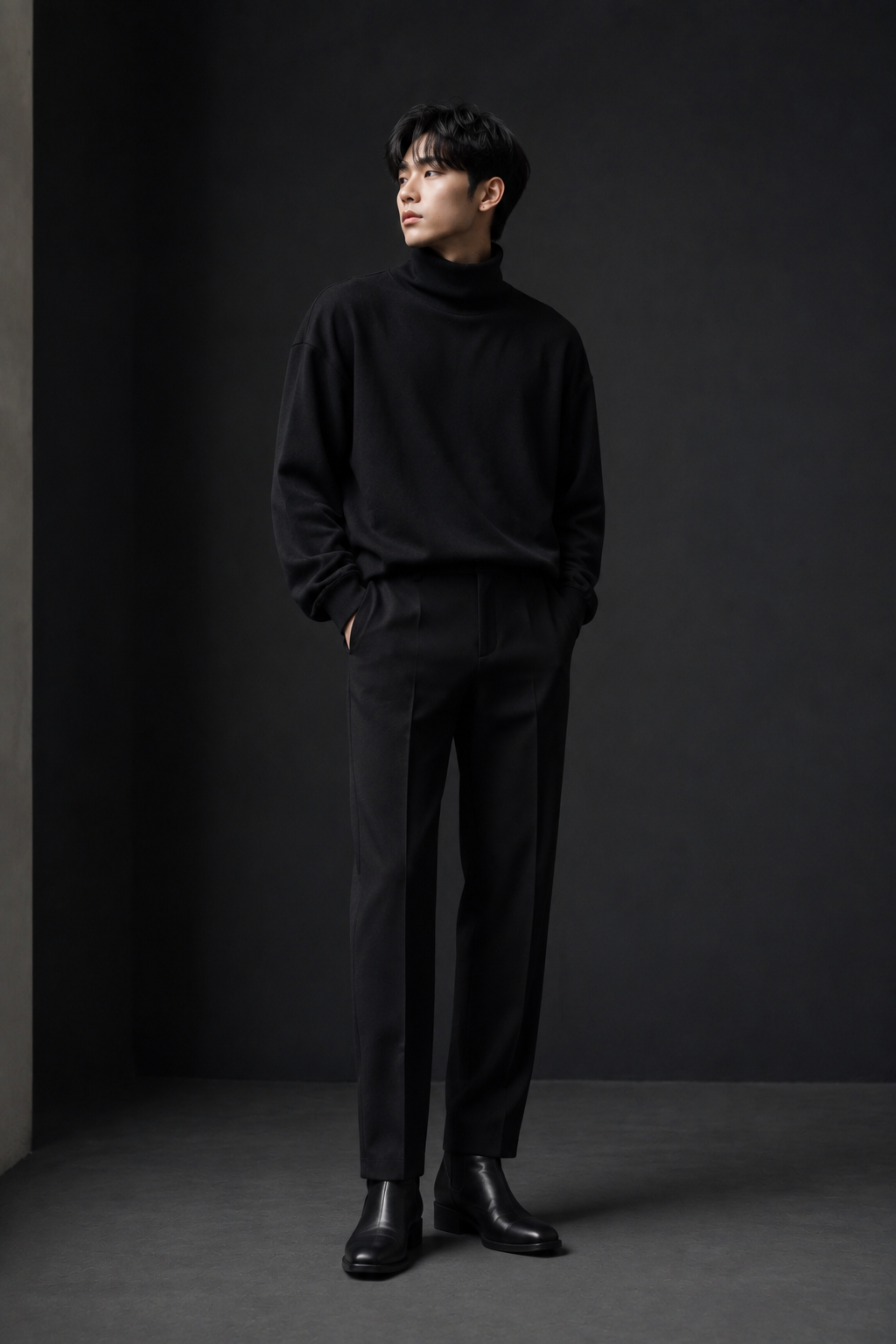
10. All-black outfit with an oversized turtleneck, straight trousers, and leather boots for an evening-ready silhouette.
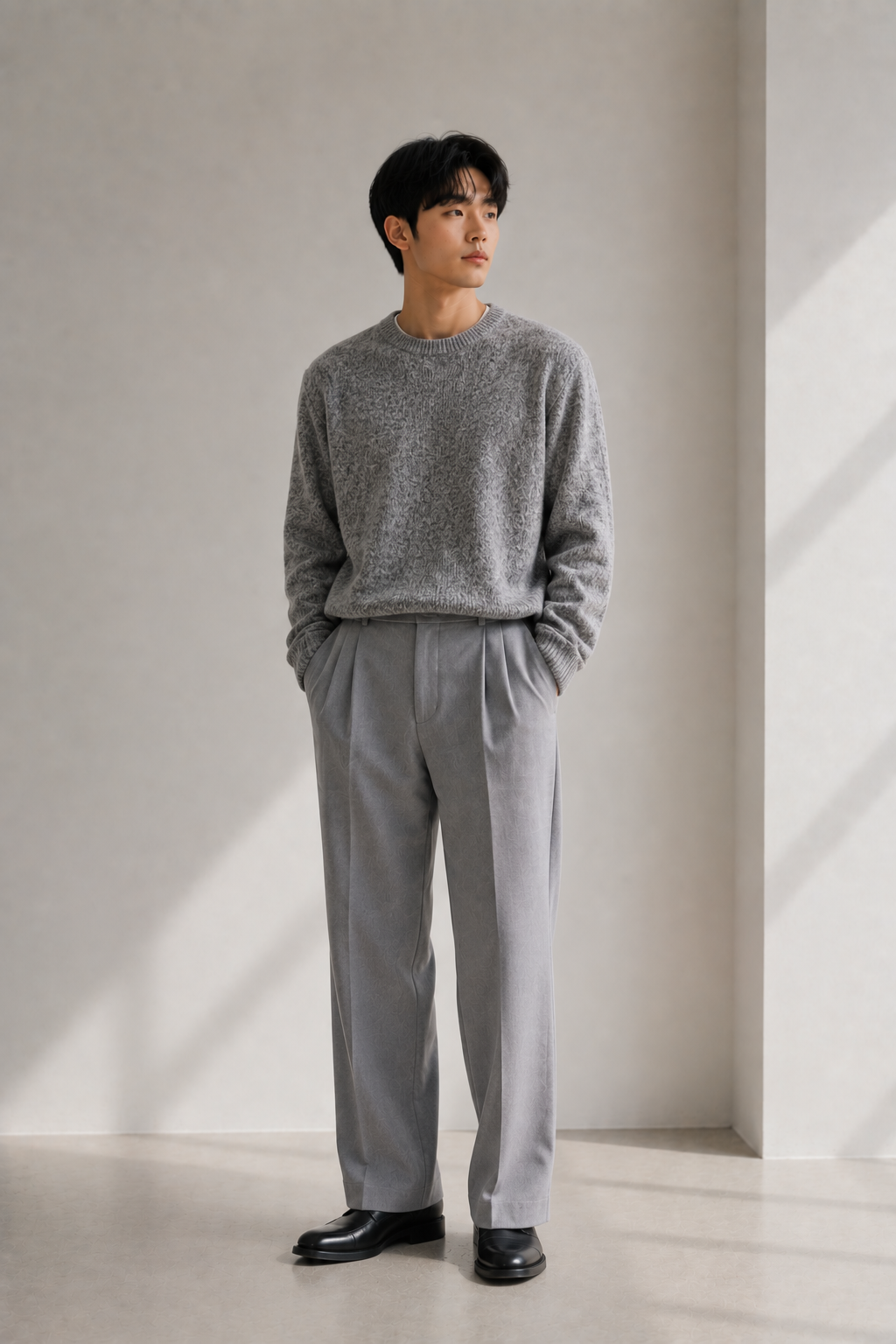
11. Grey-on-grey combination of a marled sweater and pleated trousers for a soft, textured neutral fit.
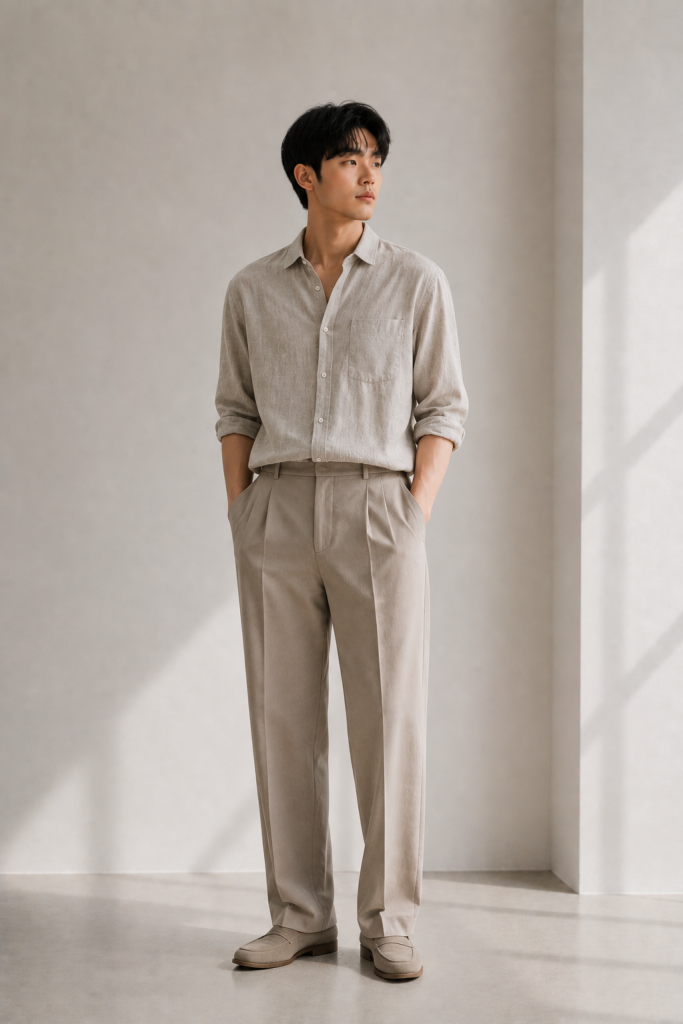
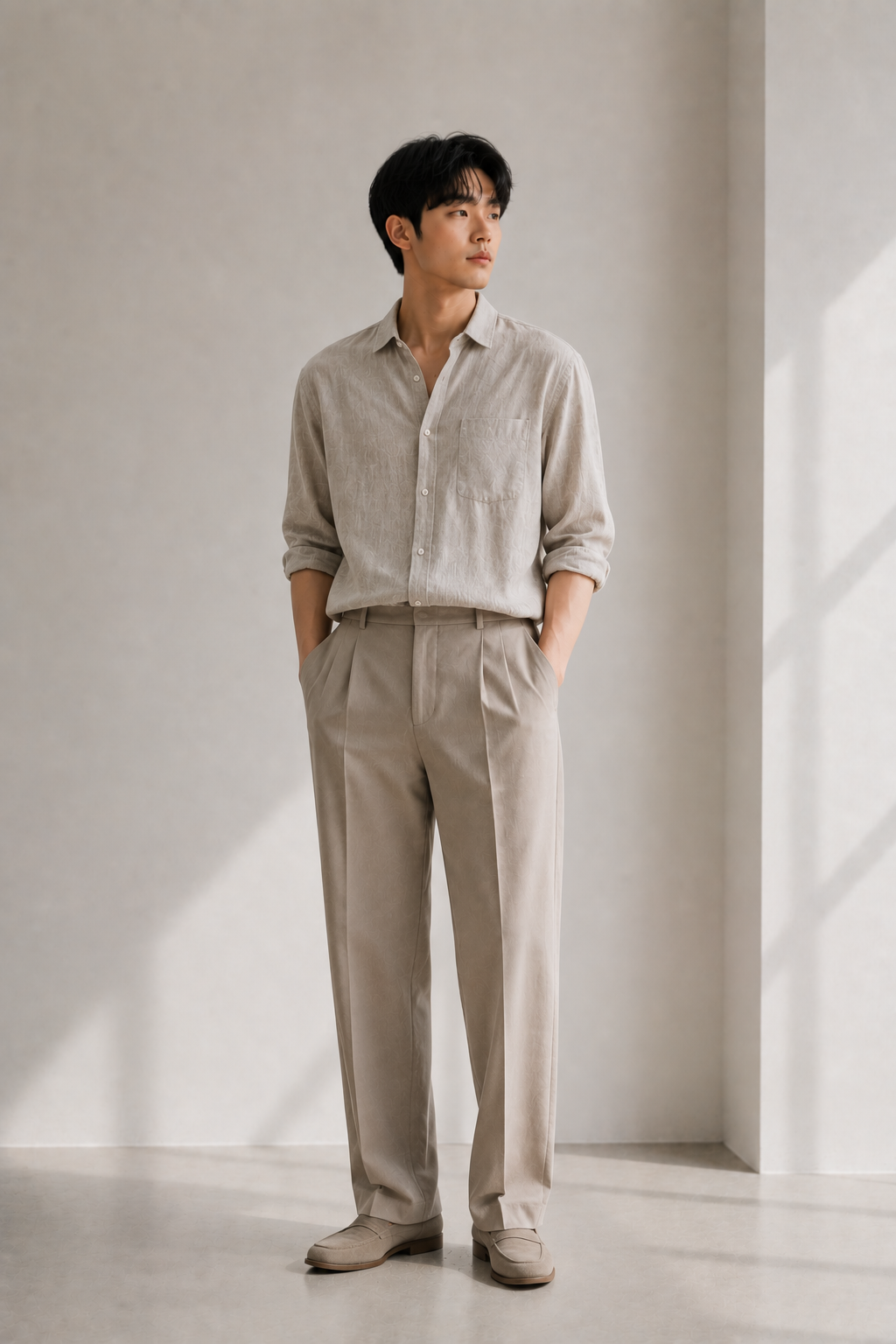
12. Stone and taupe layers mixing a linen shirt with cotton trousers for a warm, sand-toned palette.
Everyday Casual Basics
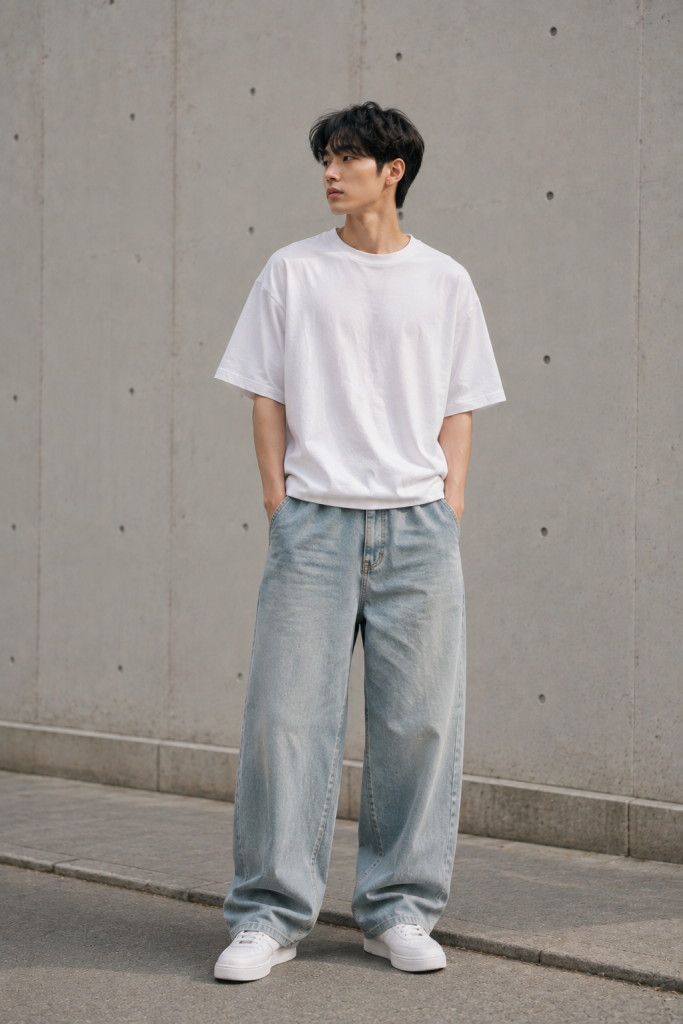
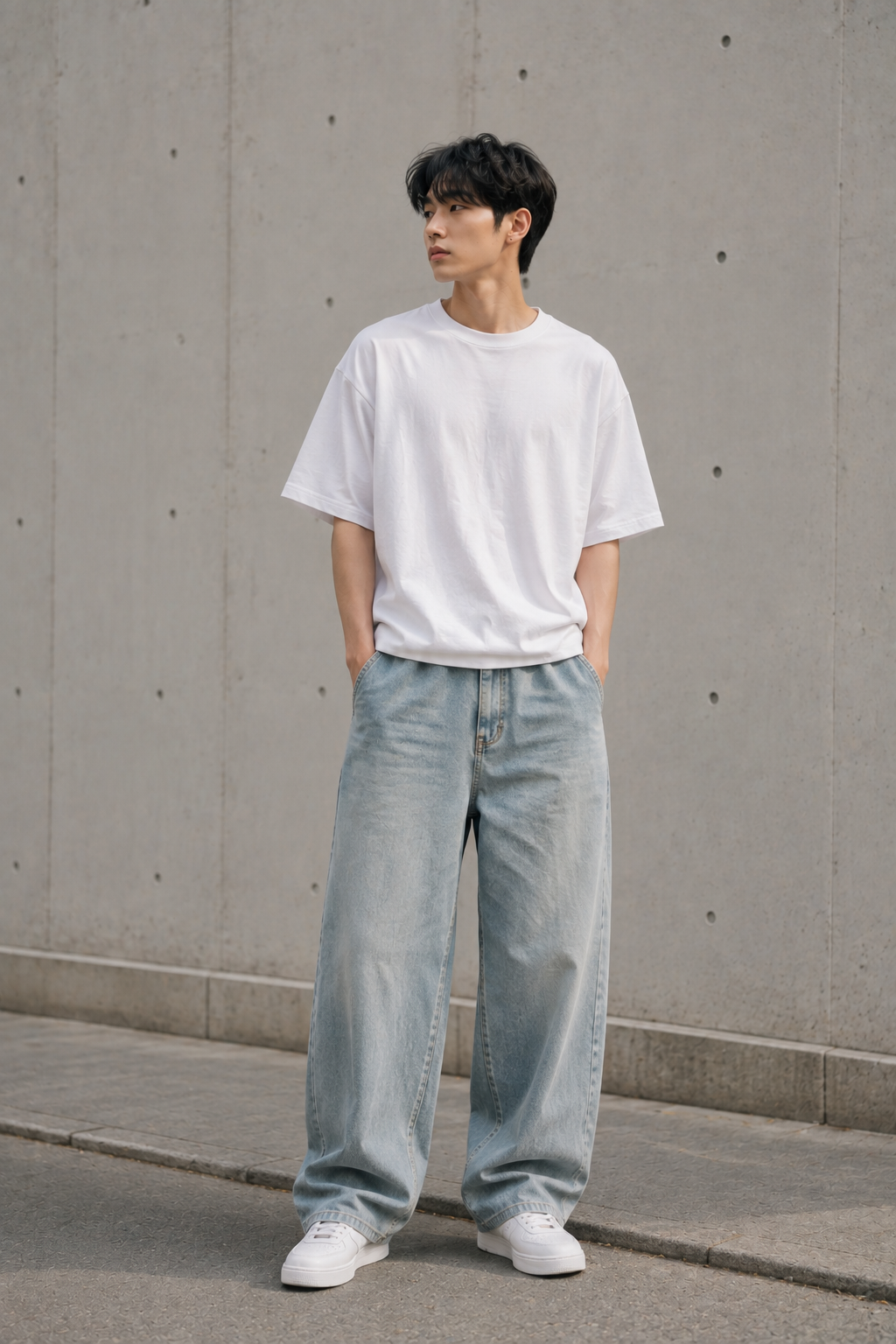
13. Plain white tee with wide-leg jeans and clean sneakers for the simplest possible entry point into the style.
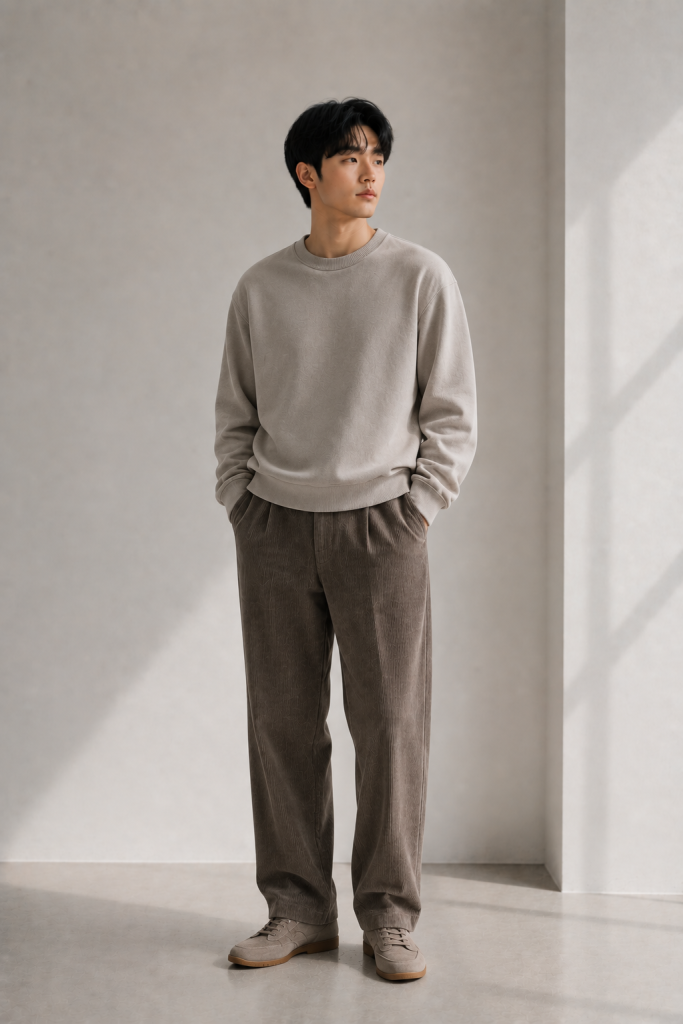
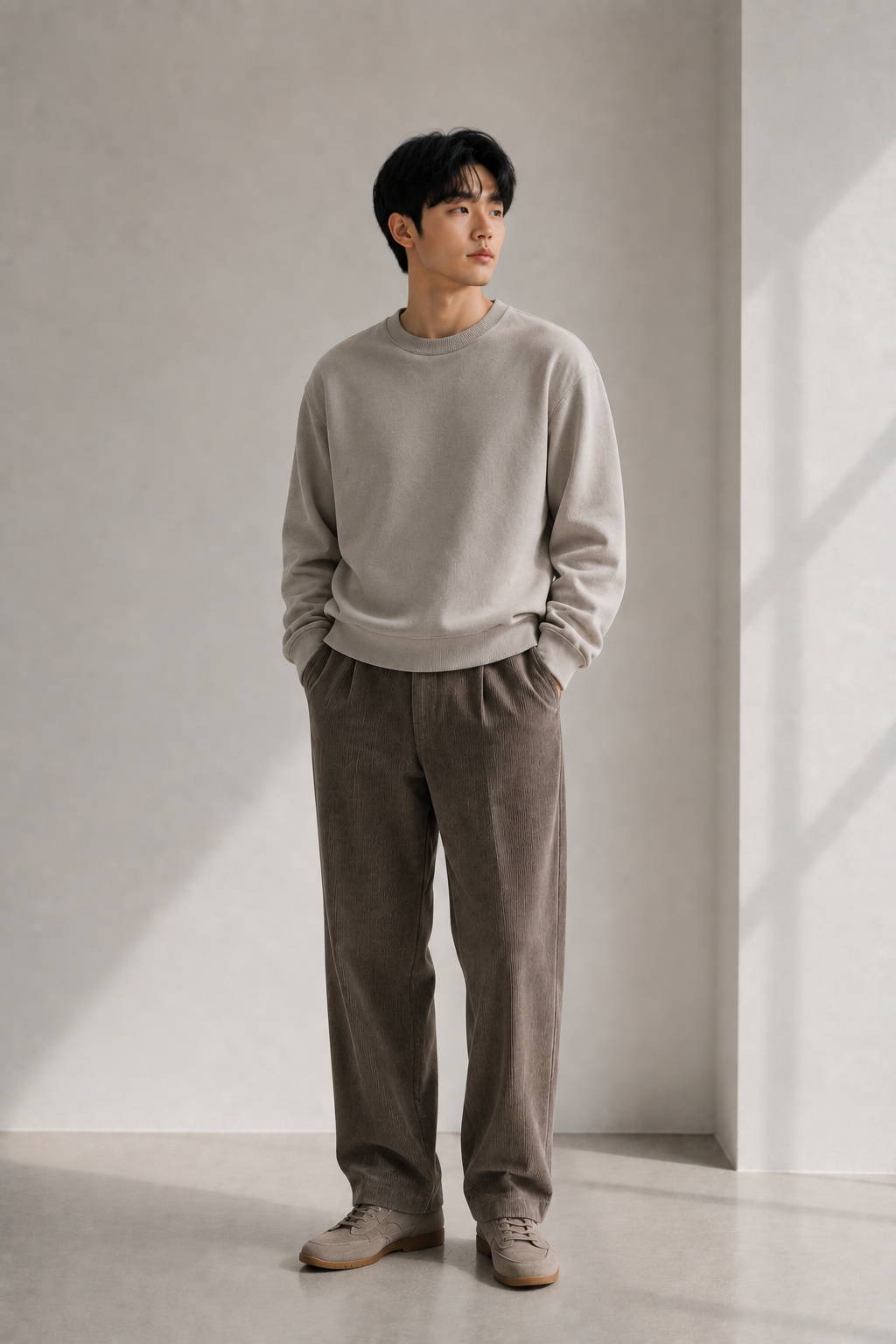
14. Crewneck sweatshirt with relaxed corduroy trousers and suede sneakers for a soft weekend uniform.
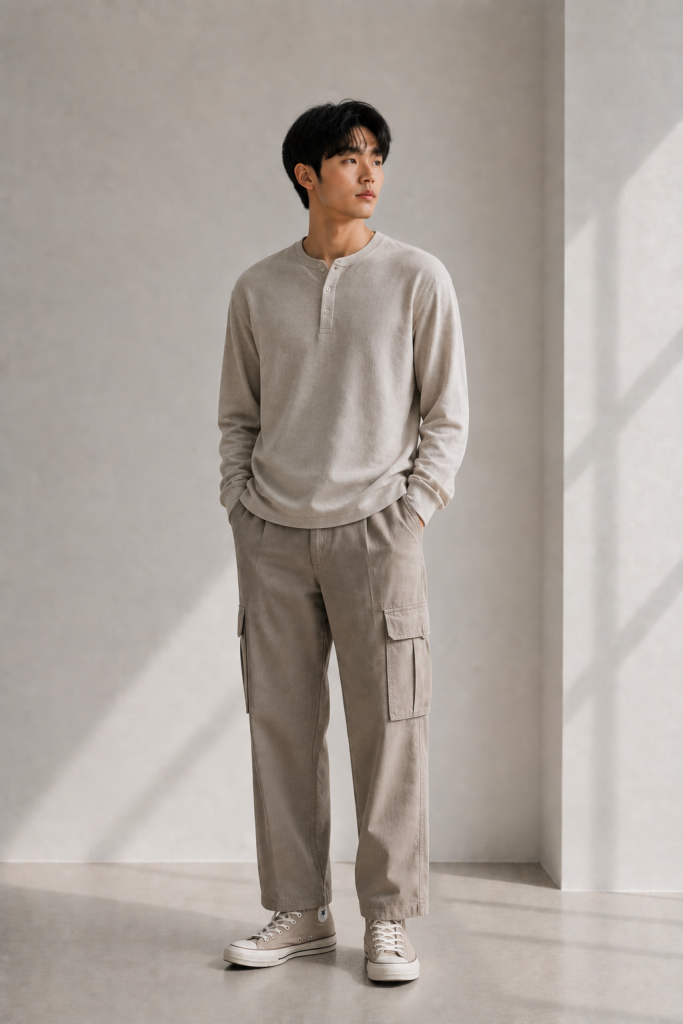
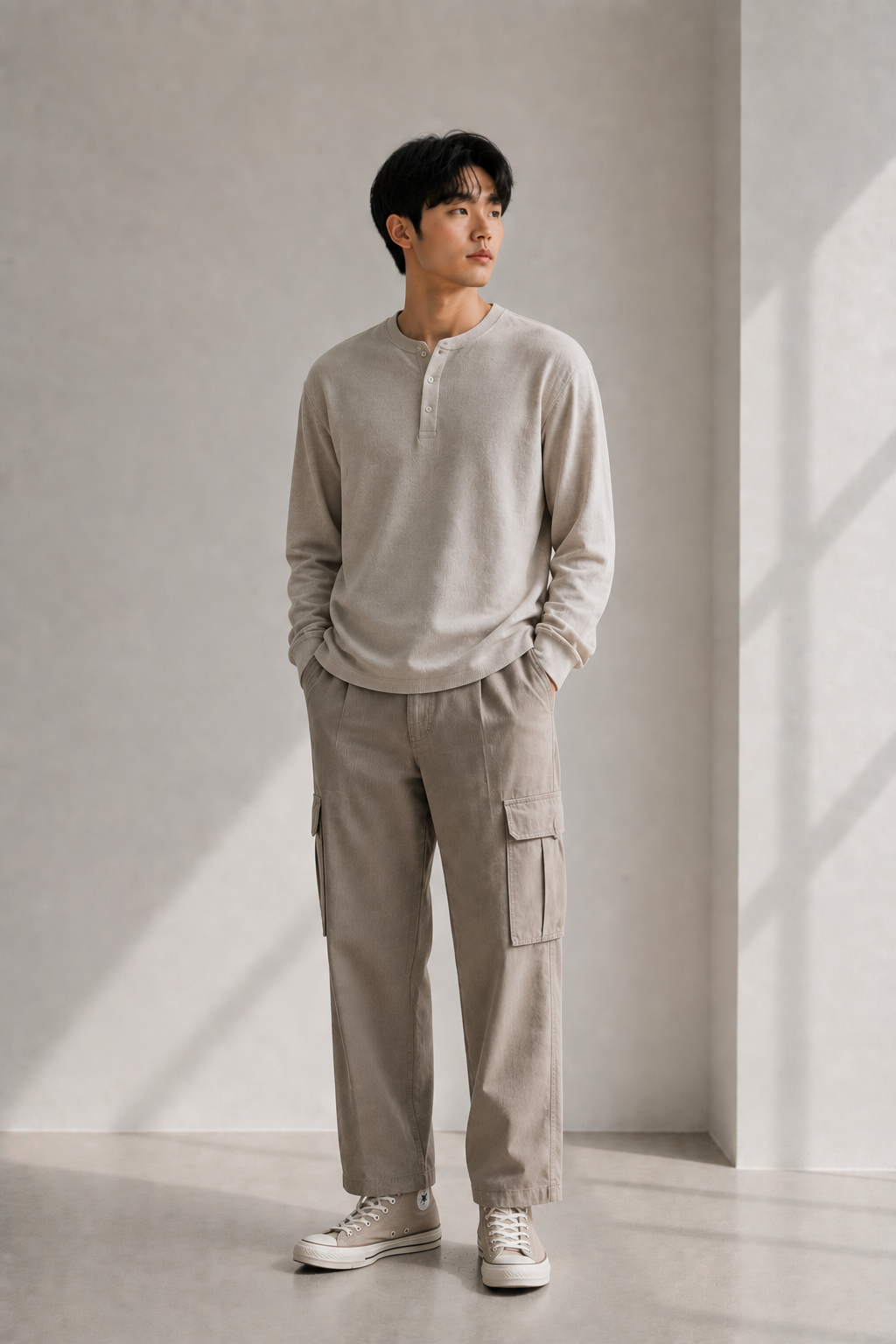
15. Long-sleeve henley with straight cargo trousers and canvas high-tops for a slightly utilitarian casual look.
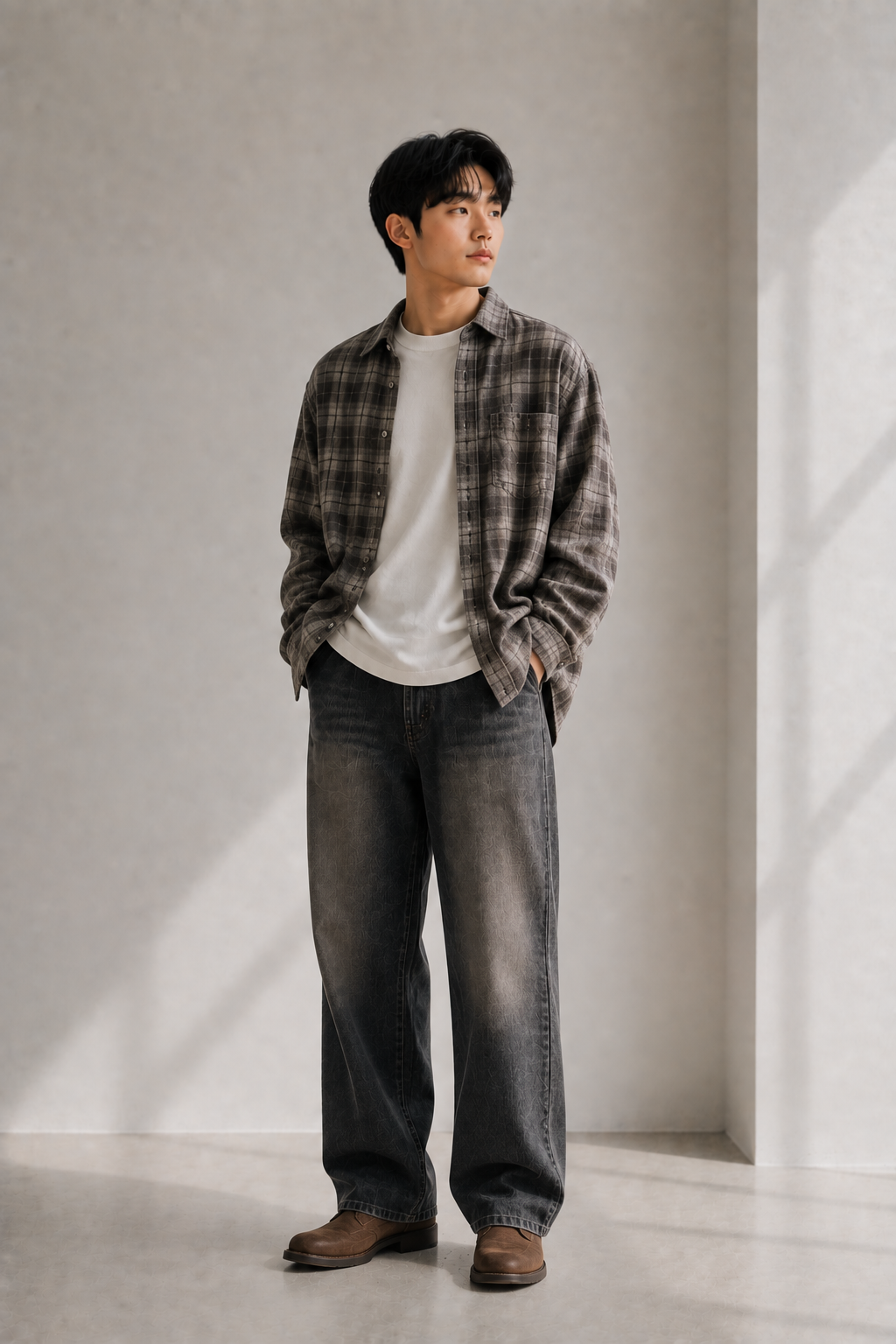
16. Oversized flannel shirt worn open over a plain tee with wide denim and boots for a laid-back off-duty fit.
Elevated Evening Looks
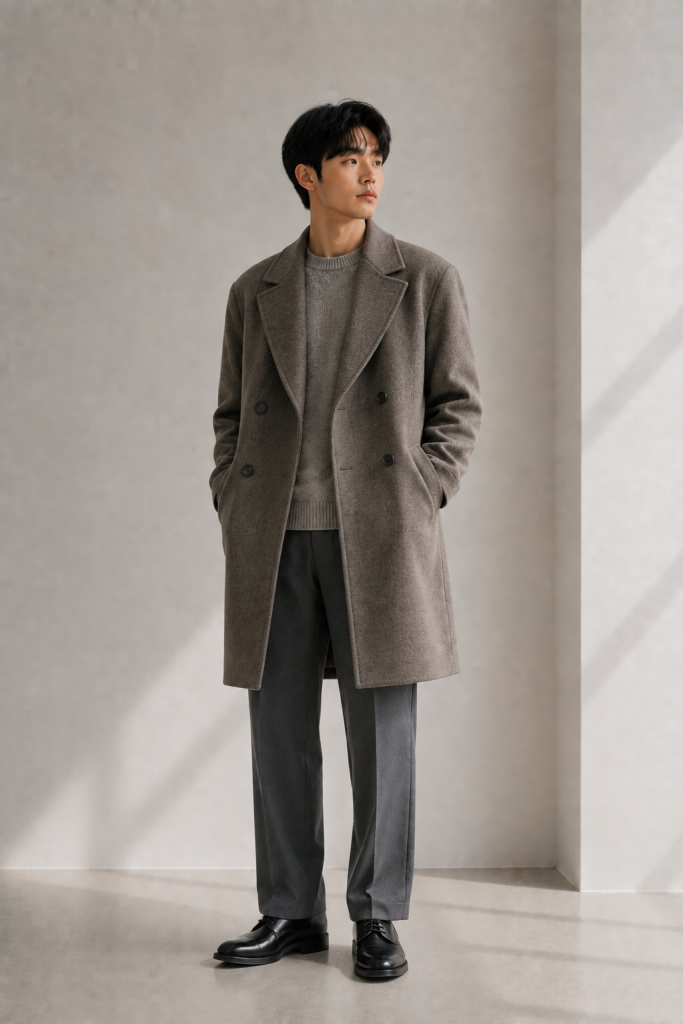
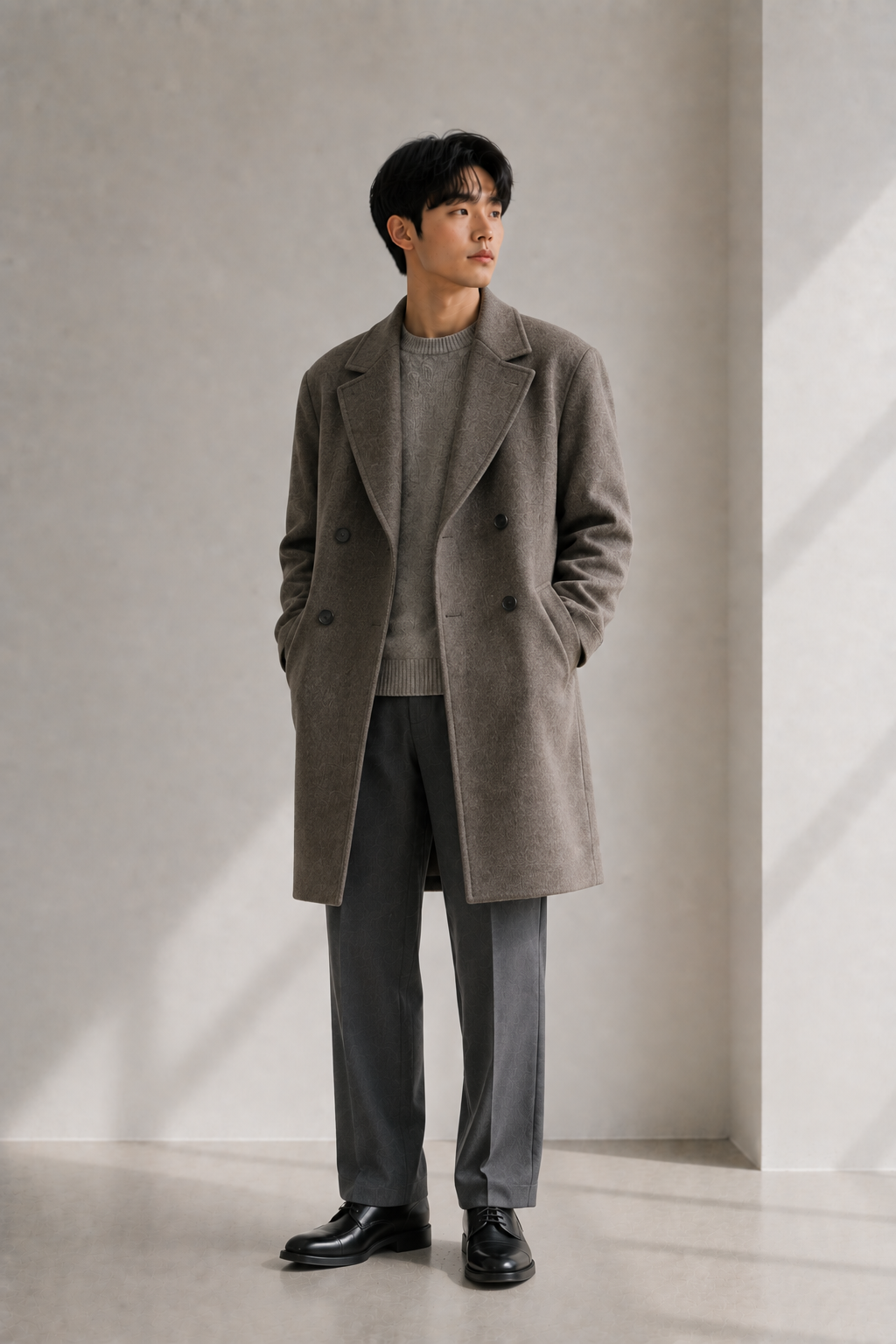
17. Double-breasted wool coat over a fine knit with tailored trousers and leather derbies for dinner or a night out.
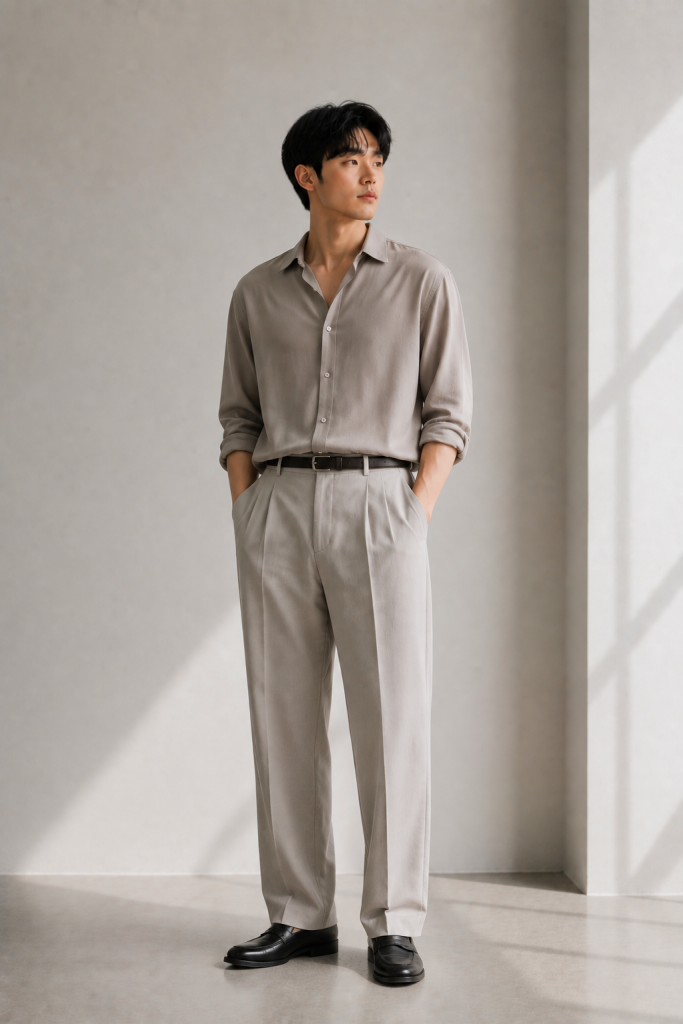
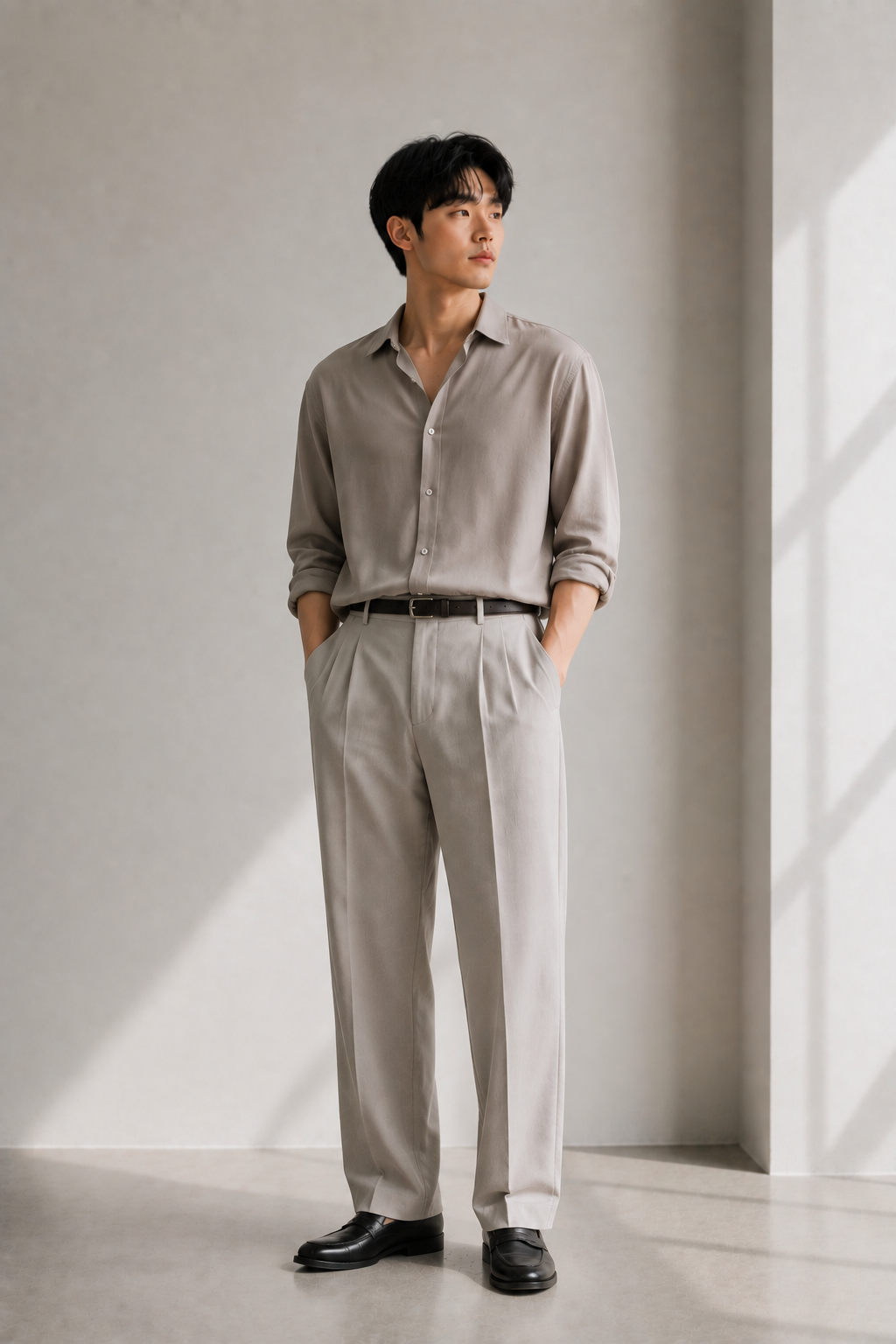
18. Silk-blend shirt tucked into pleated trousers with a thin belt and loafers for a dressed-up minimal look.
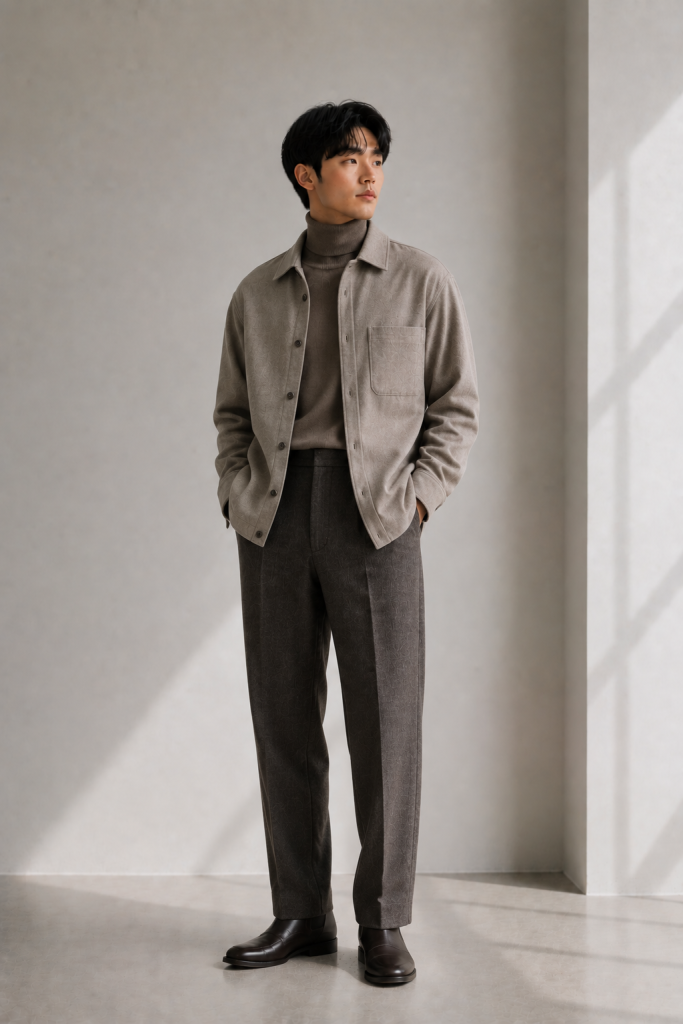
19. Structured overshirt layered over a turtleneck with wool trousers for a smart evening silhouette.
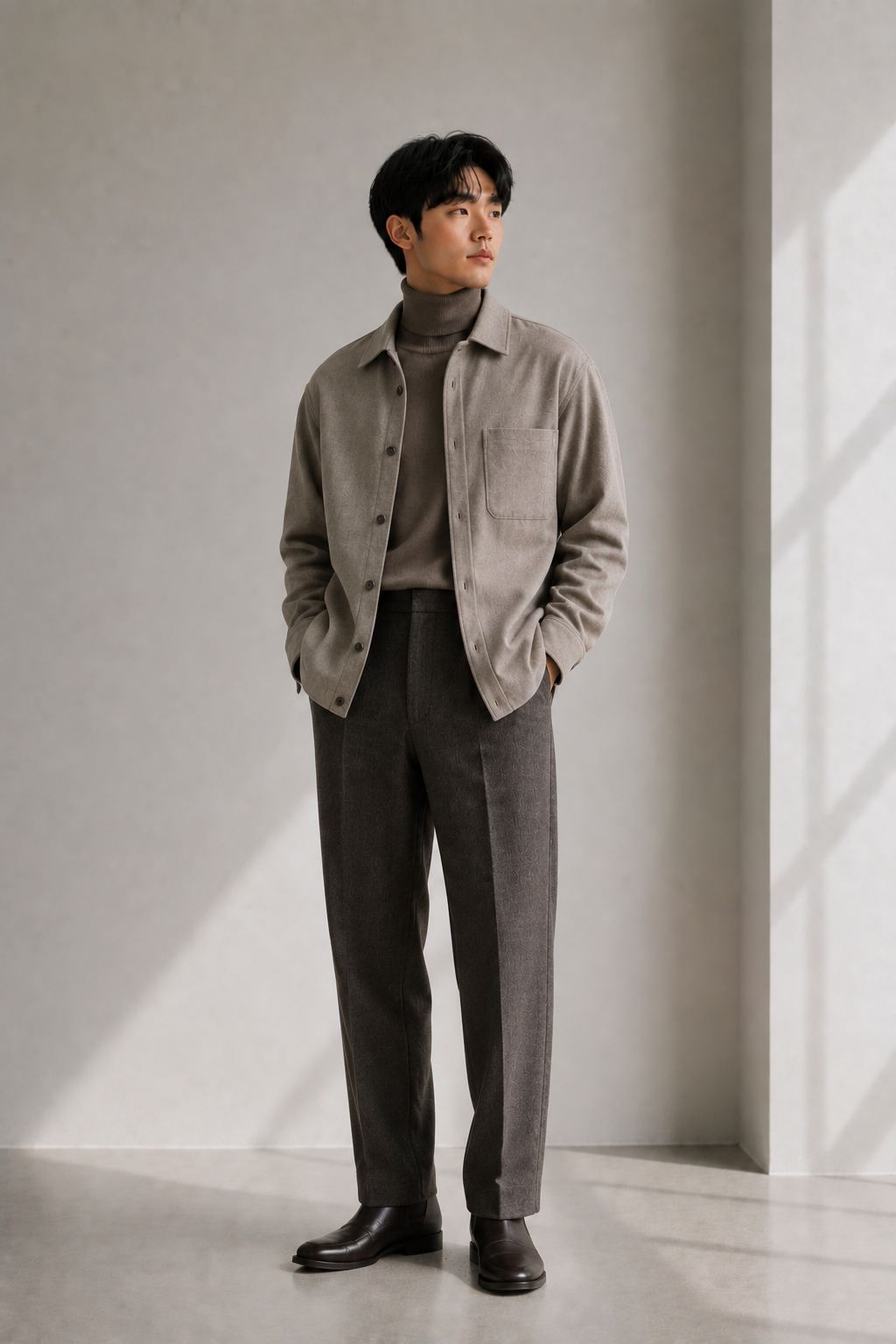
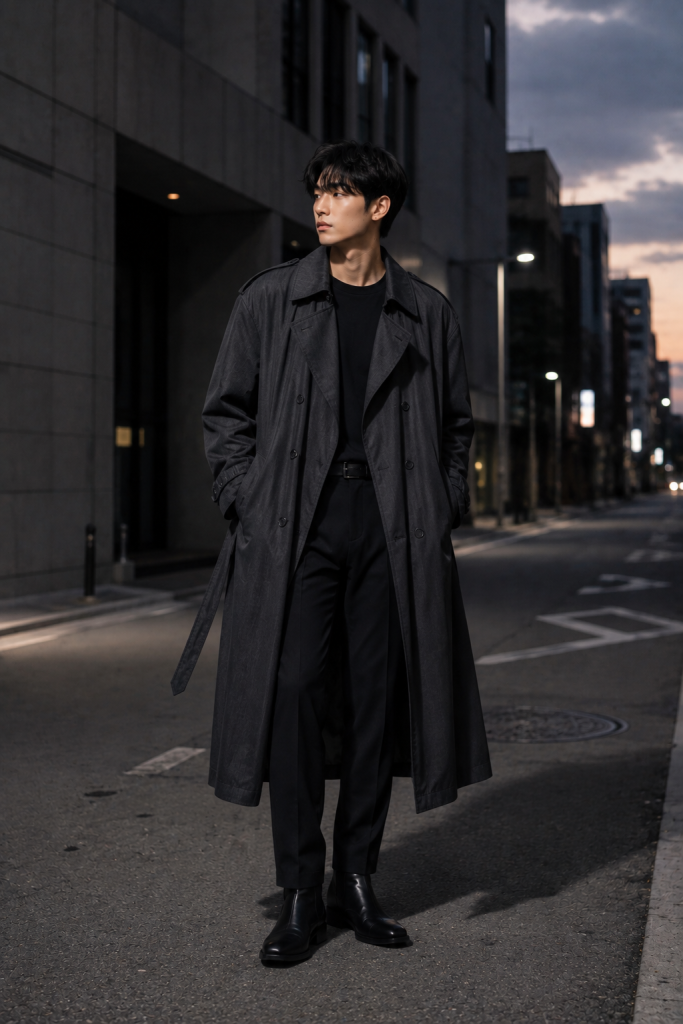
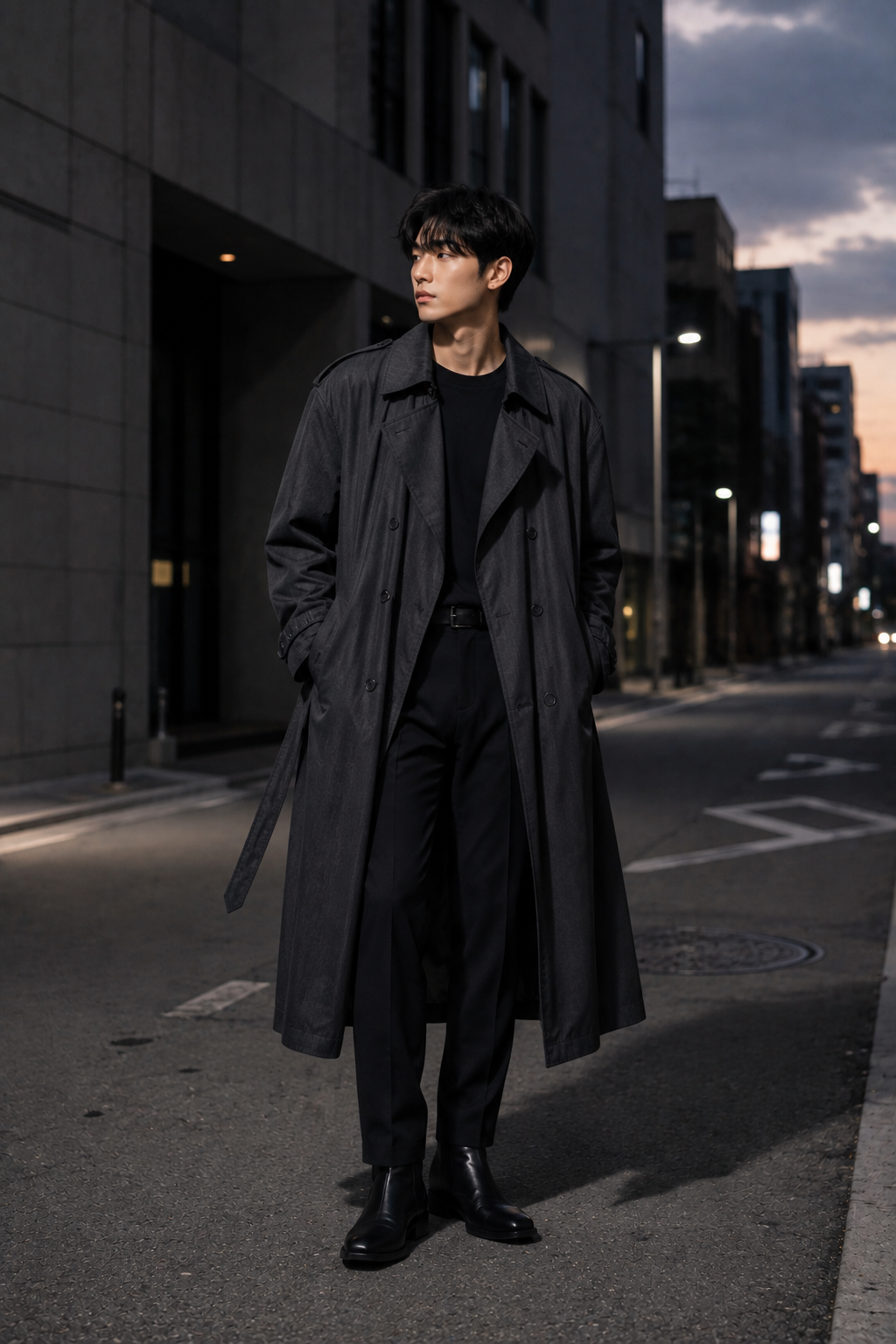
20. Long trench coat over a simple black outfit with polished boots for a dramatic, editorial-leaning finish.
Styling Acubi Outfits for Different Occasions
For the office, lean on the tailoring side of the style: a relaxed blazer, straight or wide trousers, and a simple shirt read as put-together without feeling stiff. For weekends, swap the blazer for a hoodie or overshirt and keep the wide-leg trousers or joggers, which is where acubi overlaps most with everyday streetwear. Travel days call for the coat-and-joggers combination, since the oversized shapes stay comfortable through long stretches of sitting while still looking deliberate in photos. For dinners or events, move toward the monochrome and evening-look ideas above, where a longer coat or structured overshirt adds a bit of drama without needing a full suit. The common thread across every occasion is fit: as long as the proportions stay intentional, the same handful of pieces can move between settings just by changing what you layer them with.
Building an Acubi Capsule Wardrobe
You do not need twenty new items to make these outfits work. A handful of well-chosen pieces mixed and matched will cover most of the looks above. Start with one oversized blazer in beige or grey, since it anchors the tailored looks and pairs with almost everything else in a neutral wardrobe. Add a long wool coat for colder months, ideally in charcoal or camel, which instantly upgrades a plain hoodie-and-joggers combination. Pick up two pairs of wide-leg or straight trousers in neutral tones, one in a heavier wool-blend fabric and one in lighter cotton for warmer weather. A few plain long-sleeve tops in white, cream, and black cover the base layer under blazers and coats. Round it out with one pair of clean white sneakers and one pair of leather boots or loafers, which between them handle every occasion from casual to dressy. Building the wardrobe this way keeps costs down while still giving you enough combinations to avoid repeating the exact same outfit too often. Thrifted and secondhand pieces work particularly well for this wardrobe, since older wool coats and blazers are often cut with more room and better fabric than current fast-fashion equivalents, and a trip to a good secondhand shop can fill in two or three of these key items for less than the cost of one new piece.
Where the Acubi Trend Comes From
Acubi style grew out of Korean street fashion, where the word describes the cinched, structured waistline you see on oversized blazers and coats. It picked up momentum online as more people shared outfit photos built around the same handful of principles: loose tailoring, quiet colors, and a strong focus on how pieces are proportioned rather than what brand made them. Part of the appeal for men specifically is that it borrows the polish of tailoring without the stiffness of a full suit, and it borrows the comfort of streetwear without looking sloppy. That middle ground is why it has translated so easily from Seoul street style photography into everyday wardrobes elsewhere, and why it keeps showing up across outfit boards under slightly different names like minimal streetwear or Korean-inspired tailoring.
Common Mistakes to Avoid
The most frequent mistake is going oversized everywhere at once, which just reads as ill-fitting rather than intentional. Keep at least one layer close to the body, whether that is a fitted tee under a roomy blazer or slim trousers under a long coat. The second mistake is mixing too many colors or fabrics in one outfit; acubi looks fall apart quickly once you introduce a bright color, a bold pattern, or a shiny fabric into the mix. The third is ignoring proportions at the ankle: wide trousers that pool heavily over bulky shoes tend to look unfinished, so either hem them properly or pair them with a slimmer sneaker. Finally, avoid stiff, heavy fabrics for the oversized pieces, since structured wool and cotton blends drape properly while cheap polyester tends to look boxy instead of relaxed.
Final Thoughts
Acubi style rewards patience more than spending. Pay attention to how a blazer sits on your shoulders, how a trouser hem falls over your shoe, and how the colors in your outfit relate to each other, and the rest tends to fall into place. Use the twenty ideas above as a checklist to work through over the next few months rather than a shopping list for one weekend, and keep an eye on the boards linked throughout this site for fresh combinations as new pieces come into rotation.